
Loading, please wait...
LOT 0953
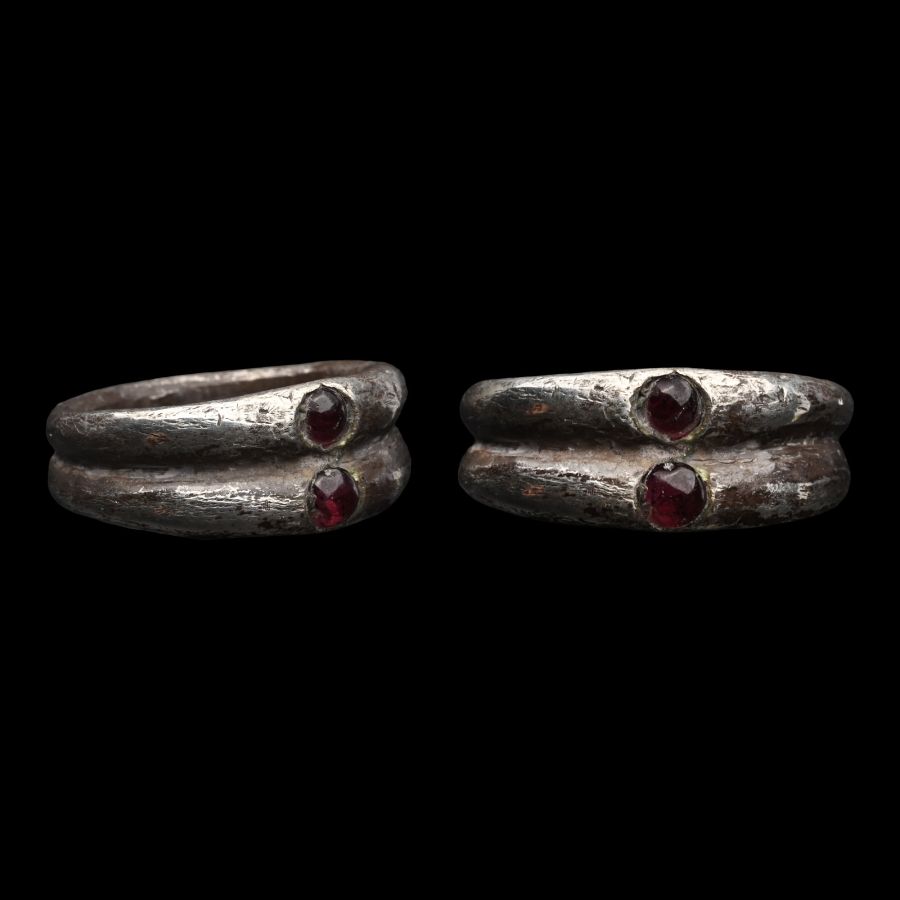
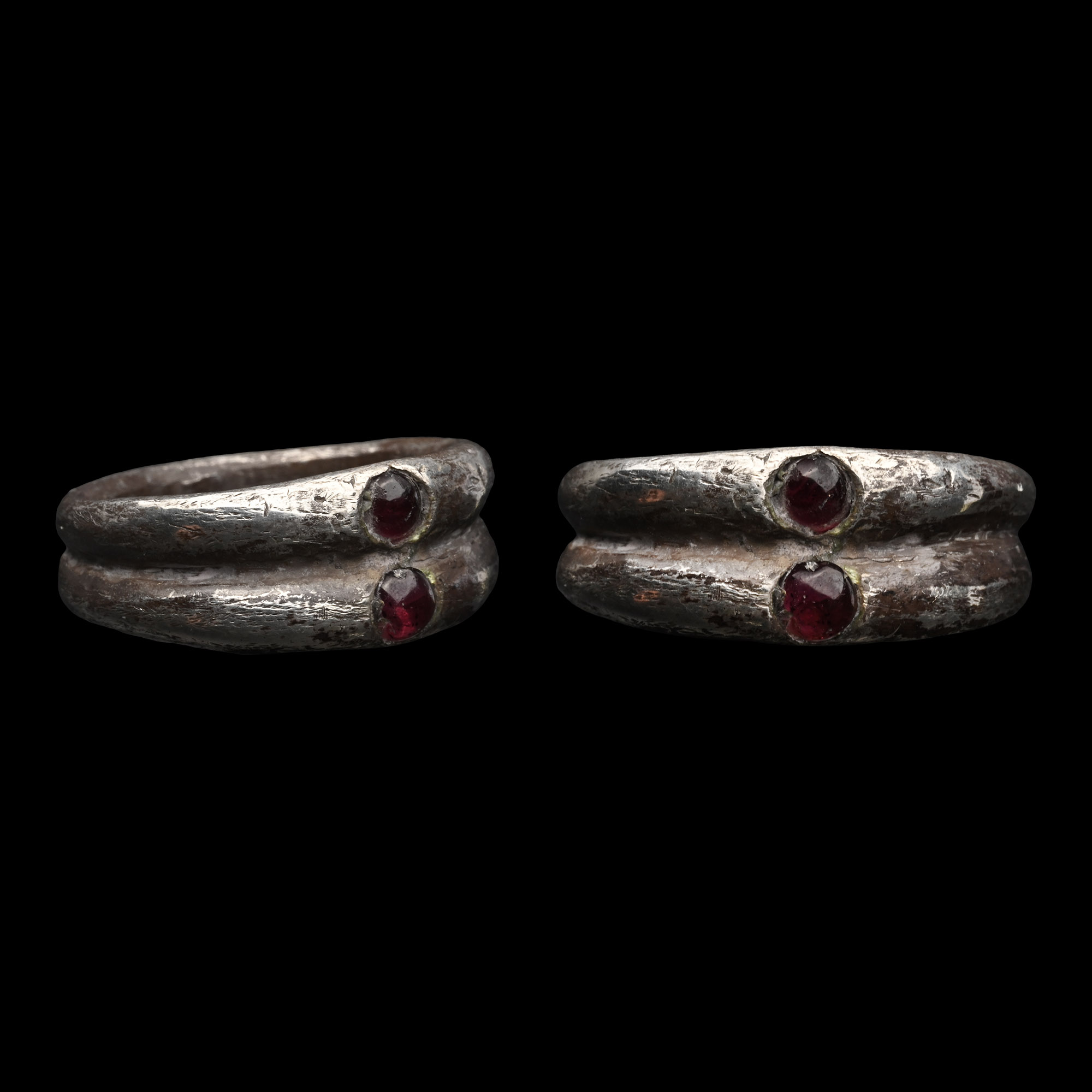
Roman Silver Double-Bezel Ring with Garnets
CIRCA 3RD CENTURY A.D.
1 in. (9.30 grams, 23.90 mm overall, 18.41 mm internal diameter (approximate size British Q, USA 8, Europe 17.49, Japan 16)).
With bifid ellipsoid bezel, each band with inset cabochon garnet. [No Reserve]
ProvenanceProperty of a North West London gallery; formerly in a 1980s collection.
LiteratureSee Ruseva-Slokoska, L., Roman Jewellery, Sofia, 1991, p.164, for variant III, type IV.
CONDITIONTimeLine Auctions follows a vetting process to ensure the authenticity and legality of all items, reinforcing our commitment to integrity and responsible trading. Each antiquity, antique, and coin lot undergoes thorough examination by a vetting committee of at least ten external specialists, professional trade association members, scientists, and archaeologists: Our Vetting Process
AUCTIONS:
TimeLine is a leading auction house specialising in antiquities, ancient art, collectables, natural history, coins, medals, and books. Our auctions offer museums, collectors, historians, and enthusiasts the opportunity to acquire unique and historically significant pieces.
-
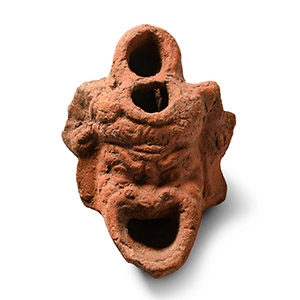
Roman Miniature Terracotta Oil Lamp with Theatre Mask
2nd century B.C.-1st century A.D.Sold for (Inc. bp): £130
Hollow-formed, no handle, but the rear bulging tubular part of the basin may have served as such; body in the shape of a comic theater mask with large open mouth; filling-hole on forehead, knit eyebrows with jolly expression and large open mouth functioning as a wick-hole; crown of foliage and fruits; flat raised oval base. 38 grams, 67 mm
From the collection of Mr W.A. Stewart, Director of School of Arts and Crafts, Cairo, 1919-1929. Acquired Christie's, London, Antiquities, Works of Art and Important Renaissance Bronzes, Plaquettes and Limoges Enamels, 8 July 1981, no.126 (part). From a private Wiltshire, UK, collection. Accompanied by a copy of the relevant Christie's catalogue page.
Lamps with figurines first appeared in the Hellenistic period, possibly originating in Athens, since the 2nd century B.C. Found in all parts of the Mediterranean basin, they were particularly popular during the 1st and 2nd centuries A.D. The Silenus face types were linked to the Bacchic cult. The crown of leaves and fruit across the forehead alludes to Bacchus or one of his followers. -
.jpg)
Roman and Byzantine Ceramic Oil Lamp Collection
2nd-8th century A.D.Sold for (Inc. bp): £293
Comprising: a slipper-shaped lamp with low-relief linear decoration; a rounded lamp with large nozzle, a band of omega motifs around the central filler hole; a drum-shaped lamp with low discus with raised double border, short nozzle with ring-and-dot motifs. 159 grams total, 88-94 mm
with Galerie Rhéa, Zurich, Switzerland. -
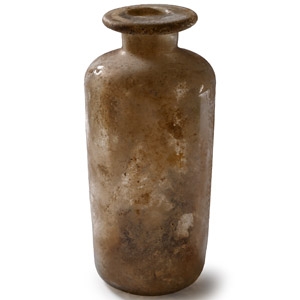
Roman Glass Bottle
3rd-4th century A.D.Estimate: £200 - 300 (+bp*)
Opening Bid: £110
Mould-blown bottle comprising a flat-based tubular body and short neck with returned flange rim. 94.2 grams, 14 cm
From an important London collection of glass, 1990s. This lot is accompanied by an illustrated lot declaration signed by the Head of the Antiquities Department, Dr Raffaele D'Amato.
Most of similar examples of Roman bottles have been found in the Eastern Mediterranean. Earliest examples have been found in Roman Lusitania (Pombalinho-Santarem). The type lasted until the 4th century A.D. (Samaria-Sebaste, Israel).
