
Loading, please wait...
LOT 0836
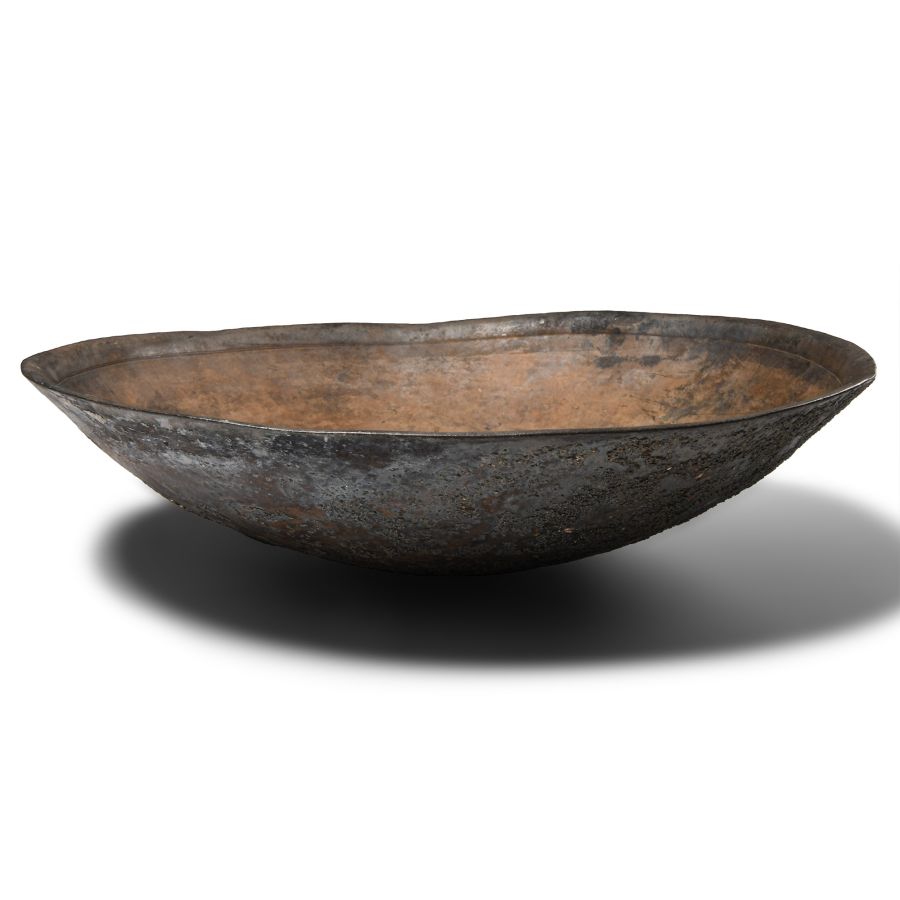
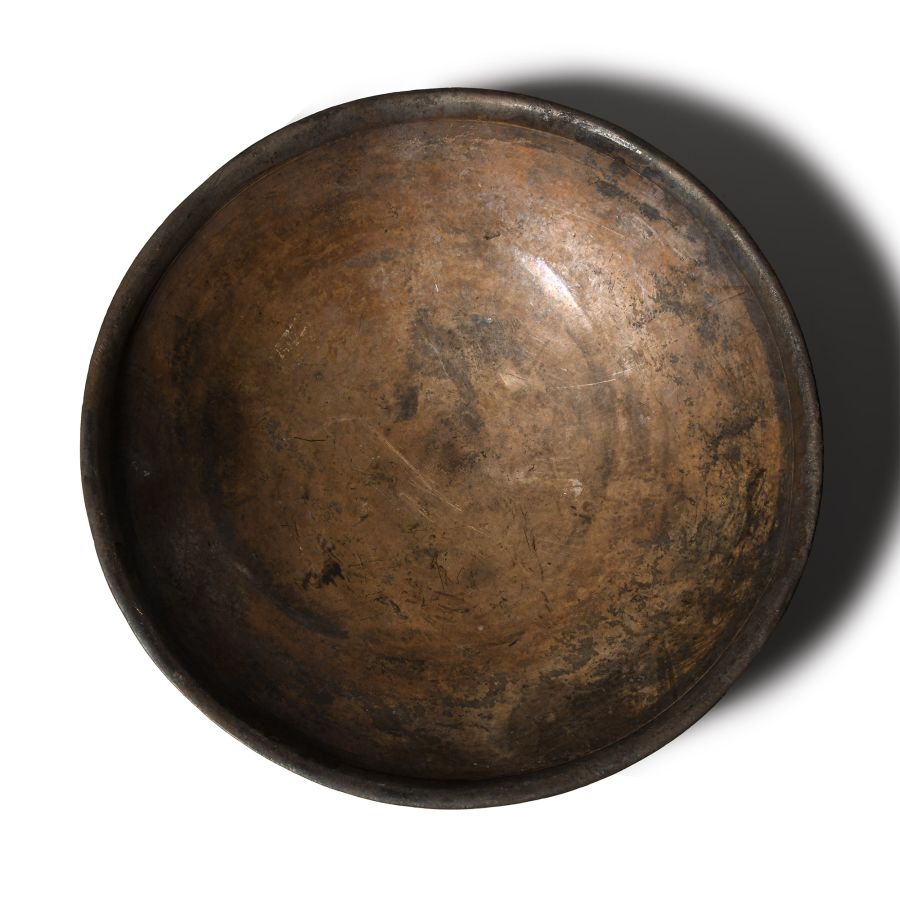
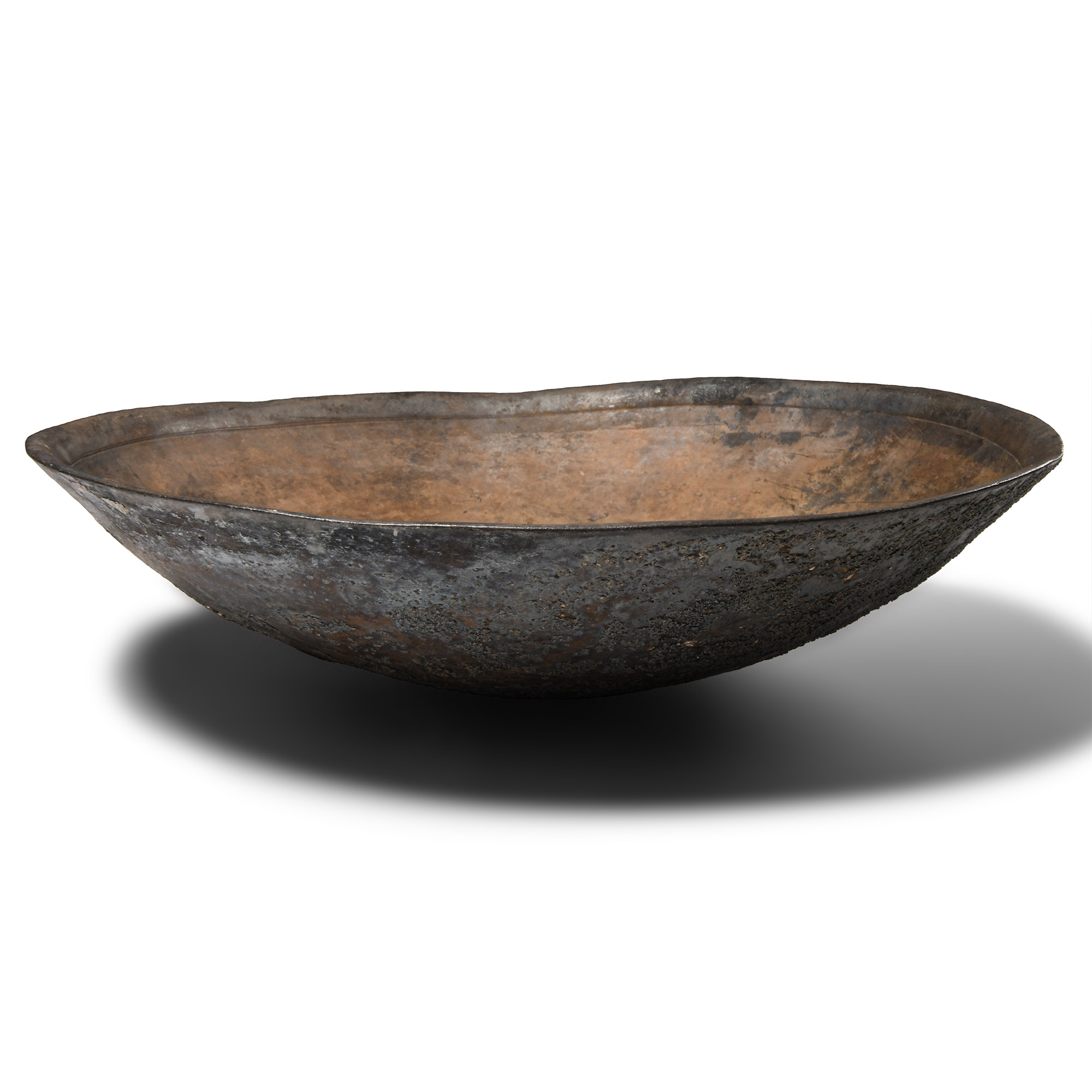
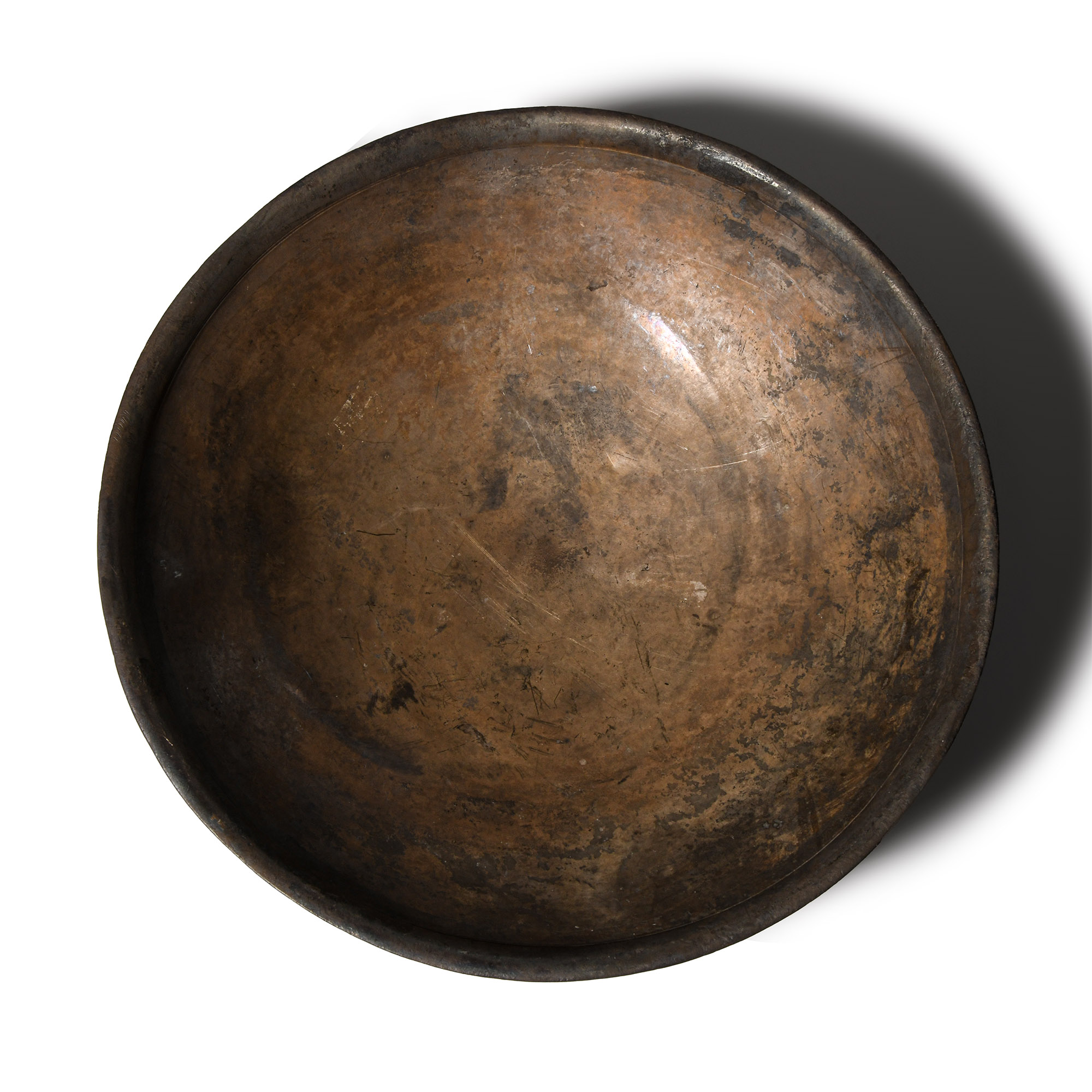
Roman Silver Dish
1ST-3RD CENTURY A.D.
8 1/4 in. (396 grams, 21 cm wide).
Shallow with thickened rim; encrustations to the outer face.
ProvenanceAcquired early 1990s.
Ex private American collection; thence by descent.
Private Swiss collection since 1998.
This lot has been checked against the Interpol Database of stolen works of art and is accompanied by search certificate no.11631-199032.
This lot is accompanied by an illustrated lot declaration signed by the Head of the Antiquities Department, Dr Raffaele D'Amato.
Cf. a similar bowl in the British Museum, London, under accession number 1926,0406.11.
CONDITIONTimeLine Auctions follows a vetting process to ensure the authenticity and legality of all items, reinforcing our commitment to integrity and responsible trading. Each antiquity, antique, and coin lot undergoes thorough examination by a vetting committee of at least ten external specialists, professional trade association members, scientists, and archaeologists: Our Vetting Process
AUCTIONS:
TimeLine is a leading auction house specialising in antiquities, ancient art, collectables, natural history, coins, medals, and books. Our auctions offer museums, collectors, historians, and enthusiasts the opportunity to acquire unique and historically significant pieces.
LOT 0836
Roman Silver Dish
Estimate £1,000 - 1,400€1,160 - 1,620 (for guidance only)$1,350 - 1,890 (for guidance only)
-
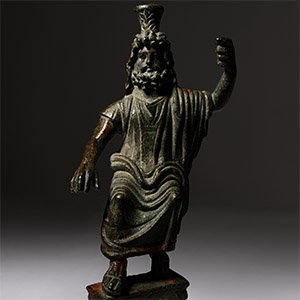
Roman Bronze Figure of Serapis
1st century B.C.-1st century A.D.Sold for (Inc. bp): £5,200
Depicted seated with his feet resting on a low stool, left hand raised and once holding sceptre or a staff; a modius crown resting on his curly hair, decorated with three incised olive sprays; dressed in a chiton and a draped himation, with his sandal-clad feet showing from beneath the folds of his garments; mounted on a custom-made display stand. 233 grams total, 12 cm high excluding stand
Private collection, Florida, USA, 1980s. European private collection, acquired in 2002. Accompanied by a copy of an Art Loss Register certificate, no.S00019356. Accompanied by an academic report by Dr Raffaele D’Amato. This lot has been checked against the Interpol Database of stolen works of art and is accompanied by search certificate number no.12611-234679. This lot has been cleared against the Art Loss Register database, and is accompanied by an illustrated lot declaration signed by the Head of the Antiquities Department, Dr Raffaele D'Amato.
The facial features are of the bearded Hellenistic type, well known by the features of the seated cult statue from the Serapeum in Alexandria and the prototypes of a number of separated heads or busts which also survive in innumerable copies in all the corners of the Roman Empire. A statue made by the Hellenistic sculptor Bryaxis was the model for this statuette and the successive iconography. -
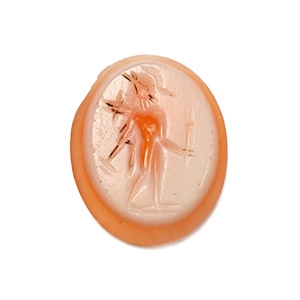
Roman Gemstone of the God Mercury
2nd-3rd century A.D.Sold for (Inc. bp): £247
With intaglio profile figure of Mercury standing holding the caduceus and marsupium. 0.46 grams, 11 mm
Ex Geneva, Switzerland, collection, 1980s. This lot is accompanied by an illustrated lot declaration signed by the Head of the Antiquities Department, Dr Raffaele D'Amato. -
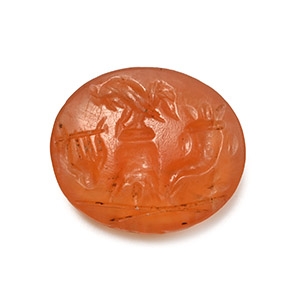
Roman Carnelian Eagle Gemstone
2nd-3rd century A.D.Estimate: £200 - 300 (+bp*)
Opening Bid: £110
Ellipsoid gemstone with incuse eagle perched on a tripod, a cornucopia and lyre. 0.71 grams, 12 mm
Ex Geneva, Switzerland, collection, 1980s. This lot is accompanied by an illustrated lot declaration signed by the Head of the Antiquities Department, Dr Raffaele D'Amato.
