
Loading, please wait...
LOT 0664
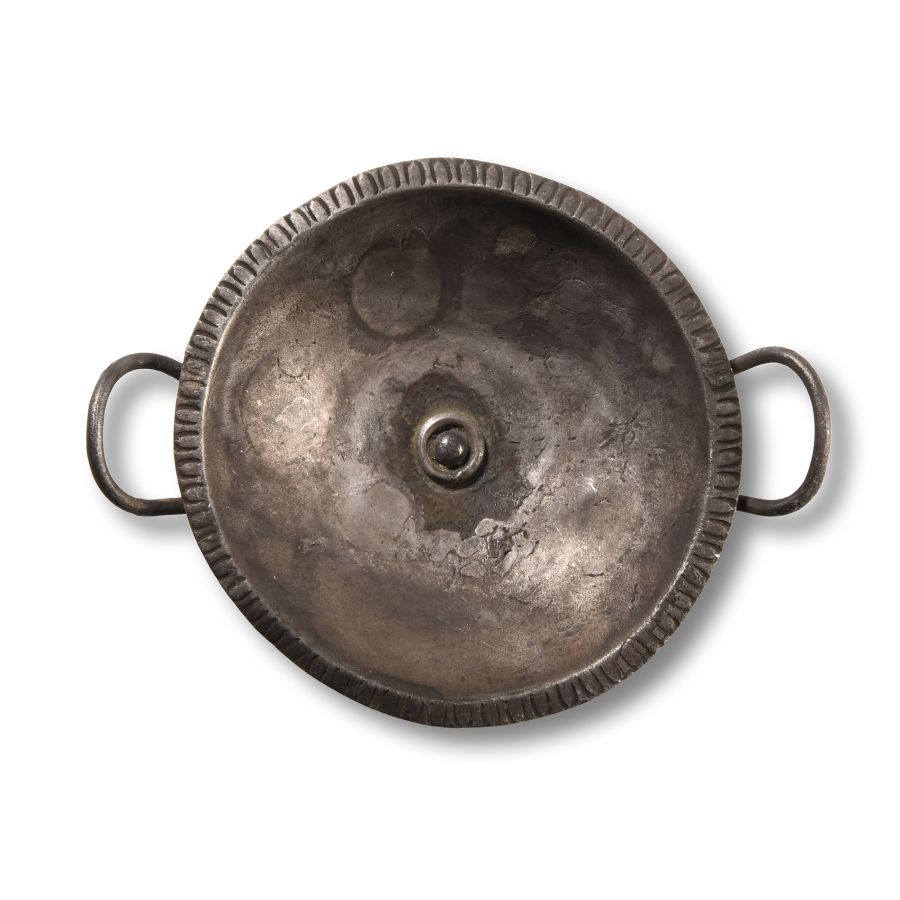
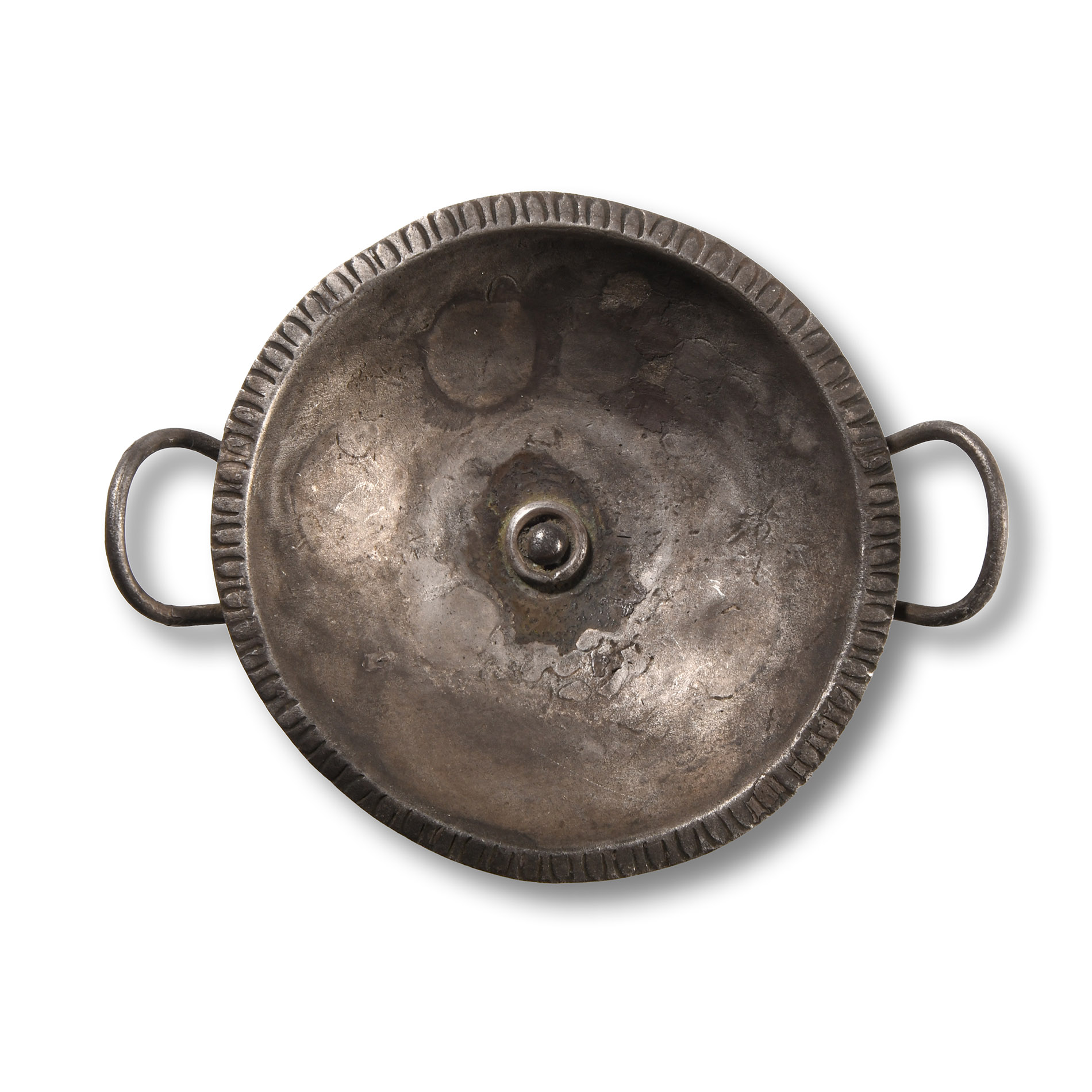
Roman Silver Decorated Dish
CIRCA 4TH-5TH CENTURY A.D.
3 3/4 in. (39 grams, 95 mm wide).
Comprising a shallow bowl fitted with handles and raised foot, the rim engraved with petals. [No Reserve]
ProvenanceFrom a North Yorkshire, UK, private collection.
Acquired from Adam Partridge Auctioneers, Macclesfield, UK.
Property of Mr A.B., an American collector.
Cf. Walters, H.B., Catalogue of the silver plate (Greek, Etruscan and Roman) in the British Museum, London, 1921, pp.XIX no.4 (shape); plate III, for similar.
FootnotesIn regards of the shape, Roman silver vessels usually fall into three classes: (1) vessels for eating; (2) vessels for drinking; (3) jugs and saucepans (trullae). The first class includes flat, circular dishes (lances), often of considerable size; the situlae or buckets, and the bowls with projecting rims (our specimen) of various dimensions. The form of the present bowl (probably used for spices, like pepper [piperatoria]) occurs all over the Mediterranean basin, and is Alexandrian in origin.
CONDITIONTimeLine Auctions follows a vetting process to ensure the authenticity and legality of all items, reinforcing our commitment to integrity and responsible trading. Each antiquity, antique, and coin lot undergoes thorough examination by a vetting committee of at least ten external specialists, professional trade association members, scientists, and archaeologists: Our Vetting Process
AUCTIONS:
TimeLine is a leading auction house specialising in antiquities, ancient art, collectables, natural history, coins, medals, and books. Our auctions offer museums, collectors, historians, and enthusiasts the opportunity to acquire unique and historically significant pieces.
-
Late Roman Iron Branding Signaculum
5th-6th century A.D.Sold for (Inc. bp): £85
Featuring an elaborate monogram composed of Greek letters M and O, supported by decoratively twisted prongs; tapering cylindrical socket. 521 grams, 37.5 cm
Acquired 1990s-early 2000s. East Anglian private collection.
Branding stamps or signacula, in particular those with large single letters, were used for marking livestock to identify the ownership, the breed, the quality and other features of the animal. The signacula were usually made in bronze, but iron examples are also preserved. -
.jpg)
Larger Than Life-Size Roman Bronze Sandaled Foot
2nd-3rd century A.D.Sold for (Inc. bp): £39,000
Modelled in the round and originally part of a monumental statue, the naturalistic right foot encased in a trochades leather sandal with median reversed tongue secured with side straps and thick looped laces; the thick platform sole slightly curved, toes and nails well defined; mounted on a substantial custom-made display stand. 5.84 kg total, foot: 30 cm wide
German art market. European private collection, 1970s-early 2000s. Acquired from the above; thence by descent. Private collection, London, UK. Accompanied by an academic report by Dr Raffaele D’Amato. This lot has been checked against the Interpol Database of stolen works of art and is accompanied by search certificate number no.12176-221443.
The detailed bronze foot with a possible variant of the Greek trochades sandal, known to be a traveller's sandal, is all that remains of the once monumental statue. The trochades was a sturdy traveller's open boot of Greek origin with a flat sole. In the Consular Age it was also used by officers and guardsmen. Roman sandals consisted usually of a leather sole attached to the foot with interlacing thongs. -
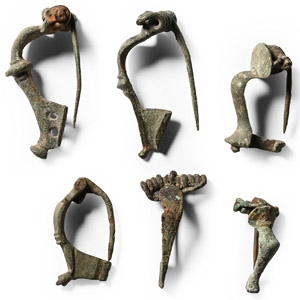
Roman Bronze Bow Brooch Group
1st-2nd century A.D.Sold for (Inc. bp): £111
Including knee, trumpet and other types. 76 grams total, 34-55 mm
Ex German art market, 2000s. Acquired from an EU collector living in London. From the collection of Surrey, UK, gentleman.
