
Loading, please wait...
LOT 0982
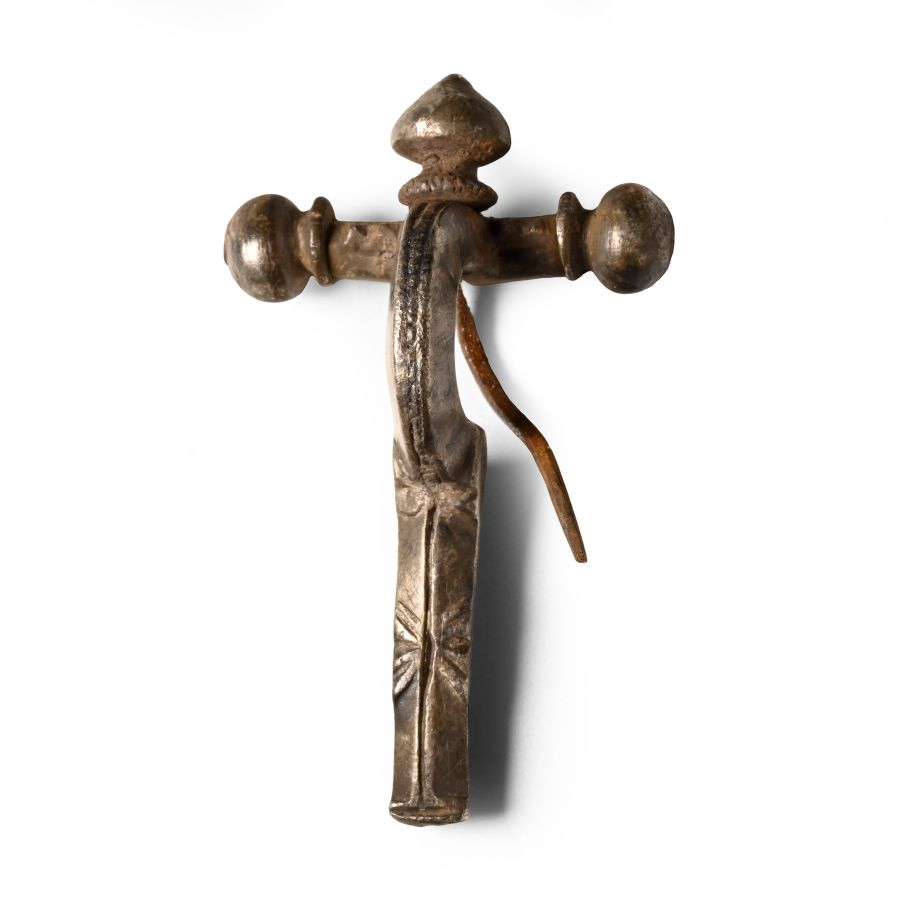
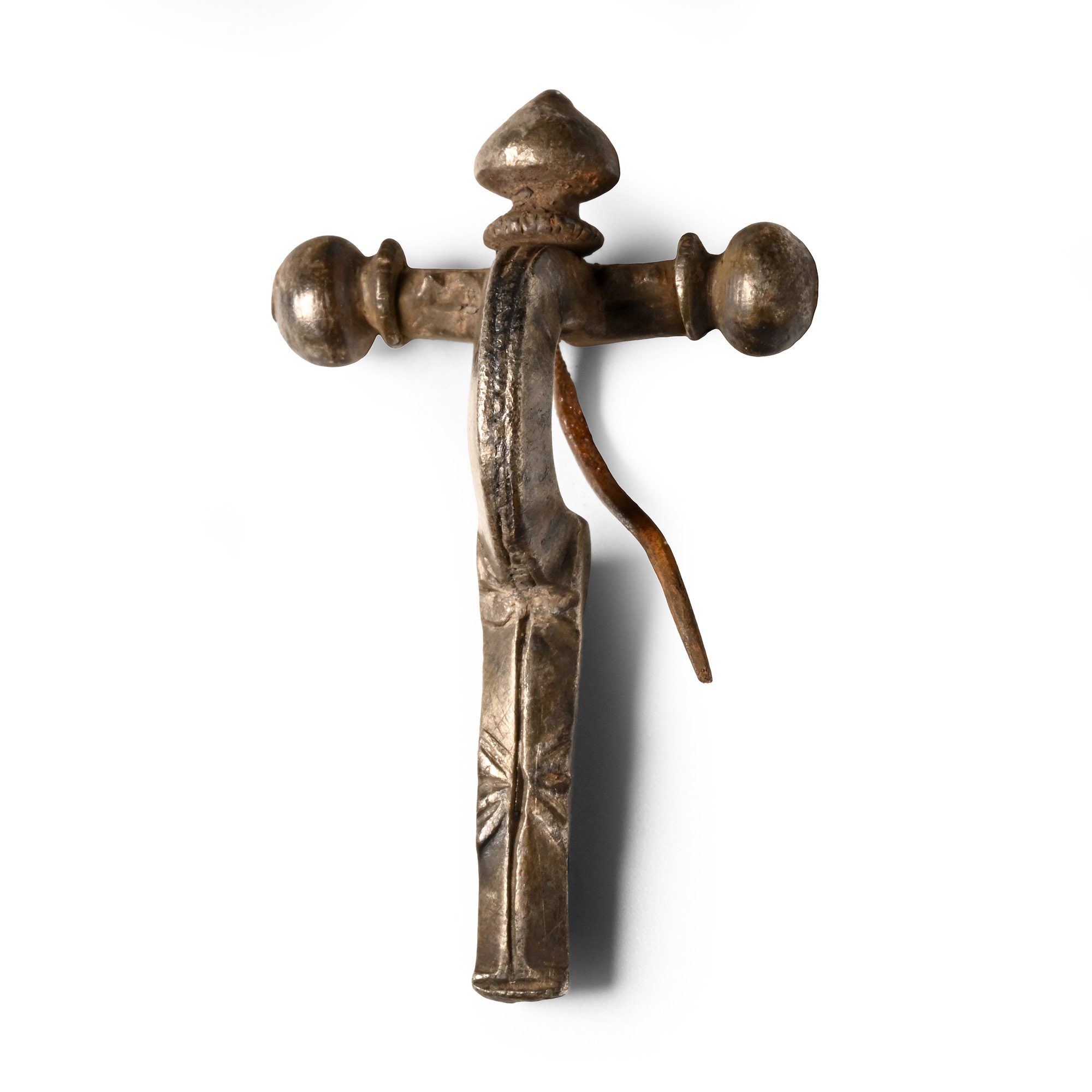
Roman Silver Crossbow Brooch
4TH CENTURY A.D.
1 7/8 in. (14.4 grams, 48 mm).
With bulbous knops to the crossbar, remains of nielloed decoration on the bow, keeled footplate.
ProvenanceEx German art market, 2000s.
Acquired from an EU collector living in London.
From the collection of a Surrey, UK, gentleman.
TimeLine Auctions follows a vetting process to ensure the authenticity and legality of all items, reinforcing our commitment to integrity and responsible trading. Each antiquity, antique, and coin lot undergoes thorough examination by a vetting committee of at least ten external specialists, professional trade association members, scientists, and archaeologists: Our Vetting Process
AUCTIONS:
TimeLine is a leading auction house specialising in antiquities, ancient art, collectables, natural history, coins, medals, and books. Our auctions offer museums, collectors, historians, and enthusiasts the opportunity to acquire unique and historically significant pieces.
-
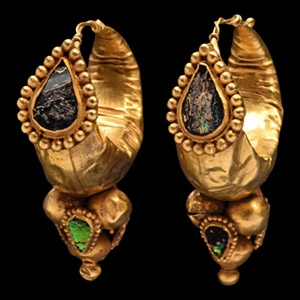
Eastern Roman Gold Hoop Earrings with Stone Inlays
3rd-4th century A.D.Estimate: £1,500 - 2,000 (‡+bp*)
Opening Bid: £750
Each with a hollow-formed crescentic hoop, piriform plaque with inset glass panel and granulated border, hollow-bulb cluster beneath with three applied piriform plaques and granule finial. 9.26 grams total, 37-38 mm
Acquired in the mid 1980s-1990s. Private collection, Switzerland, thence by descent. Private collection, since the late 1990s. This lot has been checked against the Interpol Database of stolen works of art and is accompanied by a search certificate number no.12393-226929.
As a result of the expansion of the Roman Empire, jewellery became more and more elaborate in its designs and materials used, such as precious and semi-precious gemstones. This pair of earrings represent a highly baroque evolution of the boat-shaped type, already visible in Etruscan jewellery and certainly in Roman jewellery, as demonstrated by the excavations of Herculaneum. Using the body of the boat-shaped earrings, the late Imperial artist added decorative clusters and applications of pearled borders and precious stones, according to the taste of Eastern Hellenism rooted for centuries in the provinces of the Black Sea and Roman Asia. -
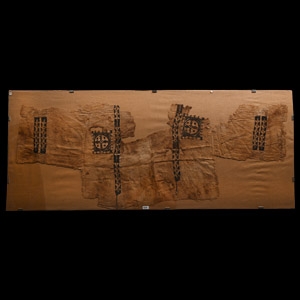
Large Mounted Roman Linen Tunic
Circa 4th-5th century A.D.Sold for (Inc. bp): £5,200
Comprising half of the upper part of a tunica manicata in light fabric, S-twist tapestry, ornamented with dark purple clavi with orbiculi and tablia, wool over linen; mounted in fabric backing and perspex display frame. 7.7 kg total, mount: 1.64 m
Acquired 1970s-1996. Property of a North American collector. London collection, 2016.
The tunic is decorated in purple with opus phrygium embroidery. The archaeological evidence from the dry desert cemeteries of Egypt offers striking confirmation of pictorial sources about late Roman clothing around the empire. -
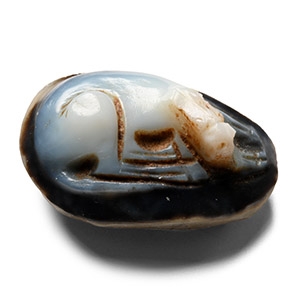
Roman Banded Agate Cameo of a Sleeping Dog
3rd century A.D.Sold for (Inc. bp): £338
With a cameo image of a lying dog curled to the right; supplied with a museum-quality impression. 0.72 grams, 12.7 mm
Private English collection, formed between the late 1970s and early 1990s. Private collection, London, UK.
