
Loading, please wait...
LOT 1001
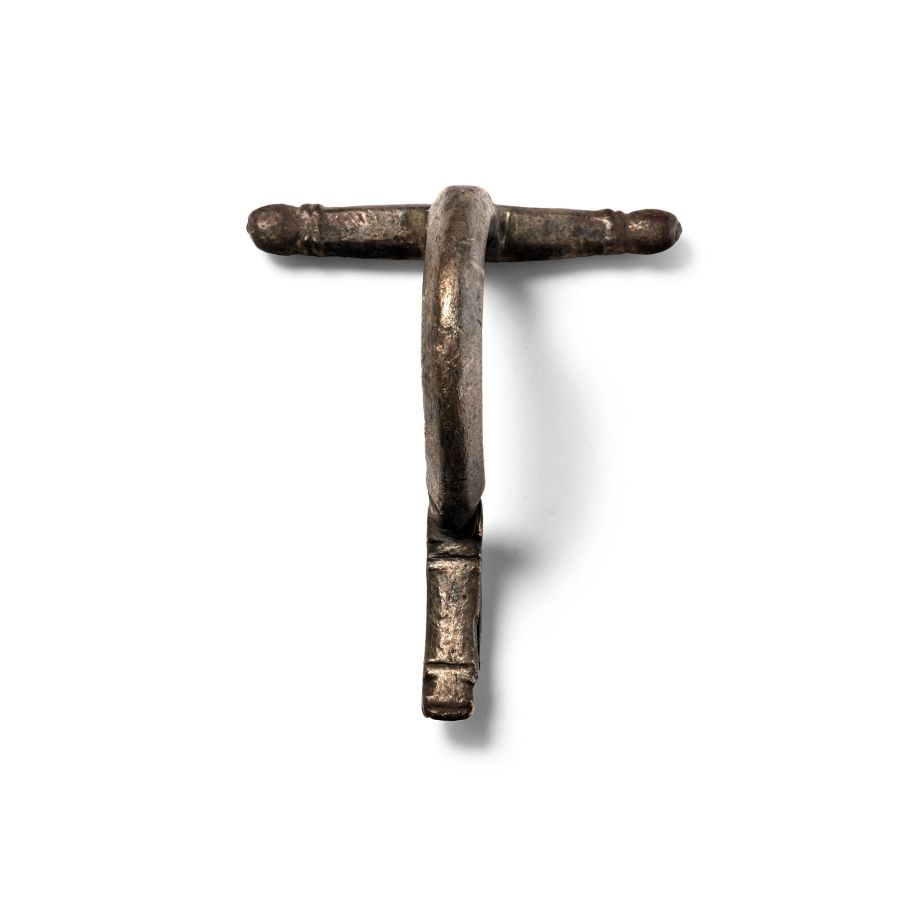
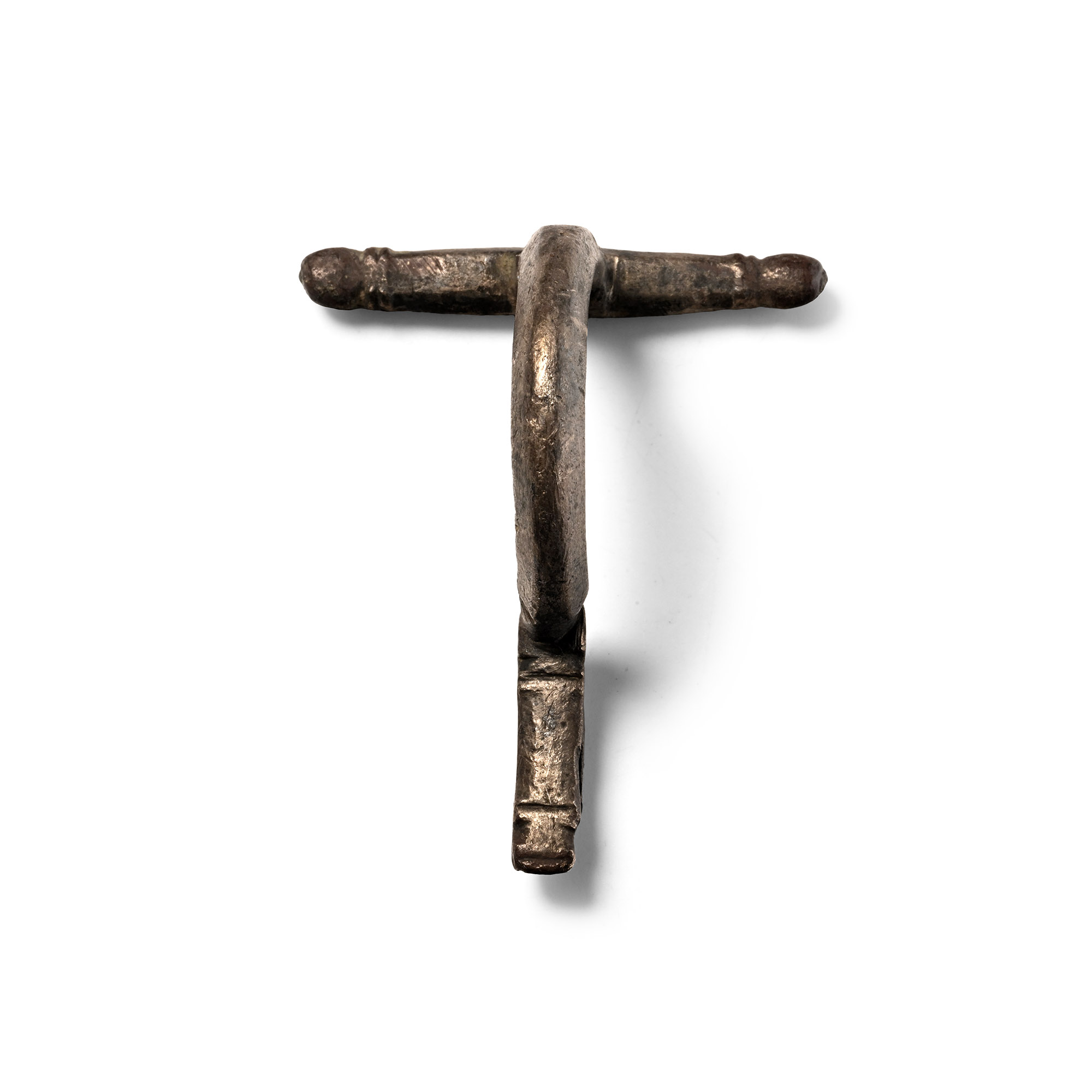
Roman Silver Crossbow Brooch
3RD CENTURY A.D.
2 in. (15.8 grams, 50 mm).
Comprising a hexagonal-section crossbar with collars and bulb finials, slot for a hinged pin, trapezoid-section bow, rectangular foot with incised geometric ornament, catch to the reverse; socket at top of bow to accept a separate knop. [No Reserve]
ProvenanceAcquired on the UK art market before 2000.
Property of an Essex, UK, gentleman.
Cf. Hattatt, R., Brooches of Antiquity, Oxford, 1987, item 1260, for type.
FootnotesThis is a very early form of crossbow brooch, showing very clearly its origin in the mid-Roman P-shaped bow brooch.
CONDITIONTimeLine Auctions follows a vetting process to ensure the authenticity and legality of all items, reinforcing our commitment to integrity and responsible trading. Each antiquity, antique, and coin lot undergoes thorough examination by a vetting committee of at least ten external specialists, professional trade association members, scientists, and archaeologists: Our Vetting Process
AUCTIONS:
TimeLine is a leading auction house specialising in antiquities, ancient art, collectables, natural history, coins, medals, and books. Our auctions offer museums, collectors, historians, and enthusiasts the opportunity to acquire unique and historically significant pieces.
-
.jpg)
Roman Gemstone Collection
2nd-3rd century A.D.Estimate: £500 - 700 (+bp*)
Opening Bid: £250
Including profile bust, standing figure and other types; each supplied with a museum-quality impression. 3.89 grams total, 9-14 mm
From the collection of a gentleman, acquired on the London art market in the 1990s. -
Roman Iridescent Blue Glass Flask
2nd-3rd century A.D.Sold for (Inc. bp): £845
Of fusiform type with a rolled lip and thick rounded bottom; iridescent surface. 198 grams total, 16.2 cm including stand
From an important collection of glass, London, UK, 1990s. -
.jpg)
Etruscan Bronze Lion Head
Central Italy, late 6th century B.C.Estimate: £10,000 - 14,000 (‡+bp*)
Opening Bid: £4,500
A decorative fitting with roaring mouth and protruding fangs and tongue, the whiskers depicted in raised radiating ridges, with lidded, elongated almond-shaped eyes and small, round ears; mounted on a custom-made display stand. 1.11 kg total, 17.5 cm including stand
with Christie’s, New York, 8 June 2001, no.58. Donati collection, Lugano, prior to 1982. Collection of Banca della Svizzera Italiana, Lugano, prior to 1986. Formerly in the Bourgknecht collection, Switzerland. Accompanied by Art Loss certificate no.S00123227.
This head was probably, as was the parallel head of the Barberini Tomb, originally attached to a magnificent bronze cauldron. These large cauldrons of hammered bronze were realised with heads and necks of two lions and two gryphons attached to the rim. The cauldrons were spherical in form and rested on a stand.
