
Loading, please wait...
LOT 0650
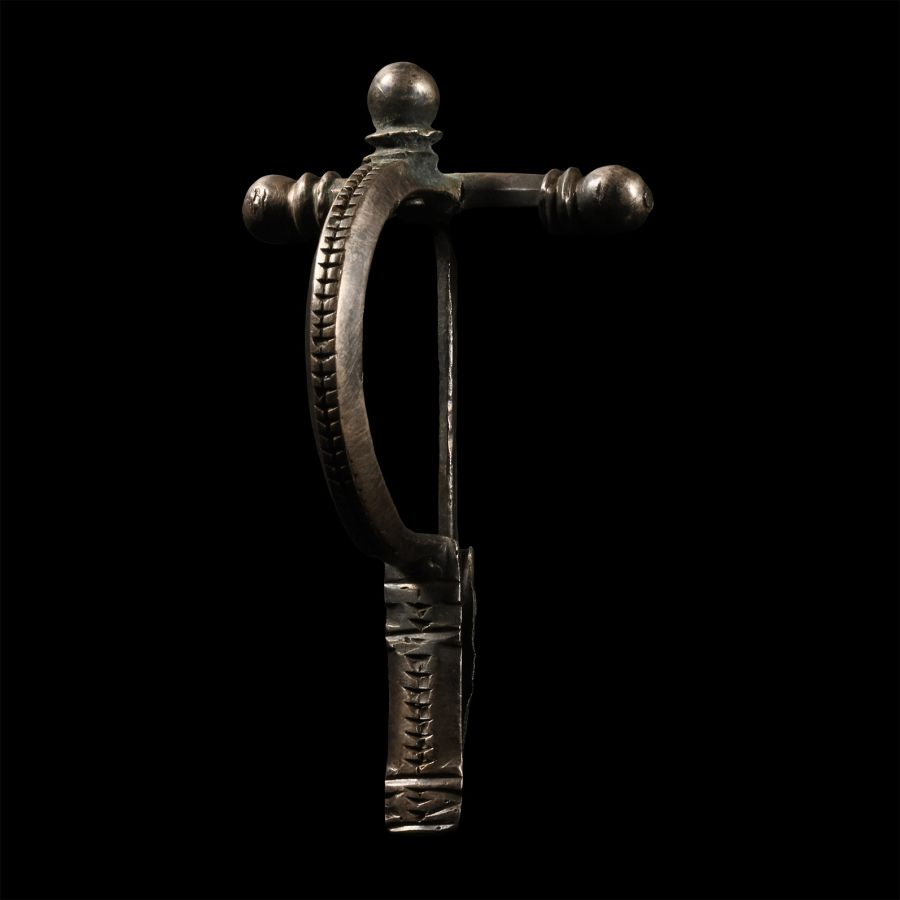
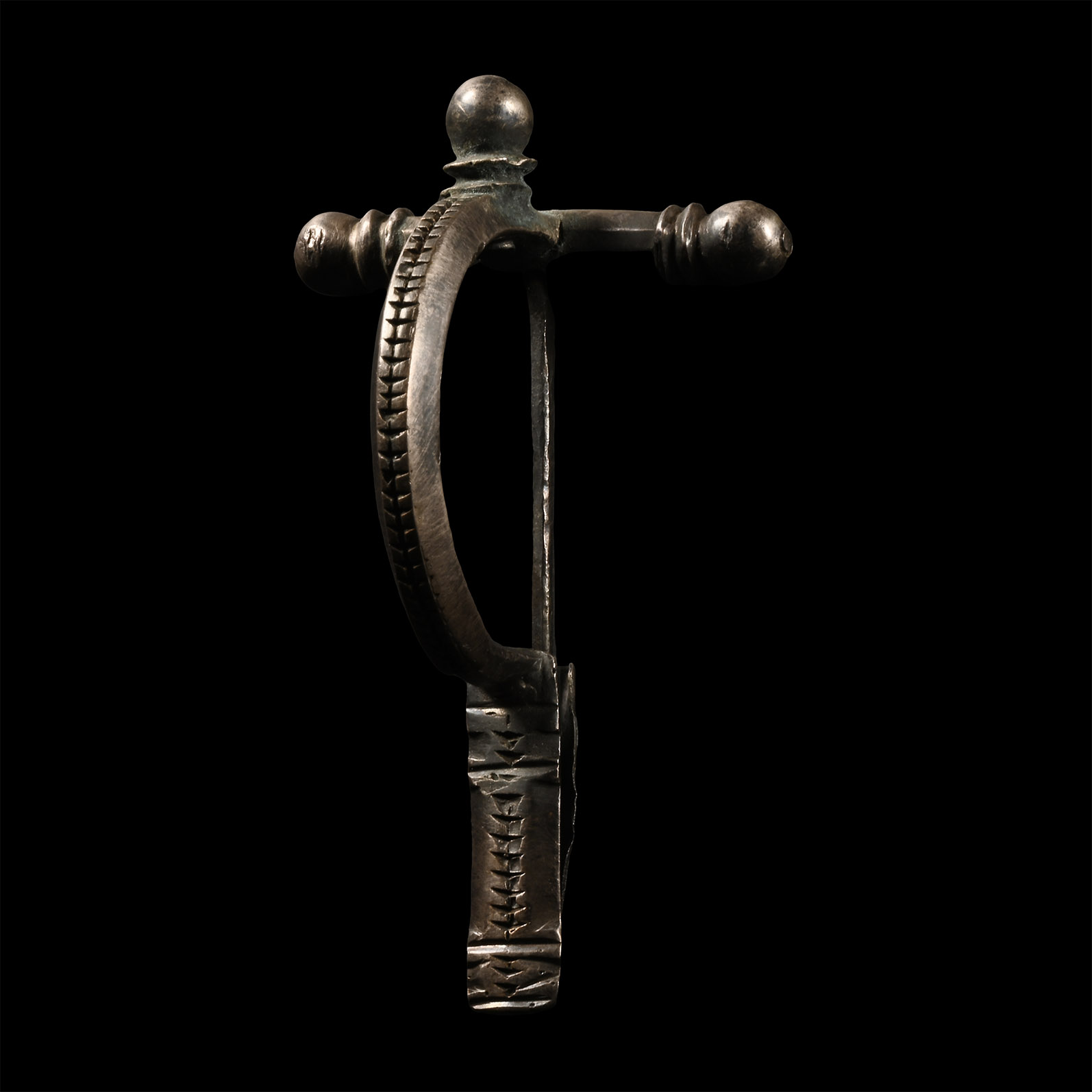
Roman Silver Crossbow Brooch
3RD CENTURY A.D.
2 3/8 in. (16.5 grams, 60 mm).
With round-section crossbar and collared knop finials, deep D-section bow with vertical band of triangles extending along the outer face and onto the rectangular footplate with chamfered long edges; separate collared knop above the bow; hinged pin housed in catchplate to reverse. [No Reserve]
ProvenanceOn the European art market before 2000.
Ex collection of a Surrey, UK, gentleman; acquired on the UK art market.
Cf. Hattatt, R., Brooches of Antiquity, Oxford, 1987, item 1260.
FootnotesThis early form of crossbow brooch shows its origins in the P-shaped bow brooch type.
CONDITIONTimeLine Auctions follows a vetting process to ensure the authenticity and legality of all items, reinforcing our commitment to integrity and responsible trading. Each antiquity, antique, and coin lot undergoes thorough examination by a vetting committee of at least ten external specialists, professional trade association members, scientists, and archaeologists: Our Vetting Process
AUCTIONS:
TimeLine is a leading auction house specialising in antiquities, ancient art, collectables, natural history, coins, medals, and books. Our auctions offer museums, collectors, historians, and enthusiasts the opportunity to acquire unique and historically significant pieces.
-
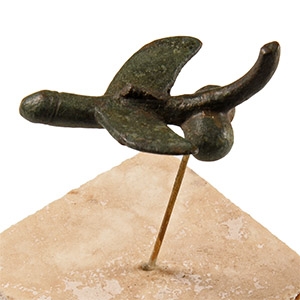
Roman Bronze Flying Phallus
2nd-3rd century A.D.Sold for (Inc. bp): £234
Amuletic model phallus with swept lateral wings; mounted on a custom-made stand. 99 grams total, 67 mm high including stand
From a collection acquired on the UK art market from various auction houses and collections mostly before 2000. From an important Cambridgeshire estate; thence by descent. -
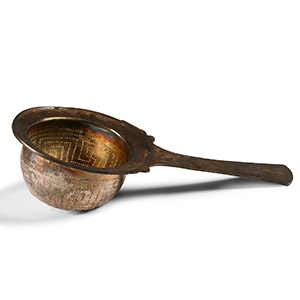
Roman Silver Wine Strainer
Circa 3rd century A.D.Sold for (Inc. bp): £975
Barrel-shaped body with flared rim, stepped rear plaque and flat-section handle; the body with pierced meander pattern; fragmentary base with scrolled tendrils and other patterns. 100 grams, 17.7 cm
Acquired 1990s-early 2000s. East Anglian private collection. Property of a Essex gentleman. -
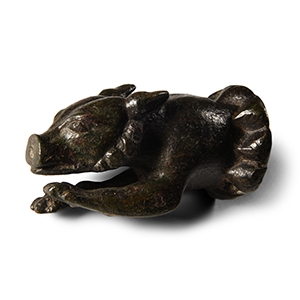
Roman Bronze Dog Chariot Fitting
2nd-4th century A.D.Sold for (Inc. bp): £169
Hollow-formed fitting of a leaping hound with forelegs extended; segmented base with two fixing holes. 148 grams, 70 mm
From a collection acquired on the UK art market from various auction houses and collections mostly before 2000. From an important Cambridgeshire estate; thence by descent.
