
Loading, please wait...
LOT 0705
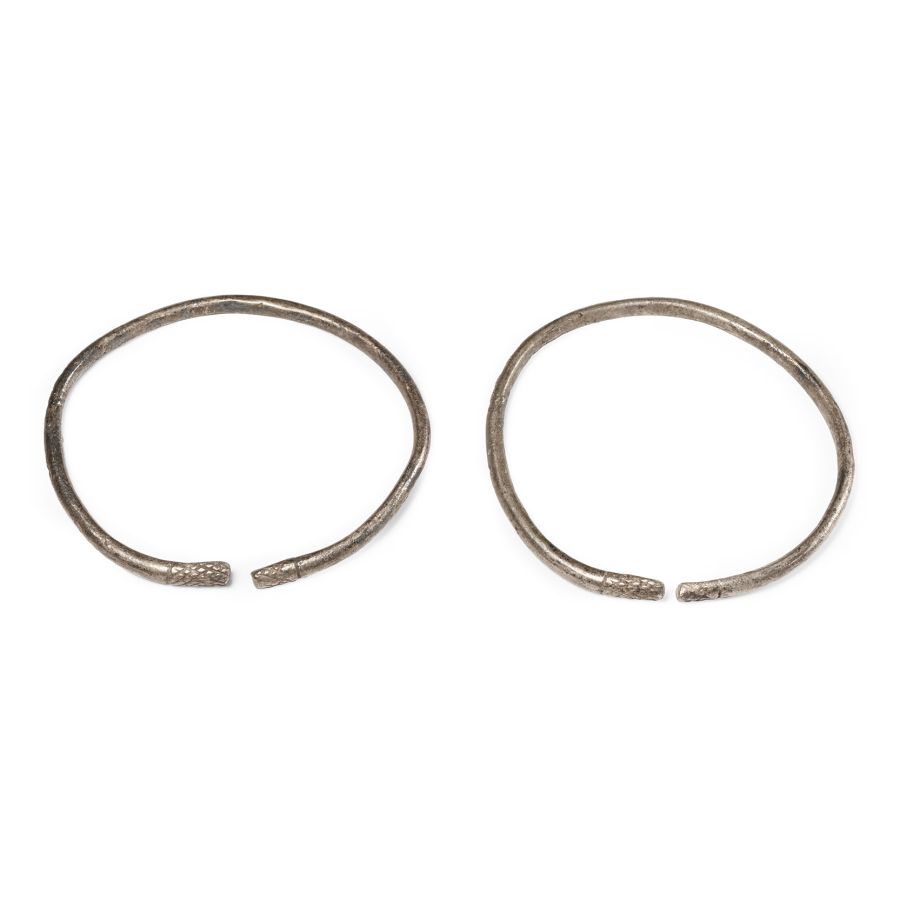
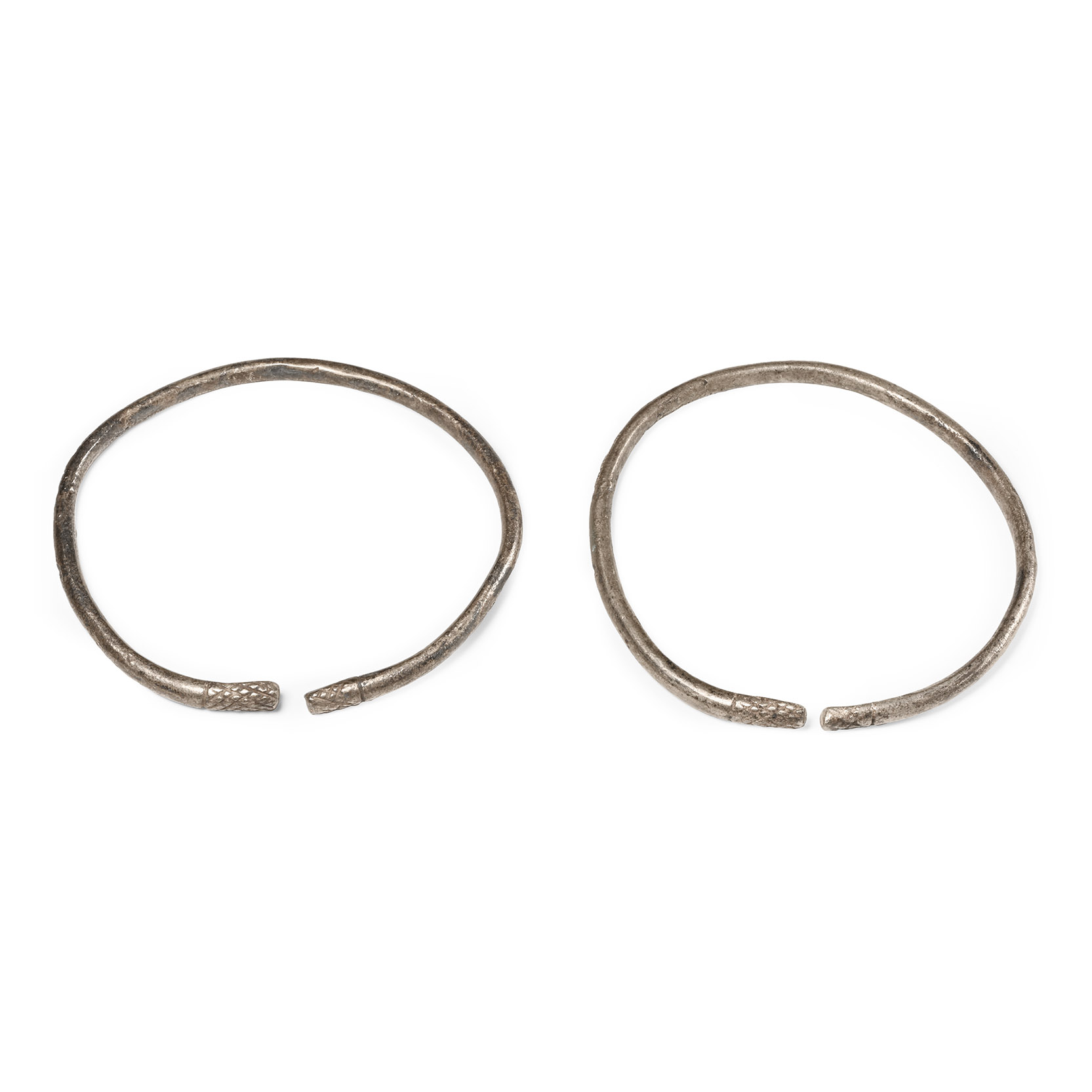
Roman Silver Bracelet Pair
2ND-3RD CENTURY A.D.
2 3/8 in. (27.6 grams total, 60-62 mm).
Group of two penannular bracelets, each with a round-section shank, cross-hatched finials. [2, No Reserve]
ProvenancePrivate collection, Arundel, West Sussex, UK, 1975-late 1990s.
LiteratureCf. Ruseva-Slokoska, L., Roman Jewellery, Sofia, 1991, item 171, for type.
CONDITIONTimeLine Auctions follows a vetting process to ensure the authenticity and legality of all items, reinforcing our commitment to integrity and responsible trading. Each antiquity, antique, and coin lot undergoes thorough examination by a vetting committee of at least ten external specialists, professional trade association members, scientists, and archaeologists: Our Vetting Process
AUCTIONS:
TimeLine is a leading auction house specialising in antiquities, ancient art, collectables, natural history, coins, medals, and books. Our auctions offer museums, collectors, historians, and enthusiasts the opportunity to acquire unique and historically significant pieces.
-
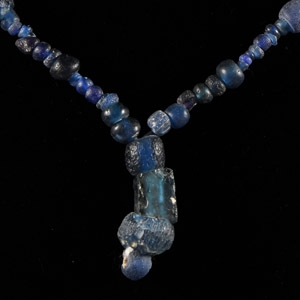
Roman Blue Glass Bead Necklace String
1st century A.D. and laterSold for (Inc. bp): £182
Restrung group of graduated annular, oblate and other beads with cluster forming the centrepiece. 12.9 grams, 35 cm
Acquired 1980-2015. Ex Abelita family collection. -
.jpg)
Roman Silver Statuette of a Genius
1st century B.C.-1st century A.D.Sold for (Inc. bp): £546
Advancing wearing an ankle-length toga drawn over the head as a cowl, the left hand supporting a partly-unfurled scroll; mounted on a custom-made stand. 149 grams total, 88 mm high including stand
From a collection acquired on the UK art market from various auction houses and collections mostly before 2000. From an important Cambridgeshire estate; thence by descent.
The statuette represents a priest dressed in a tunic and large cloak, the hem of which covers the head (capite velato). His right hand had to hold a portion of incense, while with his left hand he holds a container for the same incense. -
.jpg)
Roman Terracotta Oil Lamp with Head of Medusa
2nd century A.D.Sold for (Inc. bp): £221
Mould-made with convex shoulder separated from the concave discus by a narrow band of triangles and ovules, single groove around the discus, lower filling-hole, burn marks on the nozzle, flat undefined base, discus decorated with the head of Medusa within a laurel. 50 grams, 86 mm
Fine condition.
German collection formed since 1970. Acquired on the UK art market. Property of an Essex gentleman.
A Loeschcke VIII variant. The form and decoration suggest a Hadrianic date, at which time Medusa was one of the most popular subjects depicted on lamps. In ancient mythology, Medusa was one of three monstrous winged female creatures who had venomous snakes living in her hair. The story of Medusa is elaborated by the Roman poet Ovid in his Metamorphosis, which explains that Medusa was a beautiful woman until she had sex with Poseidon in Athena’s temple. Athena exacted punishment on Medusa, turning her into a monstrous creature with a glare that turned all who gazed into her eyes to stone. Medusa was eventually beheaded by the Greek hero Perseus, who used her head as a weapon which, even after being hewn from Medusa's body, could turn his enemies to stone. Perseus later presented Medusa's head to the goddess Athena, which she in turn weaponised, placing it on her shield. In classical antiquity, representations of the head of Medusa appeared in the apotropaic device known as the Gorgoneion, designed to ward-off evil and bad luck.
