
Loading, please wait...
LOT 0908
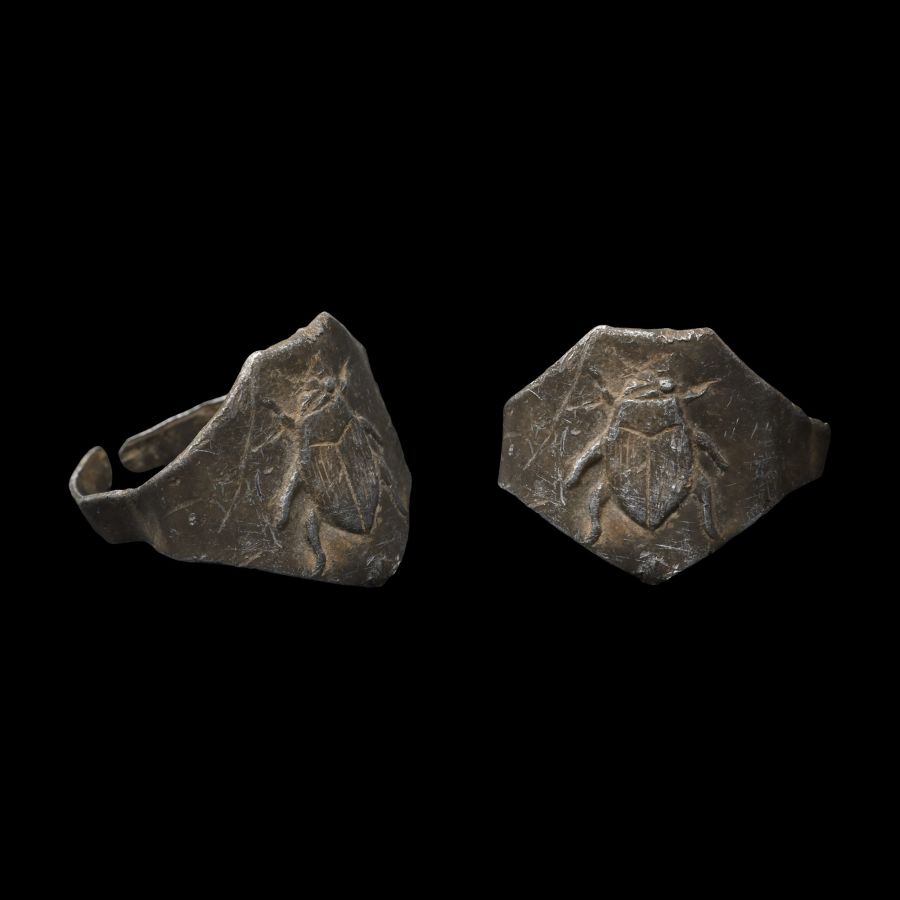
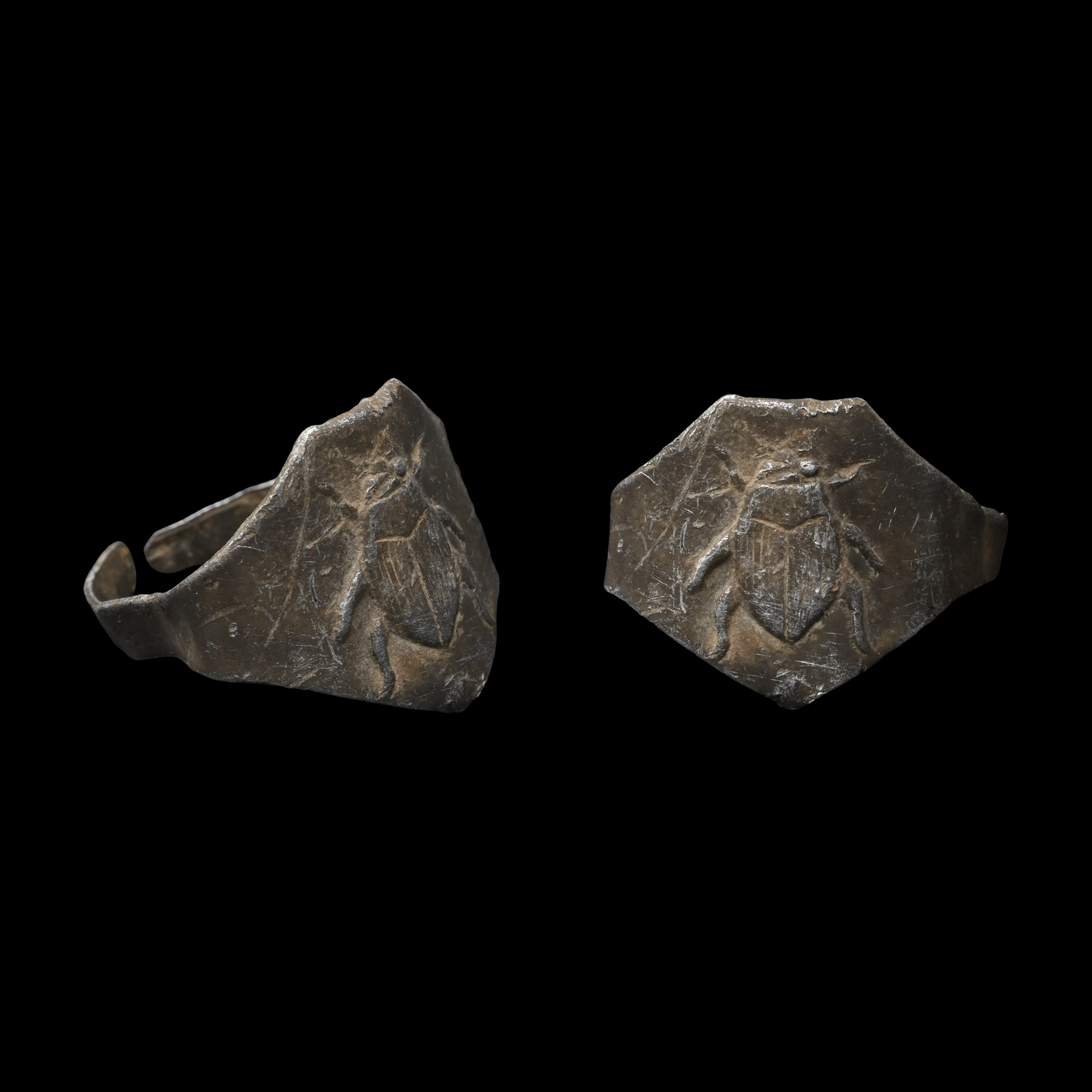
Roman Silver Beetle Ring
1ST-4TH CENTURY A.D.
3/4 in. (0.43 grams, 20.35 mm overall, 15.99 mm internal diameter (approximate size British I 1/2, USA 4 1/2, Europe 8.07, Japan 7)).
Flat-section penannular body, angled bezel with a low-relief beetle motif. [No Reserve]
ProvenanceFrom the collection of a gentleman, acquired on the London art market in the 1990s.
CONDITIONTimeLine Auctions follows a vetting process to ensure the authenticity and legality of all items, reinforcing our commitment to integrity and responsible trading. Each antiquity, antique, and coin lot undergoes thorough examination by a vetting committee of at least ten external specialists, professional trade association members, scientists, and archaeologists: Our Vetting Process
AUCTIONS:
TimeLine is a leading auction house specialising in antiquities, ancient art, collectables, natural history, coins, medals, and books. Our auctions offer museums, collectors, historians, and enthusiasts the opportunity to acquire unique and historically significant pieces.
-
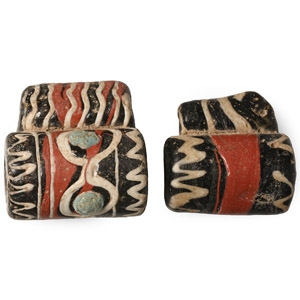
Roman or Later Mosaic Glass Bead Group
1st-4th century A.D. or laterSold for (Inc. bp): £130
Comprising two double shape lampwork-decorated glass beads, considered as scroll-holders- a pendant to hold a prayer on rolled paper inside the large part- threaded as a pendant. 16.28 grams total, 20-21 mm
Acquired in London or Japan, early 1980s. Property of a London, UK, gentleman. -
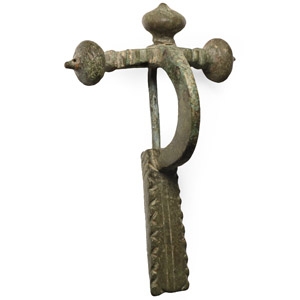
Roman Bronze Crossbow Brooch
Circa 4th century A.D.Sold for (Inc. bp): £104
With three onion-shaped knops to the crossbar and pierced moulding to the upper face, deep bow, trapezoidal foot with notched edges and longitudinal lines; integral catch; hinged pin to reverse; Keller Type 4. 37.8 grams, 73 mm
From a private Tyneside collection, formed since the early 2000s. -
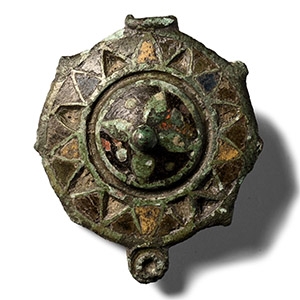
Roman Enamelled Bronze Umbonate Plate Brooch
2nd century A.D.Sold for (Inc. bp): £72
Discoid plate brooch with slightly domed body and central boss, lateral lugs; surface divided into cloisonné cells for addition of enamel ornament; remains of catch to reverse. 9.39 grams, 37 mm
Ex DRG Coins and Antiquities, Bishops Stortford, Essex, UK. From the private collection of a West London, UK, gentleman, formed since the early 2000s. Accompanied by a hand written dealer's ticket.
