
Loading, please wait...
LOT 0942
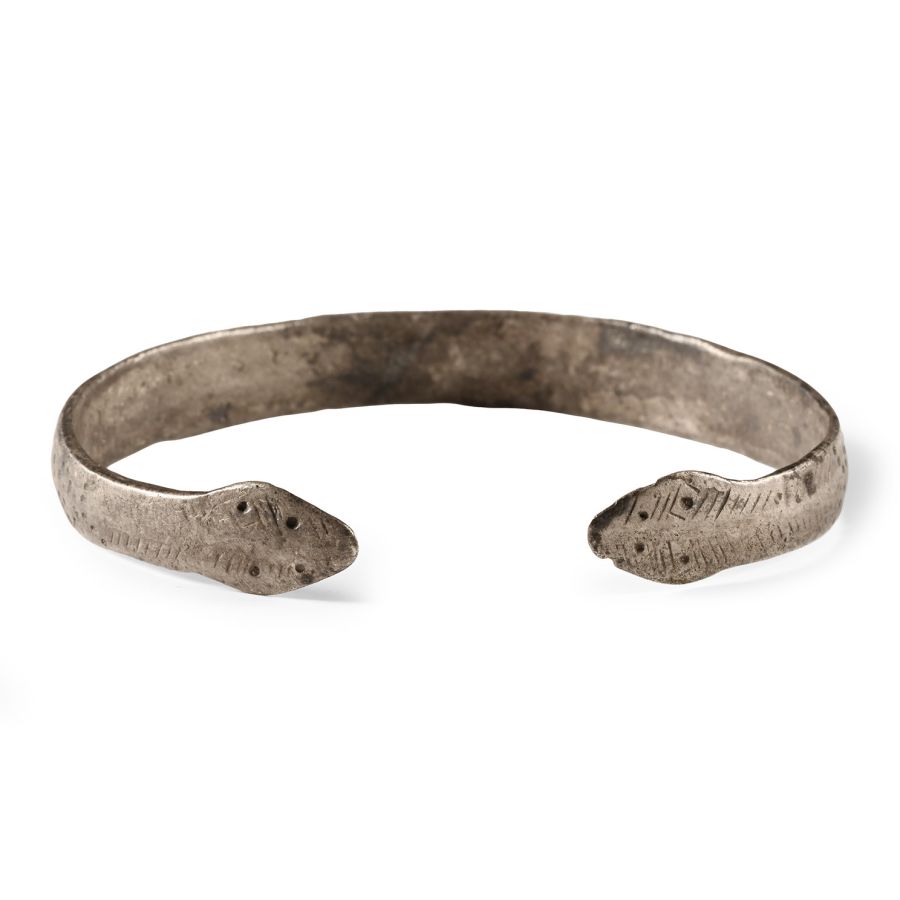
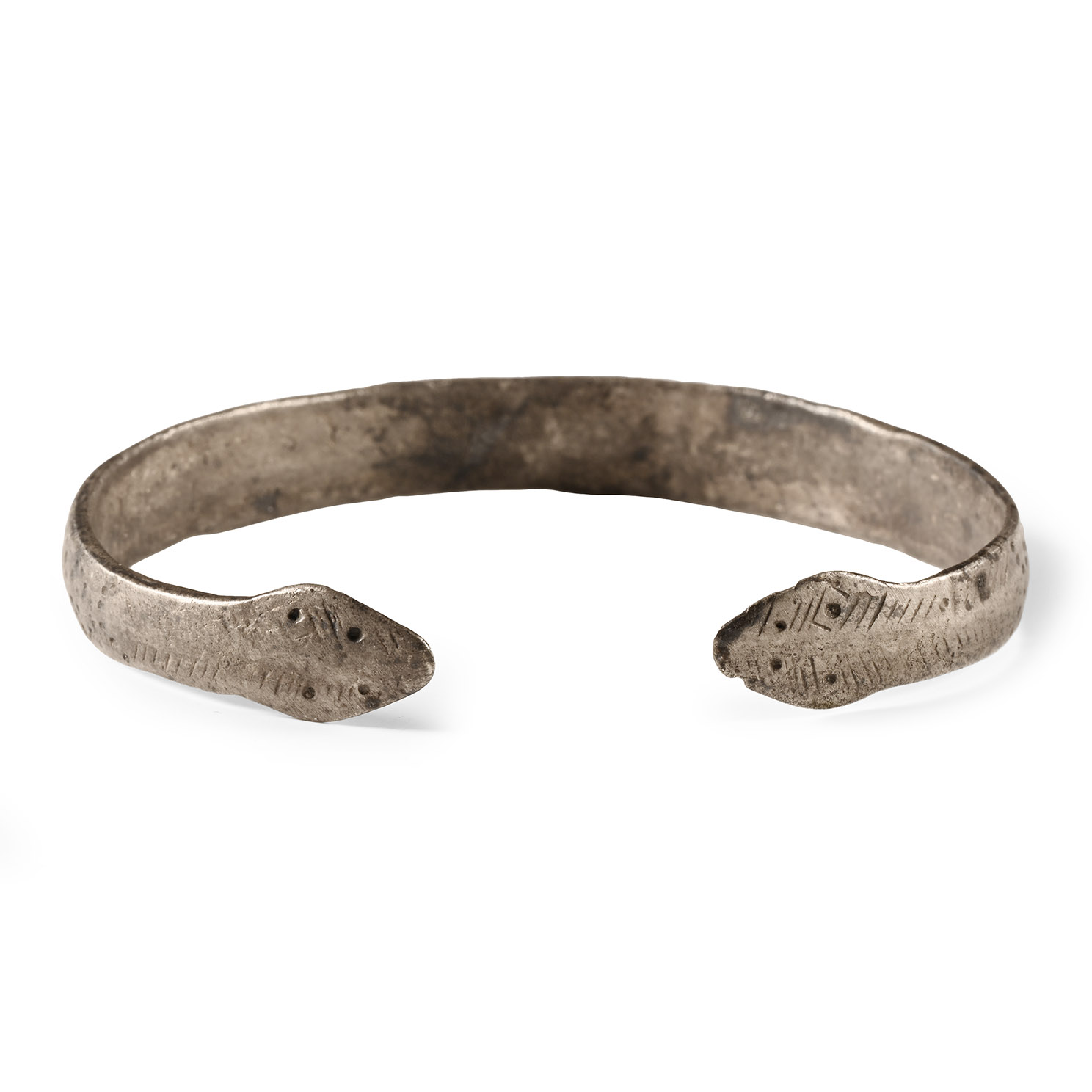
Roman Silver Armilla Snake Bracelet
2ND-3RD CENTURY A.D.
2 3/8 in. (17.7 grams, 60 mm).
With broad D-section shank and lobe terminals with snake-head detailing, incised lines and pointillé crosses to the neck, pointillé eyes. [No Reserve]
ProvenancePrivate collection, Arundel, West Sussex, UK, 1975-late 1990s.
LiteratureCf. Ruseva-Slokoska, L., Roman Jewellery, Sofia, 1991, item 161, for similar.
CONDITIONTimeLine Auctions follows a vetting process to ensure the authenticity and legality of all items, reinforcing our commitment to integrity and responsible trading. Each antiquity, antique, and coin lot undergoes thorough examination by a vetting committee of at least ten external specialists, professional trade association members, scientists, and archaeologists: Our Vetting Process
AUCTIONS:
TimeLine is a leading auction house specialising in antiquities, ancient art, collectables, natural history, coins, medals, and books. Our auctions offer museums, collectors, historians, and enthusiasts the opportunity to acquire unique and historically significant pieces.
-
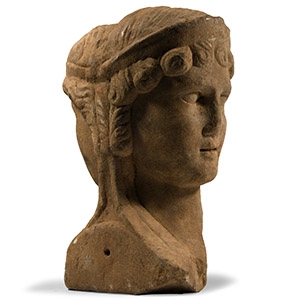
Roman Marble Janiform Herm Head of Ariadne and a Maenad
1st-2nd century A.D.Estimate: £20,000 - 30,000 (‡+bp*)
Opening Bid: £5,556
Carved architectural element depicting a double herm comprising: a diademed female bust with long wavy hair framing the face, slender features with small mouth and raised lids; the other side with a diademed female with hair arranged in neat curls on the forehead, large eyes and small mouth, taenia shown on each side of the neck; base reworked with drilled sockets for mounting. 12.6 kg, 29 cm high
Old collection, acquired in the 1970s. Acquired by inheritance from Mr N.S. Accompanied by an academic report by Dr Marina Mattei and Dr Laura Maria Vigna. This lot has been checked against the Interpol Database of stolen works of art and is accompanied by search certificate no.12084-211893.
The head with elaborately curled hair and diadem could represent Ariadne, as shown by comparisons with a fragment of a two-faced herm with bearded Dionysus and Ariadne preserved in the Antiquarium Ostiense, dated to the lmperial Roman age. The heads could be interpreted either as Ariadne and a Maenad, or as two Maenads being characterised by the diadem and long taeniae. The association of these figures with Dionysus is congruent with the typology of the herm, which refers to rural places and theatres. Numerous herms in fact attest that this type of sculpture was used in contexts linked to Dionysus and his sacred procession as well as, obviously, the representation of Ariadne, his female partner and double. The example fits into the class of domestic sculpture with a decorative function, mostly used to adorn peristyles and viridaria; the type placed at the crown of columns and pillars is quite documented, in particular in the version with the head of Dionysus contrasted with that of Ariadne or a Maenad. -
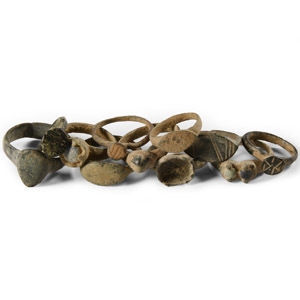
Roman and Byzantine Bronze Ring Group
Circa 3rd-16th century A.D.Sold for (Inc. bp): £111
Including trumpet bezel, claw-setting and other types. 30 grams total, 18-26 mm
Ex C. Sullivan collection, UK, 1990s. -
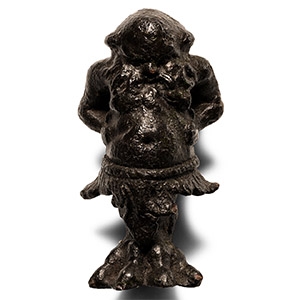
Roman Bronze Silenus Statuette Casket Fitting
2nd century B.C.-1st century A.D.Sold for (Inc. bp): £338
Standing wearing a hide skirt held up with rope, lion's claw foot below. arched bracket to rear. 124 grams, 63 mm
From a collection acquired on the UK art market from various auction houses and collections mostly before 2000. From an important Cambridgeshire estate; thence by descent.
