
Loading, please wait...
LOT 1002
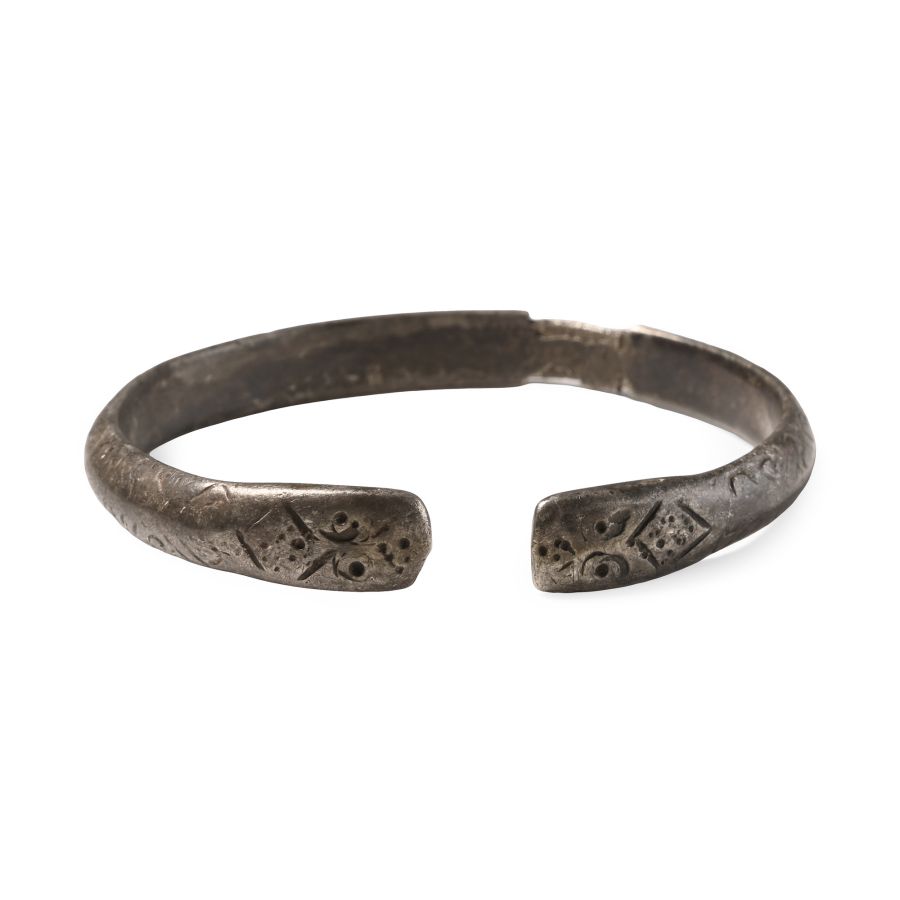
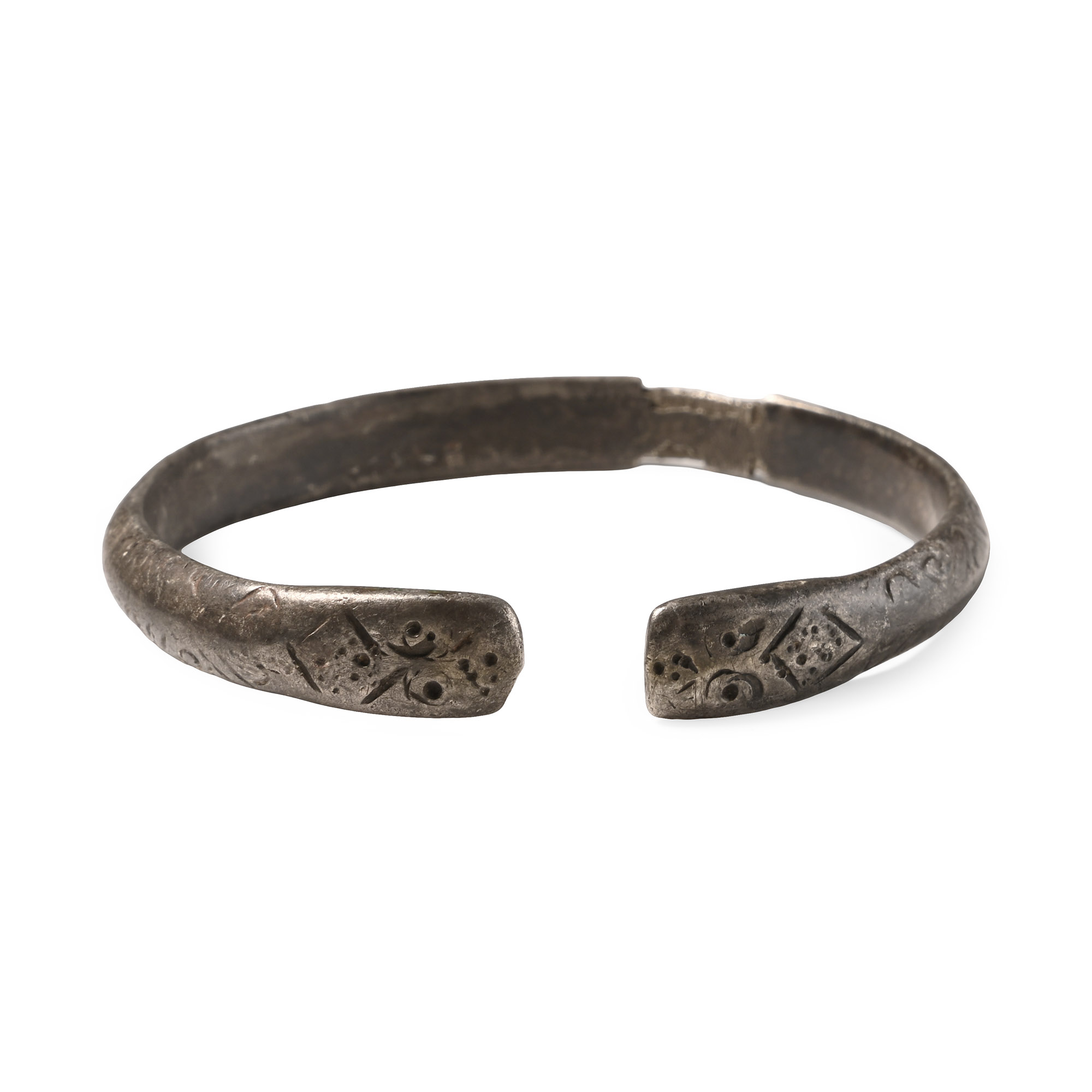
Roman Silver Armilla Bracelet
1ST-2ND CENTURY A.D.
2 1/4 in. (25 grams, 59 mm).
D-shaped in section and penannuar in form with flattened terminals; incised beast-head detailing to the finials and foliage motifs to the shank. [No Reserve]
ProvenanceAcquired on the UK art market in the late 20th century A.D.
From the private collection of the late David King (1940-2024), Hoddesdon, Hertfordshire, UK.
TimeLine Auctions follows a vetting process to ensure the authenticity and legality of all items, reinforcing our commitment to integrity and responsible trading. Each antiquity, antique, and coin lot undergoes thorough examination by a vetting committee of at least ten external specialists, professional trade association members, scientists, and archaeologists: Our Vetting Process
AUCTIONS:
TimeLine is a leading auction house specialising in antiquities, ancient art, collectables, natural history, coins, medals, and books. Our auctions offer museums, collectors, historians, and enthusiasts the opportunity to acquire unique and historically significant pieces.
-
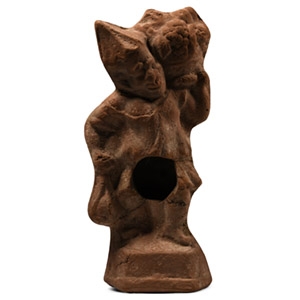
Romano-Egyptian Terracotta Figure of a Slave with Fruit Basket
1st century A.D.Estimate: £250 - 350 (+bp*)
Opening Bid: £120
Hollow-formed figure of a servant with grotesque facial features, pointed cap and a short tunic, carrying a pouch in the right hand and shoulders an overflowing fruit basket on the left; a large recess between his legs may be for the insertion of an oversized model phallus; pierced lug to rear of neck for suspension. 286 grams, 17.5 cm
Acquired from Galerie Puhze, Freiburg, between 2002 and 2010. From the collection of R. L., Lower Saxony. Ex Gorny & Mosch, auction 300, Munich, no.75. Accompanied by a certificate from Galerie Günter Puhze and a German export licence. -
.jpg)
Roman Silver Applique Mask
2nd-4th century A.D.Sold for (Inc. bp): £338
Appliqué with repoussé detailing, mask of Alexander the Great or Dionysus with diadem to his brow. 3.77 grams, 22 mm
Acquired on the London art market in the late 1980s-1990s. From the family collection of an East London, UK, gentleman.
Similar applications in bronze or silver (sometimes even in gold) decorated the triclinia of rich aristocrats, or the precious furnishings in fine wood of the furniture of the Villas. -
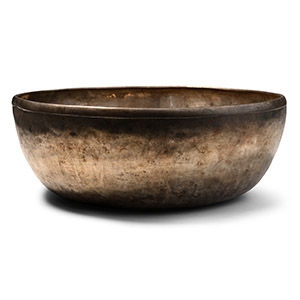
Roman or Gandharan Silver Bowl
Circa late 1st century B.C.-early 1st century A.D.Estimate: £1,500 - 2,000 (+bp*)
Opening Bid: £750
Squat in profile with gently domed base, curved sidewall with carination below the rim. 233 grams, 18.1 cm
Acquired from a private UK collection prior to 1979. Ex Julian Sherrier collection, a leading figure in Gandharan art. with Christie's, New York, sale 2337, 14th September 2010, no.51 (part). Accompanied by the original Christie's bar code label.
