
Loading, please wait...
LOT 0823
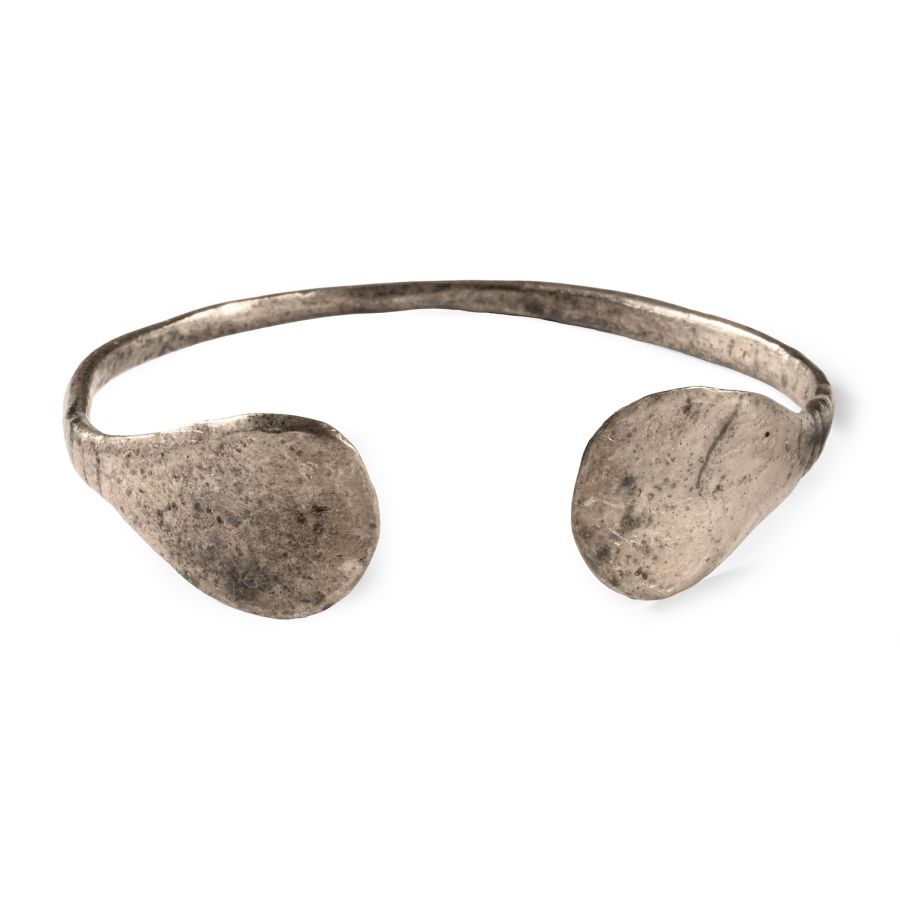
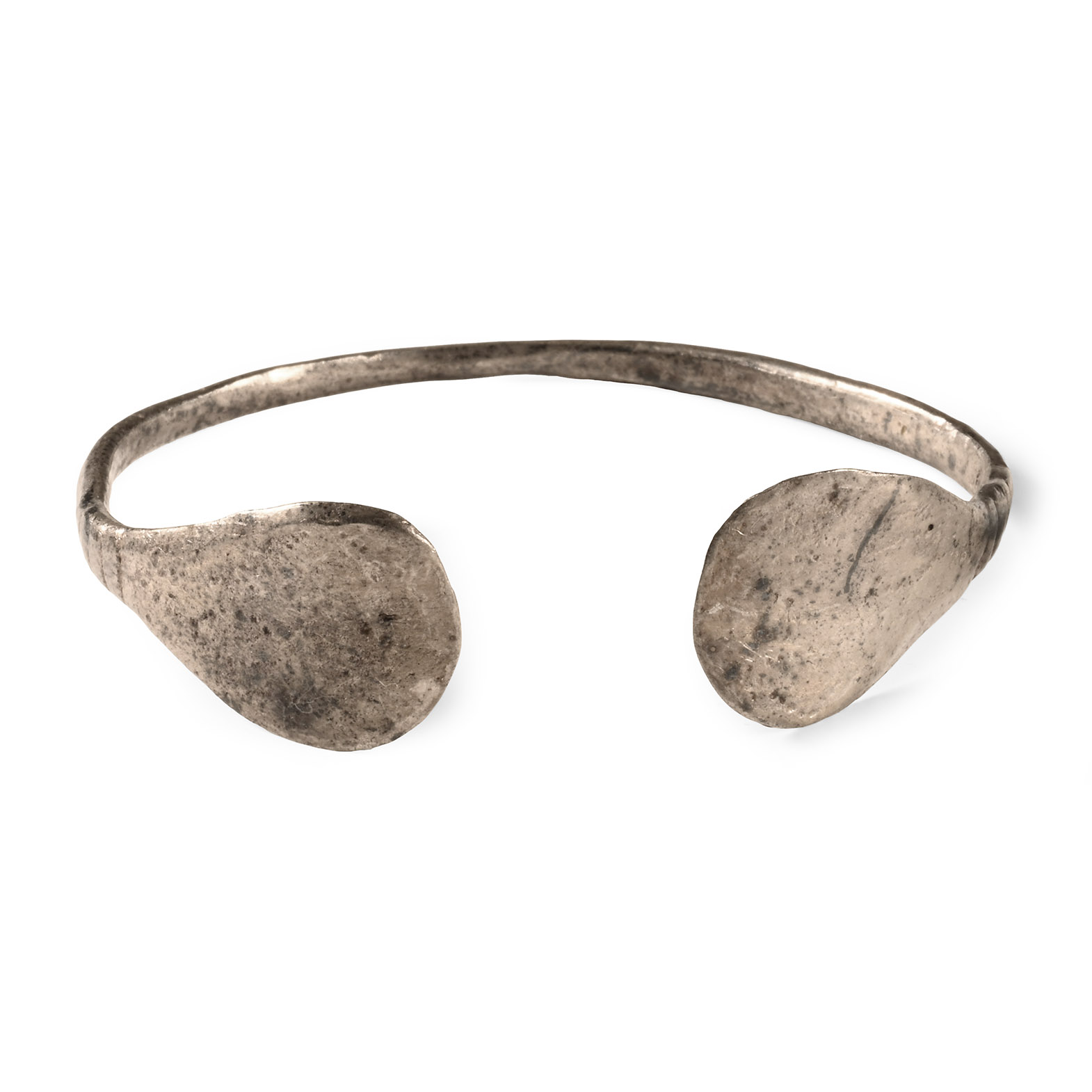
Roman Silver Armilla Bracelet with Paddle Terminals
2ND-3RD CENTURY A.D.
2 1/4 in. (11.7 grams, 58 mm).
With slender D-section shank flaring to large lobe terminals, transverse incised lines to the neck, pointillé coiled tendril design. [No Reserve]
ProvenancePrivate collection, Arundel, West Sussex, UK, 1975-late 1990s.
LiteratureCf. Ruseva-Slokoska, L., Roman Jewellery, Sofia, 1991, item 161, for similar.
CONDITIONTimeLine Auctions follows a vetting process to ensure the authenticity and legality of all items, reinforcing our commitment to integrity and responsible trading. Each antiquity, antique, and coin lot undergoes thorough examination by a vetting committee of at least ten external specialists, professional trade association members, scientists, and archaeologists: Our Vetting Process
AUCTIONS:
TimeLine is a leading auction house specialising in antiquities, ancient art, collectables, natural history, coins, medals, and books. Our auctions offer museums, collectors, historians, and enthusiasts the opportunity to acquire unique and historically significant pieces.
-
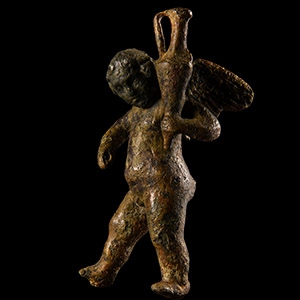
Roman Bronze Statuette of Eros
Circa 1st-2nd century A.D.Sold for (Inc. bp): £572
Eros modelled in the round, advancing, carrying an amphora on his left shoulder, wings spread to the rear, right hand open to accept a bow(?); mounted on a custom-made stand with brass nameplate. 160 grams total, 12.5 cm including stnad
Ex Phillips UK in 1998. From a collection acquired on the UK art market from various auction houses and collections mostly before 2000. From an important Cambridgeshire estate; thence by descent. -
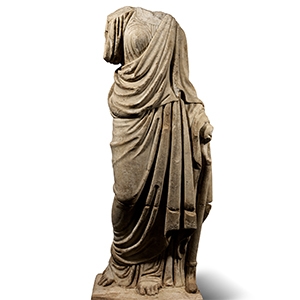
Marble Statue of a Goddess
Roman, 3rd century A.D. or laterSold for (Inc. bp): £5,200
Possibly depicting Laetitia, the goddess of joy, standing in a contrapposto pose with left arm resting on an anchor, right arm aloft; wearing a chiton and himation, feet emerging from underneath the hem; lower part of a chignon visible on the back; repaired. 146 kg, 104 cm
From a private French collection. Acquired in France before 1993. From the personal collection of Gordon Gridley. Gordon Gridley was a founding member of the Camden Passage antique dealers’ association. Trading in antiques from the late 1960s, he opened his first shop in 1971 and remained a well-known and respected figure in the antiques world until his retirement. This lot has been checked against the Interpol Database of stolen works of art and is accompanied by search certificate no.12087-214012. -
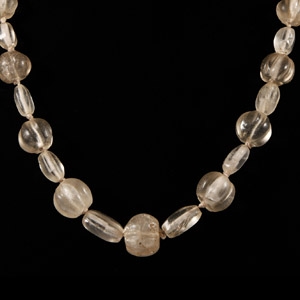
Roman Rock Crystal Bead Necklace
2nd-3rd century A.D.Sold for (Inc. bp): £468
Restrung group of clear quartz melon bead and hexagonal-section tubular beads. 103 grams, 53.5 cm long
with a London, UK gallery 1971.
