
Loading, please wait...
LOT 0773
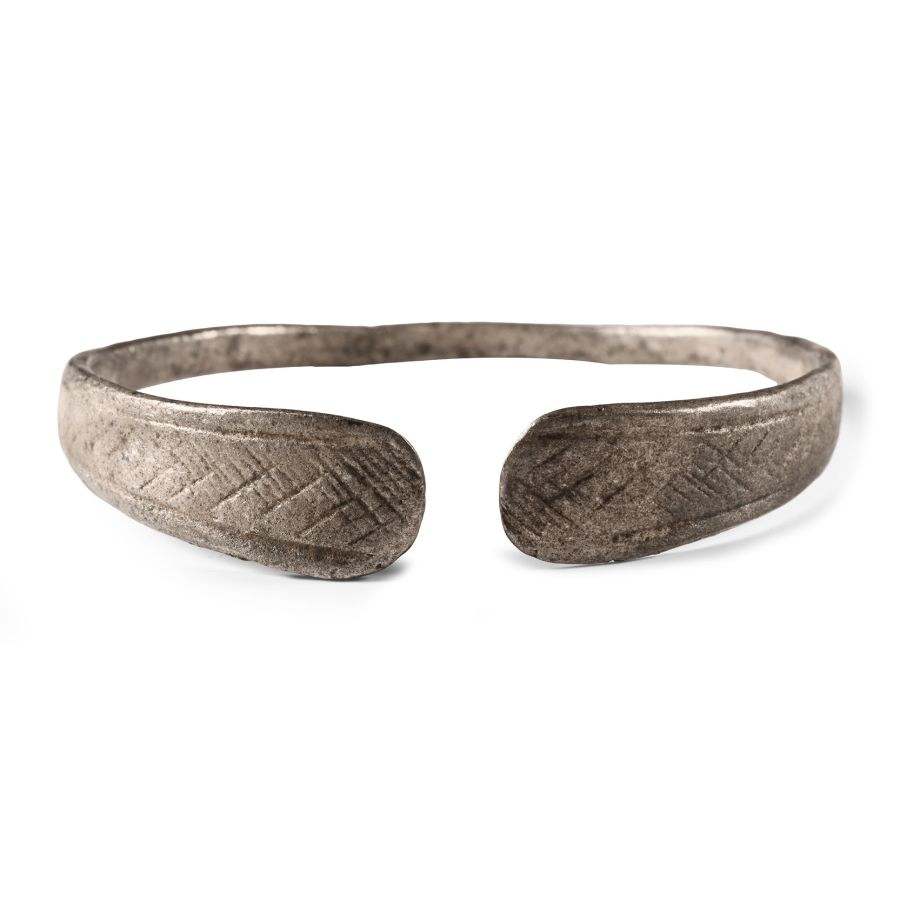
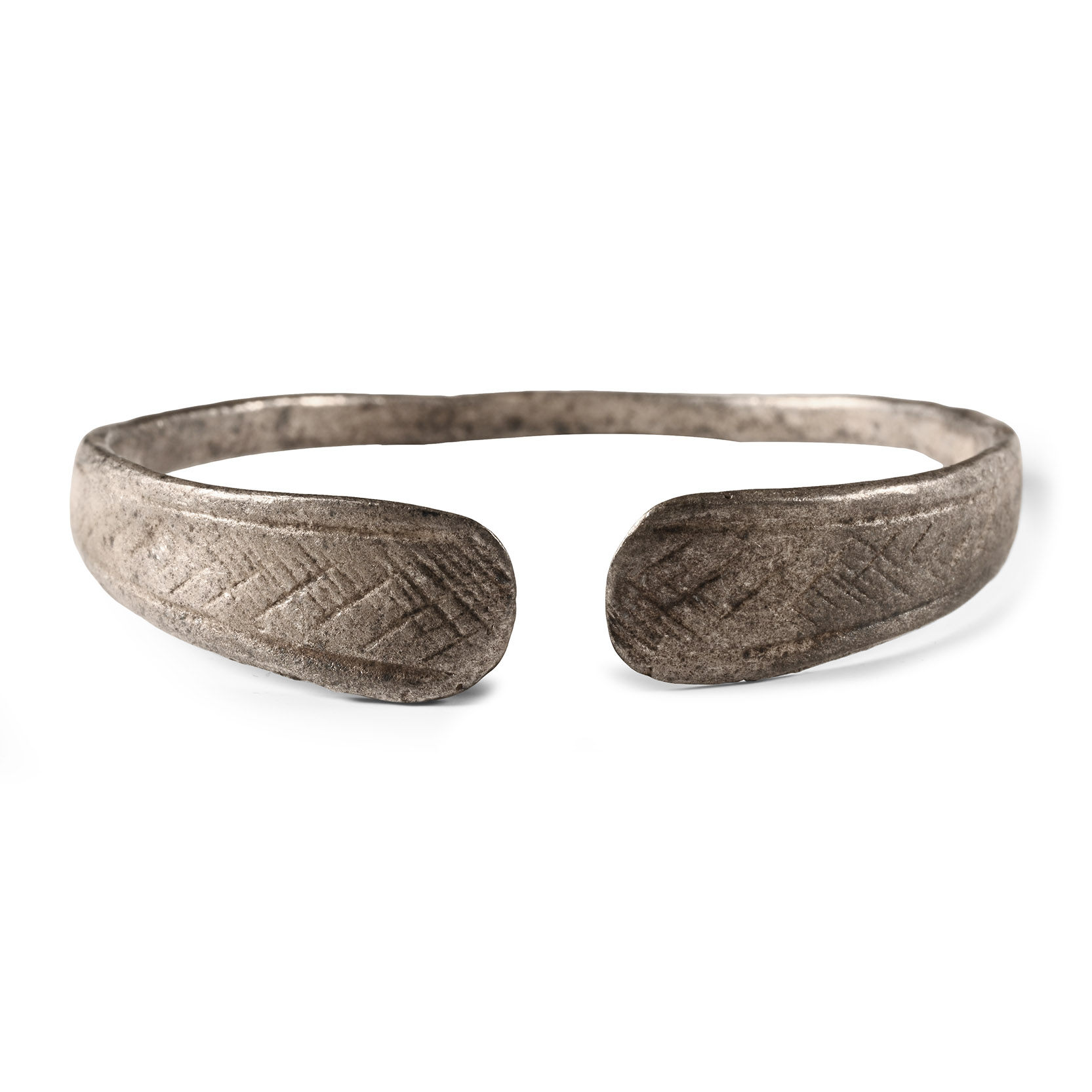
Roman Silver Armilla Bracelet with Hatched Paddle Terminals
2ND-3RD CENTURY A.D.
2 in. (11.9 grams, 51 mm).
With slender round-section shank flaring to lobe terminals, panel of hatching to each lobe. [No Reserve]
ProvenancePrivate collection, Arundel, West Sussex, UK, 1975-late 1990s.
LiteratureCf. Ruseva-Slokoska, L., Roman Jewellery, Sofia, 1991, item 172, for type.
CONDITIONTimeLine Auctions follows a vetting process to ensure the authenticity and legality of all items, reinforcing our commitment to integrity and responsible trading. Each antiquity, antique, and coin lot undergoes thorough examination by a vetting committee of at least ten external specialists, professional trade association members, scientists, and archaeologists: Our Vetting Process
AUCTIONS:
TimeLine is a leading auction house specialising in antiquities, ancient art, collectables, natural history, coins, medals, and books. Our auctions offer museums, collectors, historians, and enthusiasts the opportunity to acquire unique and historically significant pieces.
LOT 0773
Roman Silver Armilla Bracelet with Hatched Paddle Terminals
Sold for (Inc. bp): £85
-
Roman 'Gloucestershire' Mosaic Panel
Circa 2nd-3rd century A.D.Sold for (Inc. bp): £1,105
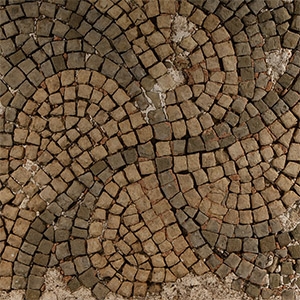
Irregular mosaic fragment of beige, cream and grey tesserae with radiating trumpet-shaped swirls; mounted in a modern rectangular matrix. 33 kg, 76 cm high
Found Gloucestershire, UK. From a collection acquired on the UK art market from various auction houses and collections mostly before 2000. From an important Cambridgeshire estate; thence by descent.
A mosaic found in Cirenchester (insula IX, Chester Street) shows panels defined by a dark blue-grey single fillet with an additional double fillet parallel to it on a longer axis, having an overall scheme of running pelta-pattern. Each pelta is outlined in dark-blue grey and infilled with red, white and dark blue grey at the centre. -
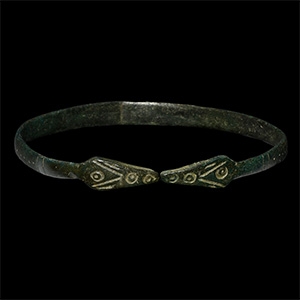
Roman Bronze Armilla Bracelet
1st-2nd century A.D.Sold for (Inc. bp): £195
With snake-head terminals, the heads with pellet-in-circle decoration, the body with bands of transverse lines and punched pellets. 8.6 grams, 59 mm
Very fine condition.
Acquired in the 1980s. From a North West London collection. -
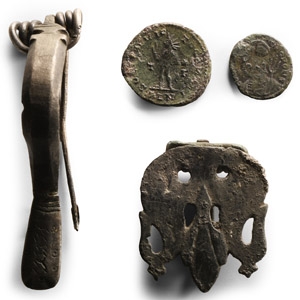
Roman Silver and Bronze Artefact and Coin Group
1st-4th century A.D.Sold for (Inc. bp): £39
Mixed group including a vine-leaf plate brooch, repaired P-shaped bow brooch, and silver coin of Constantine and another. 39.1 grams total, 17-69 mm
From a Suffolk collection. Property of a Scottish collector, acquired in 2013.
