
Loading, please wait...
LOT 0711
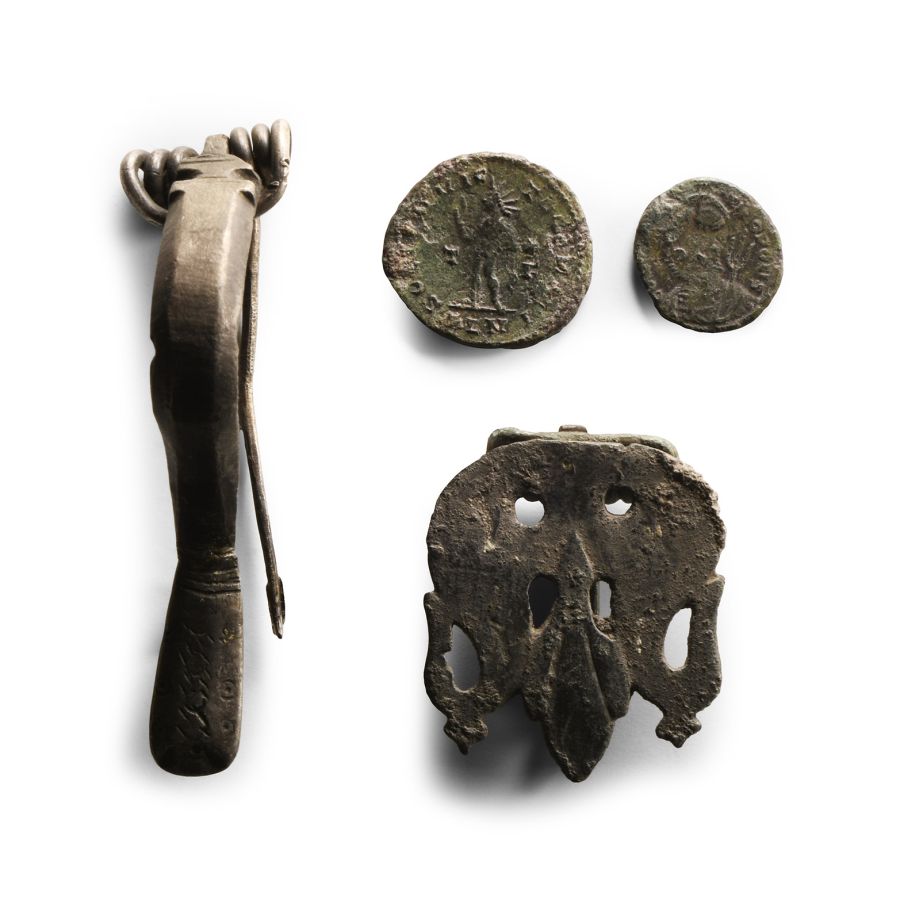
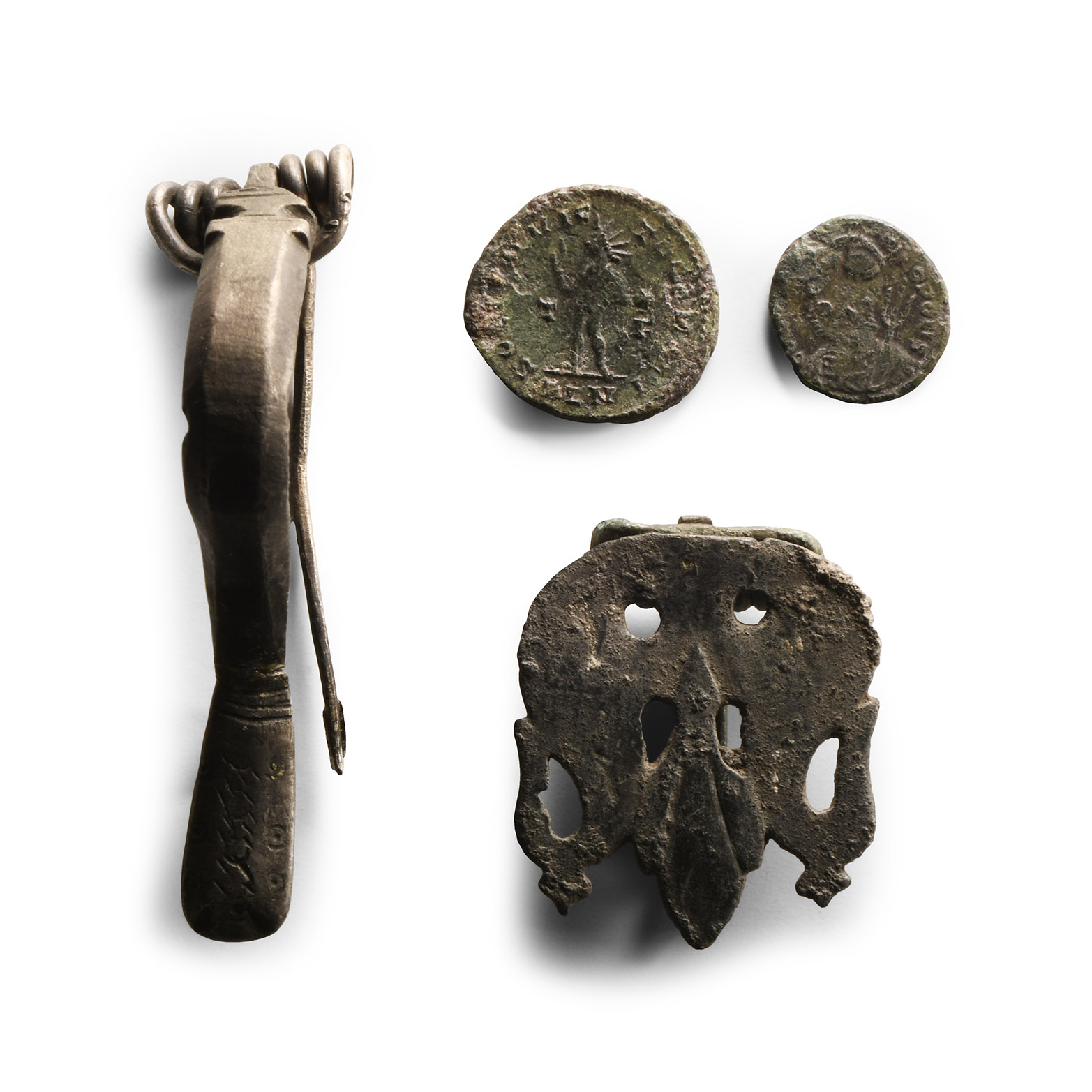
Roman Silver and Bronze Artefact and Coin Group
1ST-4TH CENTURY A.D.
5/8 - 2 3/4 in. (39.1 grams total, 17-69 mm).
Mixed group including a vine-leaf plate brooch, repaired P-shaped bow brooch, and silver coin of Constantine and another. [4, No Reserve]
ProvenanceFrom a Suffolk collection.
Property of a Scottish collector, acquired in 2013.
TimeLine Auctions follows a vetting process to ensure the authenticity and legality of all items, reinforcing our commitment to integrity and responsible trading. Each antiquity, antique, and coin lot undergoes thorough examination by a vetting committee of at least ten external specialists, professional trade association members, scientists, and archaeologists: Our Vetting Process
AUCTIONS:
TimeLine is a leading auction house specialising in antiquities, ancient art, collectables, natural history, coins, medals, and books. Our auctions offer museums, collectors, historians, and enthusiasts the opportunity to acquire unique and historically significant pieces.
-
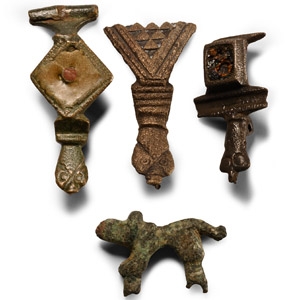
Roman Bronze Brooch Group
Circa 2nd-3rd century A.D.Sold for (Inc. bp): £65
Including equal-arm, bow brooch fragments, and a Romano-British lion bow brooch similar to the one found at Corbridge (lot 891). 21.1 grams total, 28-42 mm
Property of the vendor's grandfather, thence by family descent, circa 1985. From the private collection of a New York, USA gentleman. -
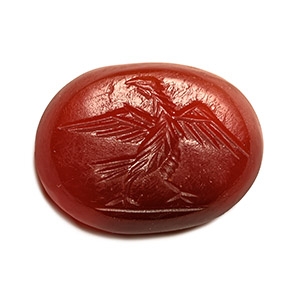
Roman Carnelian Gemstone with Eagle
Circa 2nd-3rd century A.D.Sold for (Inc. bp): £260
Ellipsoid cloison with intaglio eagle with wings spread in the act of taking off; supplied with a museum-quality impression. 0.96 grams, 14 cm
Acquired on the London art market in the late 1980s-1990s. From the family collection of an East London, UK, gentleman. -
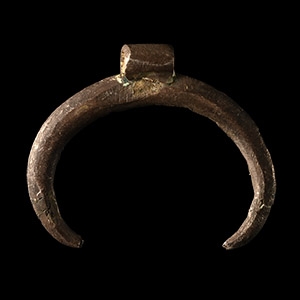
Roman Silver Lunar Pendant
Circa 2nd-3rd century A.D.Sold for (Inc. bp): £111
Comprising a crescentic pendant with keeled arms, applied suspension loop. 2.42 grams, 29 mm
Acquired before 1980. Ex property of a South London collector.
