
Loading, please wait...
LOT 0133
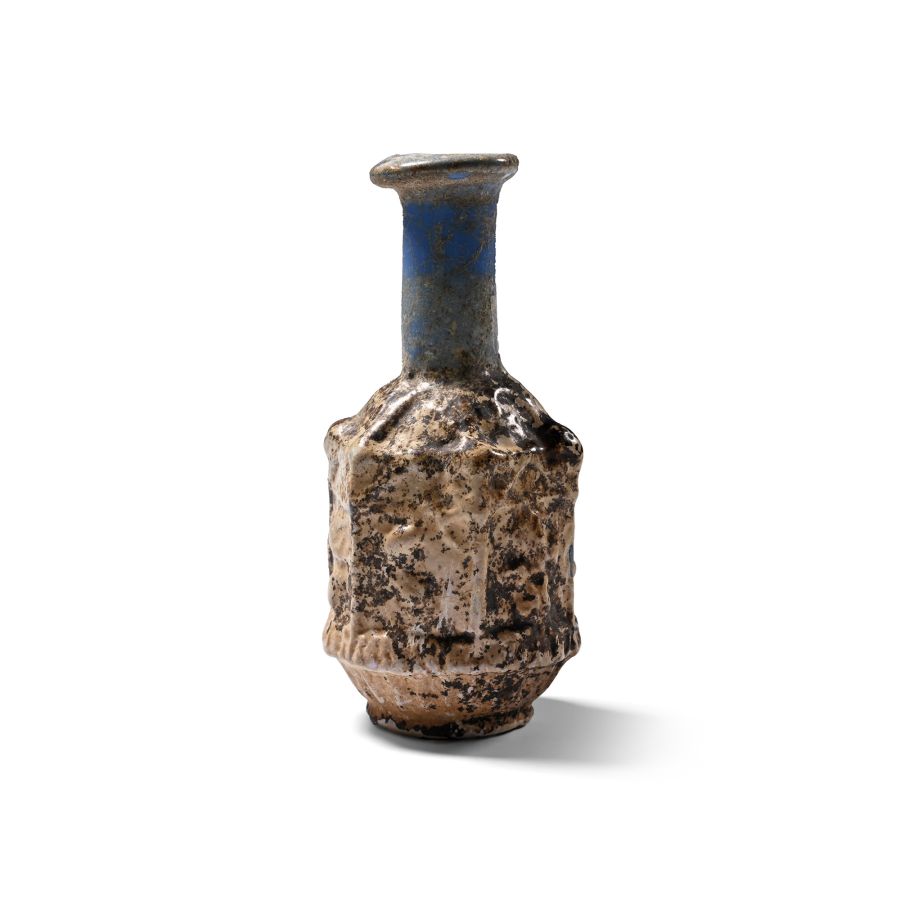
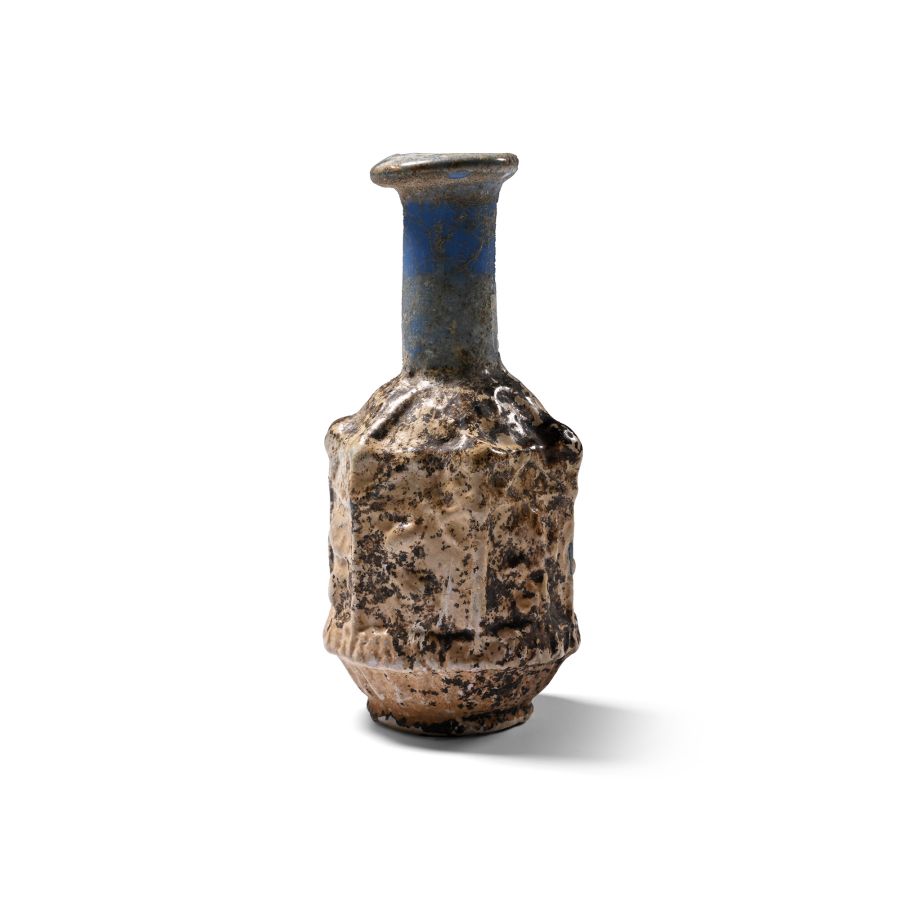
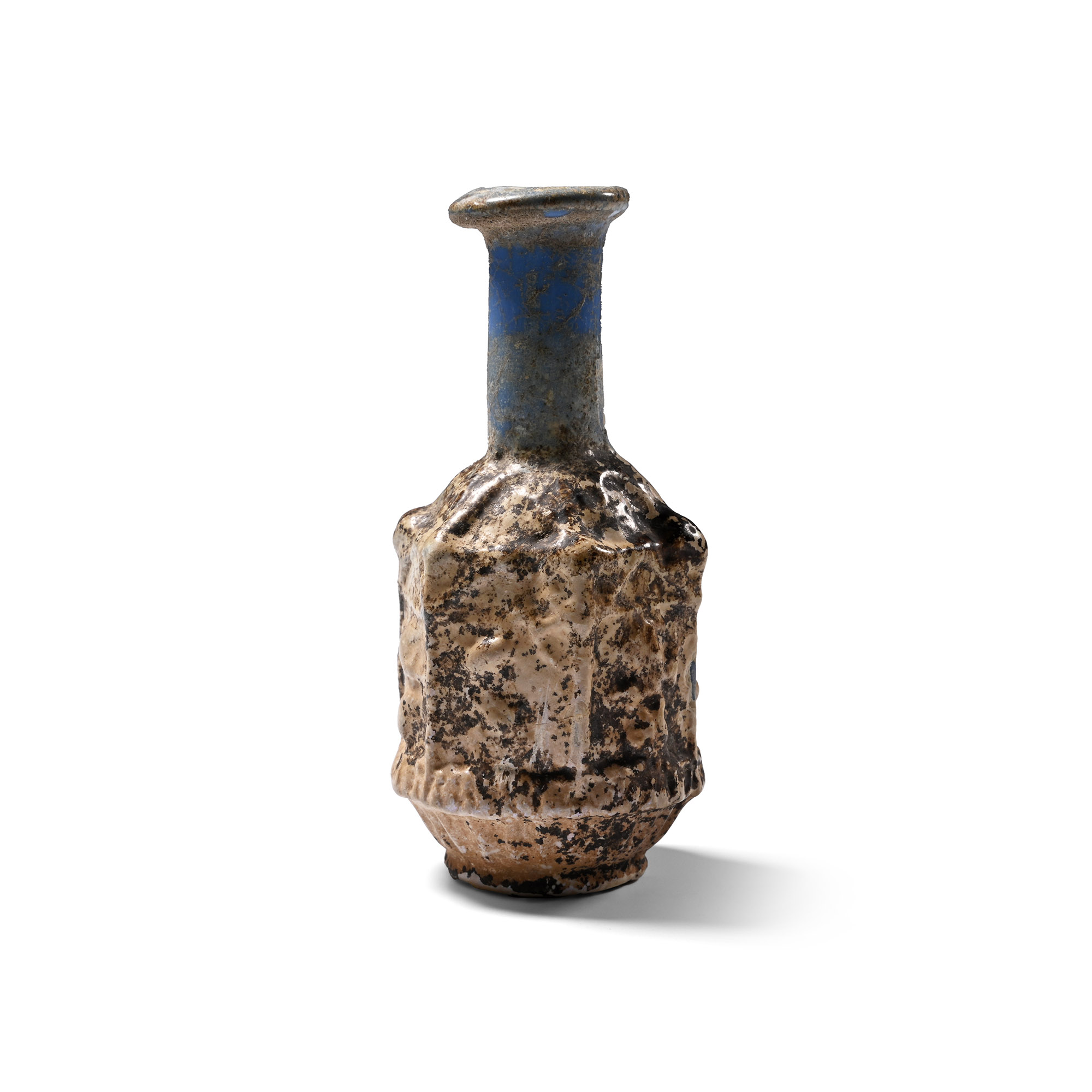
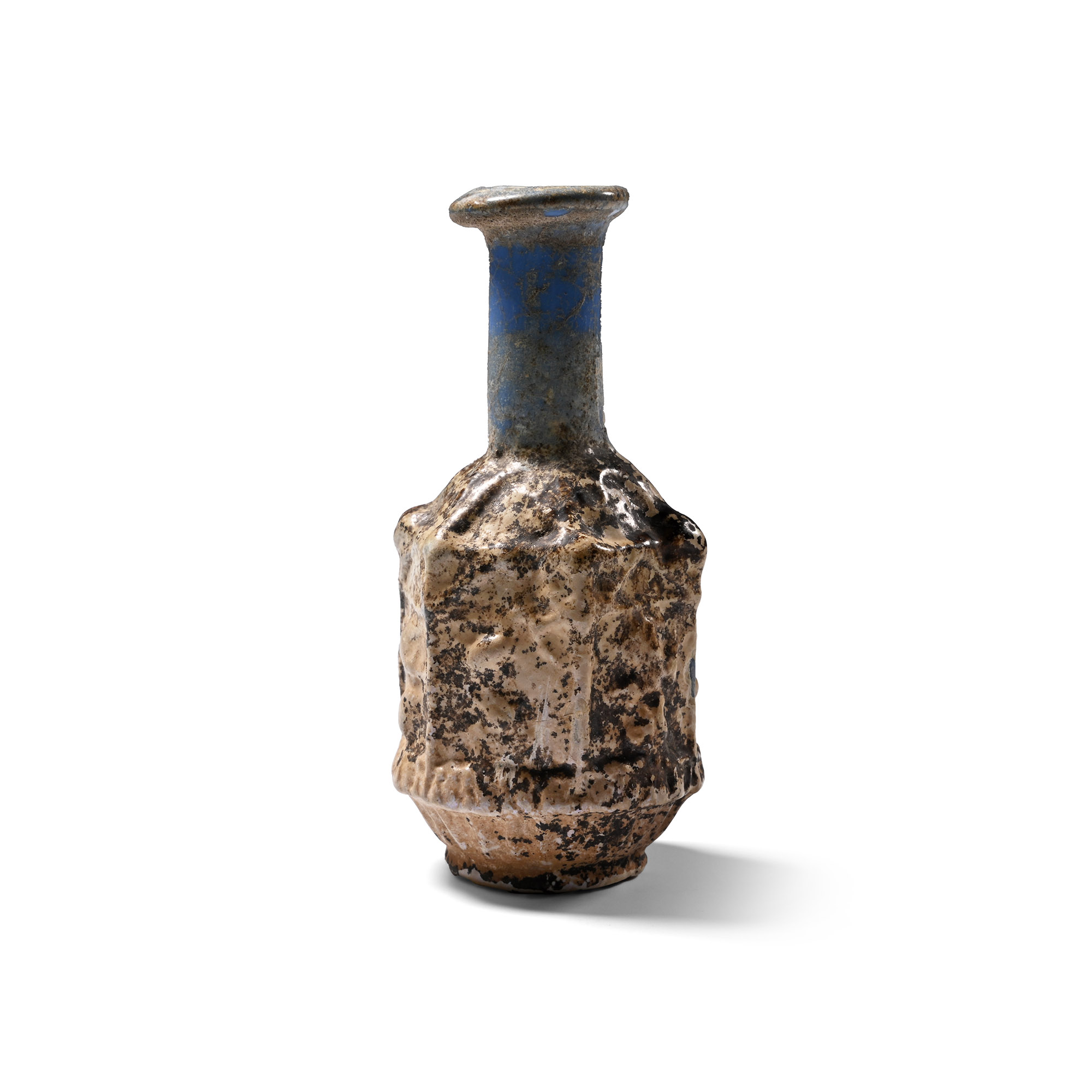
Roman Sidonian Pastel Blue Mould-Blown Glass Vessel with Birds
3RD-4TH CENTURY A.D.
3 1/4 in. (40.8 grams, 84 mm).
With hexagonal-section body decorated with an arcade, tubular neck and rolled rim.
ProvenanceFrom an important London collection of glass, 1990s.
This lot has been checked against the Interpol Database of stolen works of art and is accompanied by a search certificate number no.12675-235651.
This lot has been cleared against the Art Loss Register database, and is accompanied by an illustrated lot declaration signed by the Head of the Antiquities Department, Dr Raffaele D'Amato.
Cf. Whitehouse, D., Roman Glass in The Corning Museum Of Glass, Volume 2, New York, 2003, p.134, for similar.
CONDITIONTimeLine Auctions follows a vetting process to ensure the authenticity and legality of all items, reinforcing our commitment to integrity and responsible trading. Each antiquity, antique, and coin lot undergoes thorough examination by a vetting committee of at least ten external specialists, professional trade association members, scientists, and archaeologists: Our Vetting Process
AUCTIONS:
TimeLine is a leading auction house specialising in antiquities, ancient art, collectables, natural history, coins, medals, and books. Our auctions offer museums, collectors, historians, and enthusiasts the opportunity to acquire unique and historically significant pieces.
LOT 0133
Roman Sidonian Pastel Blue Mould-Blown Glass Vessel with Birds
Estimate £3,000 - 4,000€3,480 - 4,640 (for guidance only)$4,050 - 5,400 (for guidance only)
-
Roman Yellow Glass Amphora
3rd-4th century A.D.Estimate: £1,000 - 1,400 (+bp*)
Opening Bid: £500
With broad rounded shoulder tapering to a conical foot, cylindrical neck and everted mouth with rolled rim, applied trail handles and collar. 31.08 grams, 92 mm
From an important London collection of glass, 1990s. This lot is accompanied by an illustrated lot declaration signed by the Head of the Antiquities Department, Dr Raffaele D'Amato. -

Roman Black Glass Bead Necklace String
1st-4th century A.D. and laterSold for (Inc. bp): £72
Restrung group of oblate and other beads. 11 grams, 47 cm
Ex London, UK, collection, 1990s. This lot is accompanied by an illustrated lot declaration signed by the Head of the Antiquities Department, Dr Raffaele D'Amato. -
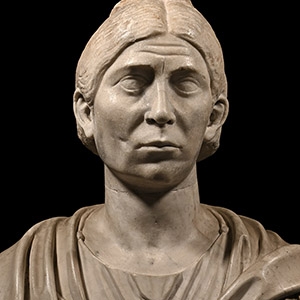
Lifesize Roman Marble Portrait Head of a Patrician Woman
3rd century A.D.Sold for (Inc. bp): £28,600
Carved in fine-grained marble, the head depicting a matron of the patrician class with angular features, pronounced cheekbones and a softly wrinkled brow; her lips finely curved and gently closed, the heavy-lidded eyes incised with irises and drilled pupils, lending an expression of composed attentiveness; the hair parted centrally, arranged in thick curls drawn behind the prominent ears, coiled into a low chignon at the nape and continued as a braided tail over the crown, a coiffure closely associated with the mid-3rd century A.D.; attached to an antique bust, some restoration. 49 kg, 76.5 cm high
French private collection, 18th century. with Mercier & Cie, Lille, France, 6 October 2019, no.199. Private collection, Europe. Accompanied by a copy of French passport no.217723, dated 27 February 2020. This lot has been checked against the Interpol Database of stolen works of art and is accompanied by a search certificate number no.12674-236274. This lot has been cleared against the Art Loss Register database, and is accompanied by an illustrated lot declaration signed by the Head of the Antiquities Department, Dr Raffaele D'Amato.
The present work exhibits a distinctive coiffure that gained prominence among aristocratic Roman women during the mid-3rd century A.D., most notably under the empresses Furia Sabinia Tranquillina, consort of Gordian III, and Otacilia Severa, wife of Philippus Arabs. This elaborate arrangement - central parting, voluminous curls, and a braided crown - is a key chronological indicator, allowing the portrait to be securely dated to this period. The head is mounted on an 18th century bust inscribed 'IVLIA MAESA'. While this identification reflects an earlier attribution, current stylistic analysis suggests a slightly later date, aligning the portrait more plausibly with the generation following Julia Maesa’s death in A.D. 224/225.
