
Loading, please wait...

LOT 0152
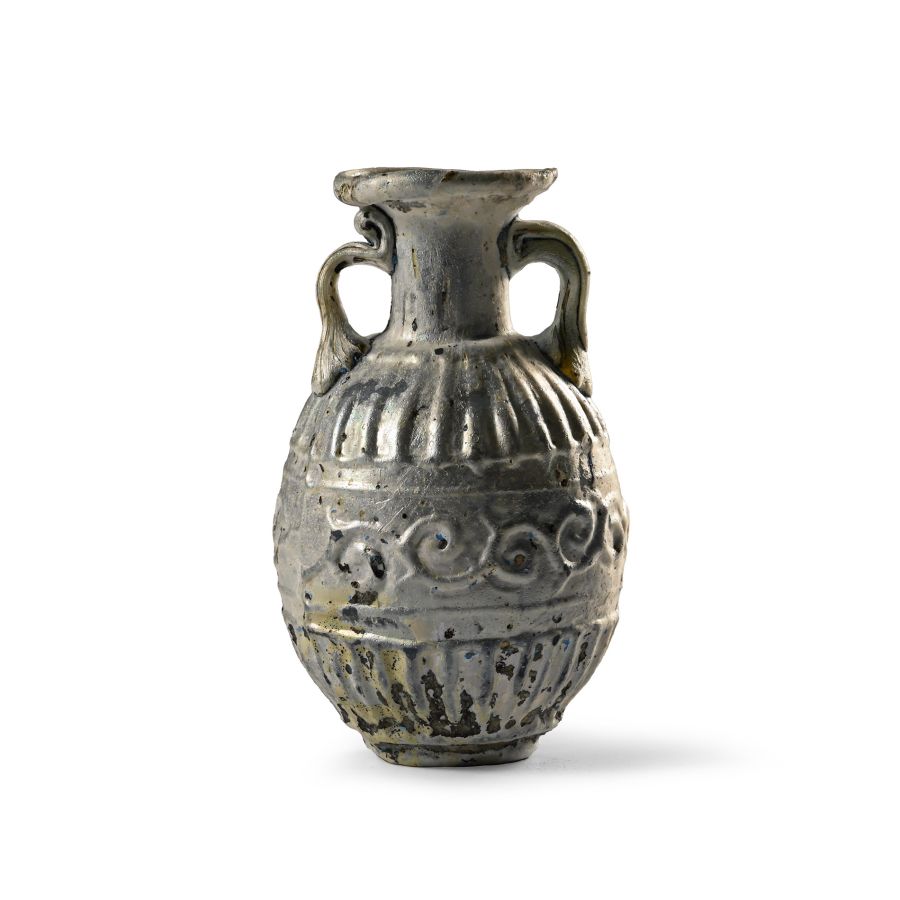
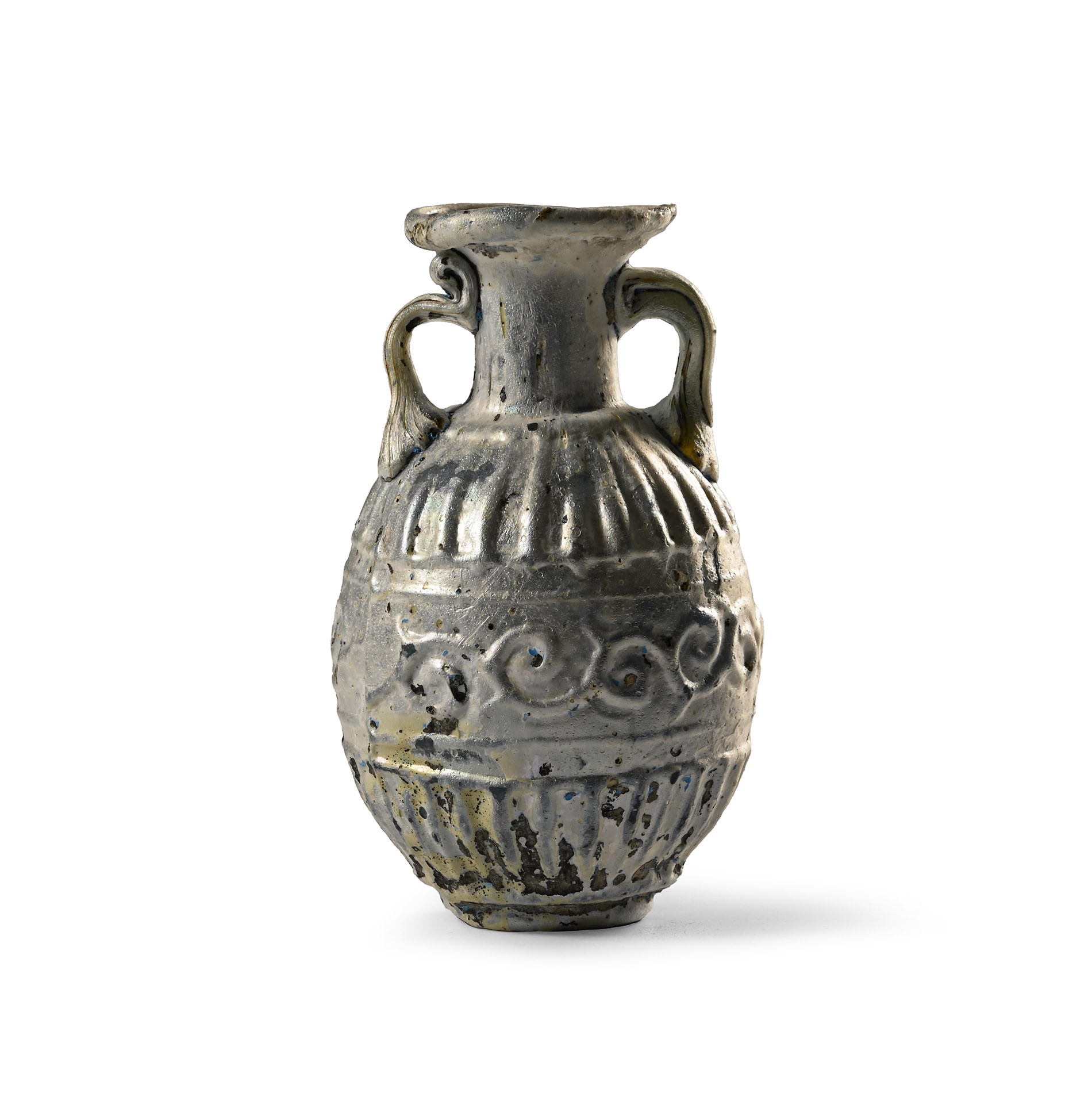
Roman Sidonian Mould-Blown Two-Handled Flask with Silver Iridescence
2ND-4TH CENTURY A.D.
3 in. (20 grams, 75 mm).
With barrel-shaped body, trumpet-shaped mouth and two applied strap handles to the shoulder; band of scrolled tendrils to the equator, vertically ribbed bands above and below.
ProvenanceFrom an important London, UK, collection, 1970-1990s.
This lot has been checked against the Interpol Database of stolen works of art and is accompanied by search certificate number no.12236-222279.
Cf. Whitehouse, D., Roman Glass in the Corning Museum of Glass, vol.2, New York, 2001, items 522-523, for examples of mould-blown glassware.
CONDITIONTimeLine Auctions follows a vetting process to ensure the authenticity and legality of all items, reinforcing our commitment to integrity and responsible trading. Each antiquity, antique, and coin lot undergoes thorough examination by a vetting committee of at least ten external specialists, professional trade association members, scientists, and archaeologists: Our Vetting Process
AUCTIONS:
TimeLine is a leading auction house specialising in antiquities, ancient art, collectables, natural history, coins, medals, and books. Our auctions offer museums, collectors, historians, and enthusiasts the opportunity to acquire unique and historically significant pieces.
LOT 0152
Roman Sidonian Mould-Blown Two-Handled Flask with Silver Iridescence
Estimate £2,500 - 3,500€2,900 - 4,060 (for guidance only)$3,380 - 4,730 (for guidance only)
-
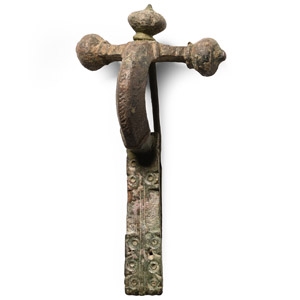
Roman Bronze Crossbow Brooch
4th century A.D.Sold for (Inc. bp): £72
With three faceted knops to the crossbar, the upper one with beaded collar, and pierced moulding to the upper face, deep bow, stepped junction with foot, trapezoidal foot with ring-and-dot motifs and integral catch; hinged pin to reverse; Keller Type 4. 56 grams, 88 mm
Ex German art market, 2000s. Acquired from an EU collector living in London. From the collection of Surrey, UK, gentleman. -
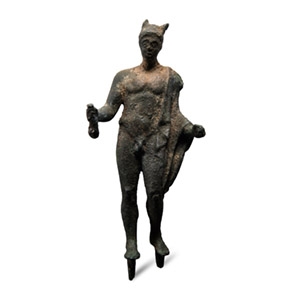
Roman Bronze Statuette of Mercury
1st-2nd century A.D.Estimate: £700 - 900 (+bp*)
Opening Bid: £350
Modelled standing nude wearing the winged petasos and with a bag of coins in his extended right hand, mantle over his left shoulder; attachment peg to the underside of each foot. 209 grams, 12.6 cm
English private collection. -
.jpg)
Roman and Other Mixed Bead Group
1st millennium A.D. and laterSold for (Inc. bp): £26
Comprising a range of bead types in different materials, including decorated examples. 93 grams total, 3-29 mm
Acquired on the UK art market. Property of a Ruislip, UK, gentleman, by inheritance.
