
Loading, please wait...
LOT 0688
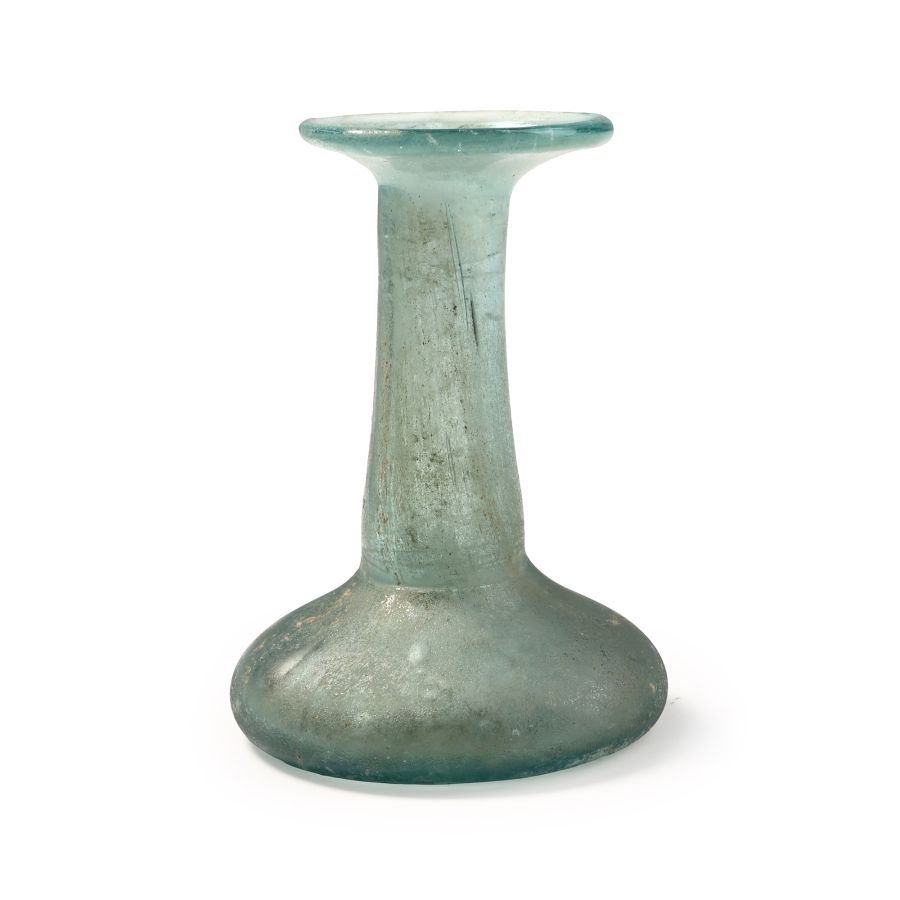
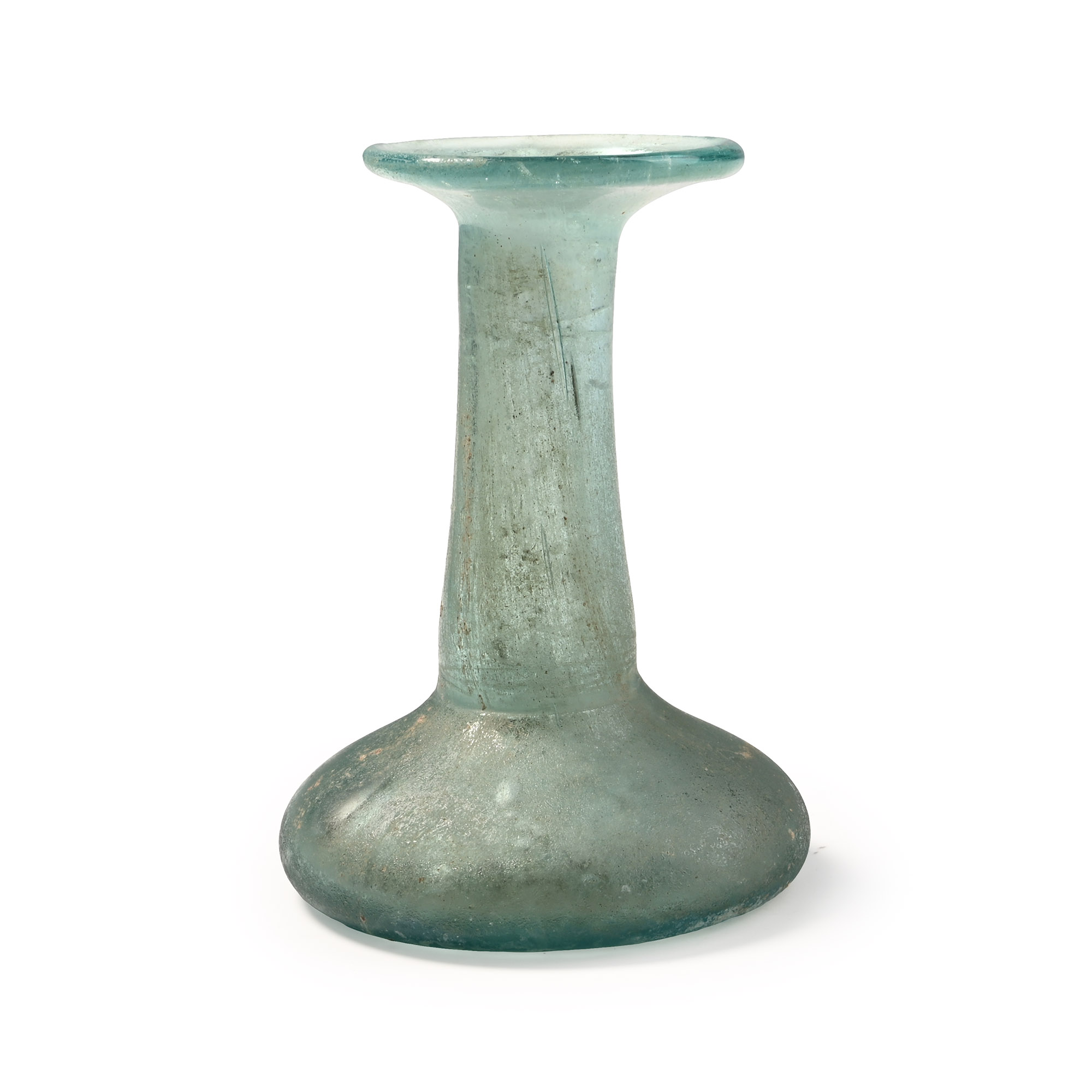
Roman Short Blue Glass Flask
1ST-4TH CENTURY A.D.
3 1/8 in. (71.3 grams, 79 mm).
Comprising a wide shallow body and tall neck with trumpet mouth.
ProvenanceEx German art market, 2000s.
Acquired from an EU collector living in London.
From the collection of a Surrey, UK, gentleman.
TimeLine Auctions follows a vetting process to ensure the authenticity and legality of all items, reinforcing our commitment to integrity and responsible trading. Each antiquity, antique, and coin lot undergoes thorough examination by a vetting committee of at least ten external specialists, professional trade association members, scientists, and archaeologists: Our Vetting Process
AUCTIONS:
TimeLine is a leading auction house specialising in antiquities, ancient art, collectables, natural history, coins, medals, and books. Our auctions offer museums, collectors, historians, and enthusiasts the opportunity to acquire unique and historically significant pieces.
-
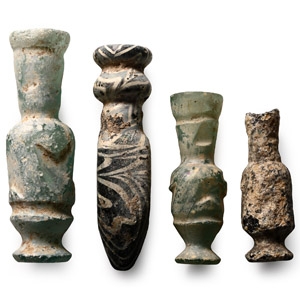
Roman Period Miniature Glass Bottle Collection
1st century A.D. and laterSold for (Inc. bp): £59
Comprising: three round-section with flared neck and one square-section with bell-shaped mouth. 26 grams total, 31-49 mm
From the private collection of a North West London lady; previously with a central London gallery; formerly acquired before 1990. -
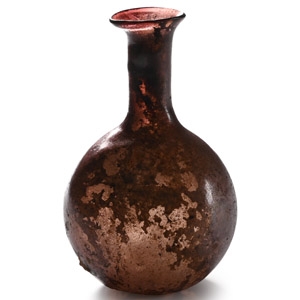
Roman Aubergine Glass Bottle
1st century B.C-1st century A.D.Estimate: £300 - 400 (+bp*)
Opening Bid: £165
With bulbous body, tubular neck, broad everted rim; extensive iridescence. 10.6 grams, 70 mm
From an important London collection of glass, 1990s. This lot is accompanied by an illustrated lot declaration signed by the Head of the Antiquities Department, Dr Raffaele D'Amato.
Similar bottles were found in the Cemetery of Ein-Gedi in the Judaean Desert, in a settlement abandoned in 40-37 B.C, and in Homs, Syria, dated to the first half of the first century A.D. These are among the first earliest datable blown bottles. -
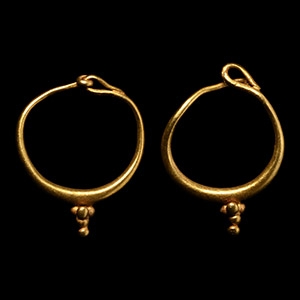
Roman Gold Earring Pair
1st-2nd century A.D.Sold for (Inc. bp): £585
Matched pair, each a slender hoop with graduated granule cluster. 1.12 grams total, 15.5-16.5 mm
with Archaeologia, Switzerland, before 1983. Ex private North American collection. London private collection, 2016.
