
Loading, please wait...
LOT 0806
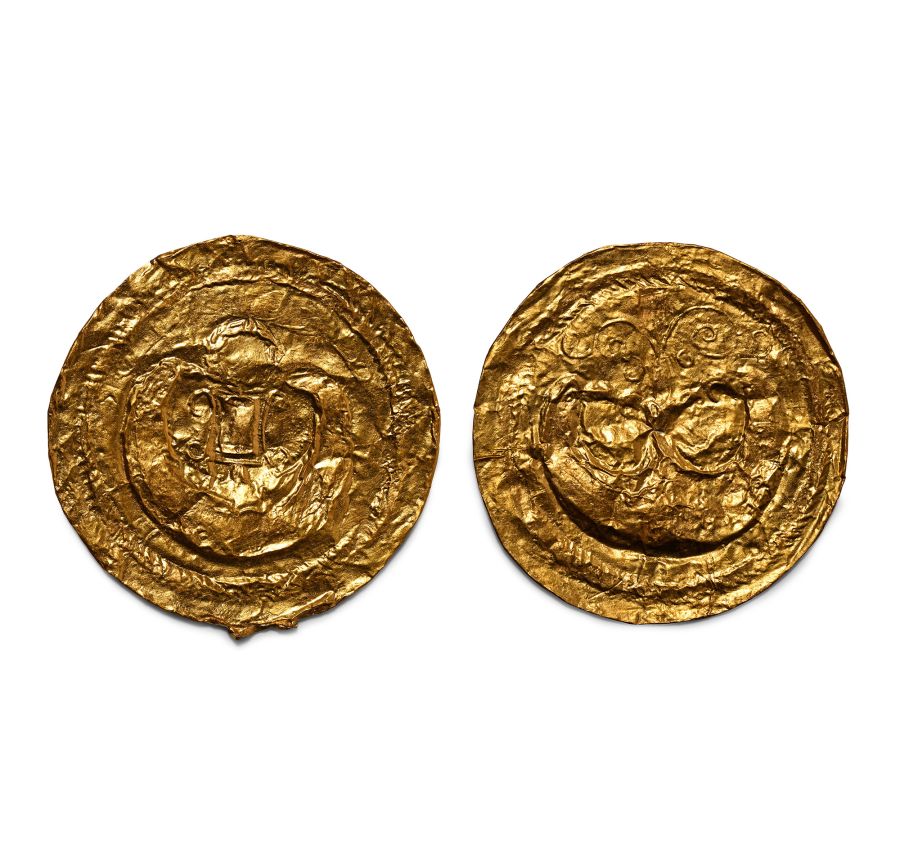
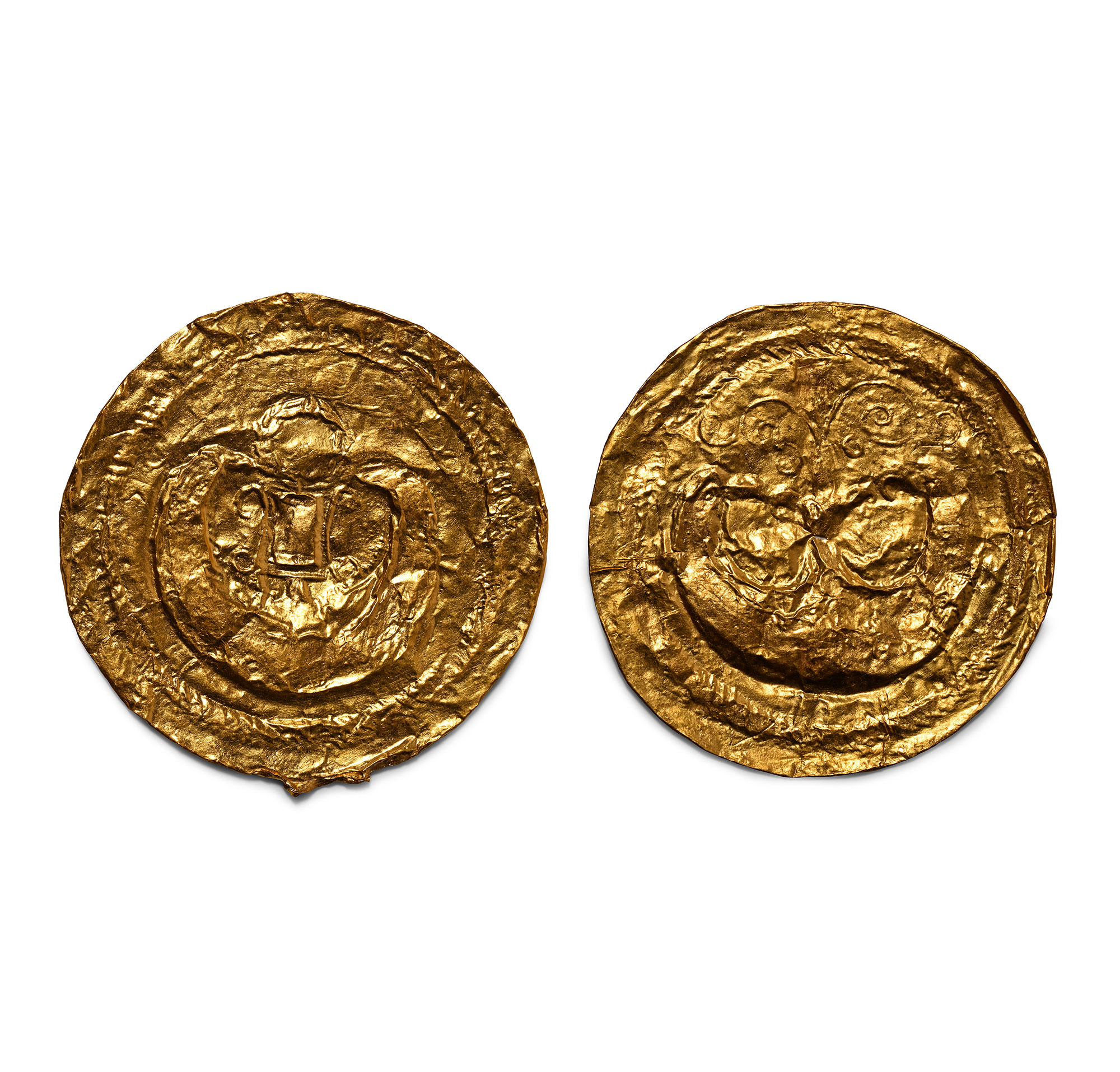
Roman Sheet Gold Phalera Covers with Pelta Shields
4TH-6TH CENTURY A.D.
2 3/8 in. (6.60 grams total, 61-62 mm).
Comprising a pair of discoid appliqués with beaded rim and high-relief pelta (military shield) motif, one with the pelta surmounted by a kantharos with a laurel wreath above, the other with vegetal volutes. [2, No Reserve]
ProvenanceAcquired in the early 1990s.
From the collection of a London antiquarian.
Accompanied by an academic report by Dr Raffaele D'Amato.
Cf. Sannazzaro, M., Giostra, C., Petala Aurea, Gold-Sheet-work of Byzantine and Lombard Origin from the Rovati Collection, Truccazzano, 2014, nos.8-9-10, for circular gold sheets with similar decorations; D’Amato, R., Negin, A., Decorated Roman Armour, from the Age of the Kings to the death of Justinian the Great, London, 2017.
FootnotesThe subject represented on these two appliqués is a crescentic military shield, the so-called pelta, associated in the late Roman iconography with the Amazon female warriors. Many shields of this typology were also represented on the pedestal of the Column of Arcadius in Constantinople (circa 400 A.D.) and seemed to be associated with the heavy cavalry of the Imperial Guard (D’Amato-Negin, 2017, p.252).
CONDITIONTimeLine Auctions follows a vetting process to ensure the authenticity and legality of all items, reinforcing our commitment to integrity and responsible trading. Each antiquity, antique, and coin lot undergoes thorough examination by a vetting committee of at least ten external specialists, professional trade association members, scientists, and archaeologists: Our Vetting Process
AUCTIONS:
TimeLine is a leading auction house specialising in antiquities, ancient art, collectables, natural history, coins, medals, and books. Our auctions offer museums, collectors, historians, and enthusiasts the opportunity to acquire unique and historically significant pieces.
-
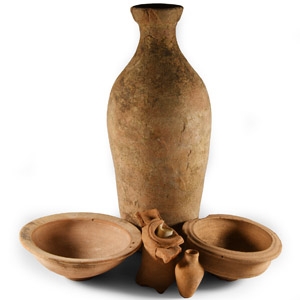
Romano-British Mixed Pottery Sherd Group
3rd century B.C.-1st century A.D.Sold for (Inc. bp): £130
Including a bell-shaped amphora, bowl with carinated profile and other items. 4.6 kg total, 6.5-40 cm
Found UK. From the collection of a late East Anglian teacher and antiquarian who retired to the Isle of Wight in Hampshire, UK. He amassed a large collection of objects between the 1960s-1980s. -
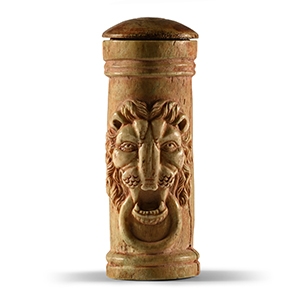
Roman Bone Pyxis with Lion Heads
Circa 1st century B.C.-1st century A.D.Sold for (Inc. bp): £715
Carved with thick rim to each end, ogee above the base and double band beneath the mouth; two facing lion masks modelled in high-relief, each with gaping jaws and a ring held between the jaws; disc to the base, domed lid. 39.7 grams, 71 mm
From the old collection of Colonel Ronde, circa 1980s. Property of a French collector. This lot has been checked against the Interpol Database of stolen works of art and is accompanied by a search certificate number no.12094-214901.
According to archaeologists, the pyxis could have served as a container for cosmetics, medicinal ointments, or perfume. Soldiers’ posessions often included carved vessels and lathe-turned bowls, spoons, spatulas, knives, discs and lids, as well as pyxides, which have been found in high numbers in military camps. -
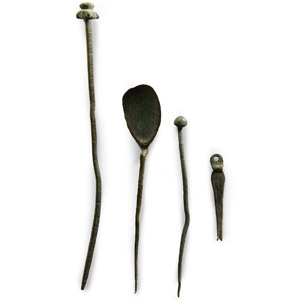
Roman Bronze Implement Collection
1st-4th century A.D.Sold for (Inc. bp): £143
Including cosmetic nail-cleaner, dress-pin, spike-handled spoon and other items. 36.1 grams total, 5.2-17 cm
Found Wiltshire, UK, before 1974.
