
Loading, please wait...
LOT 0771
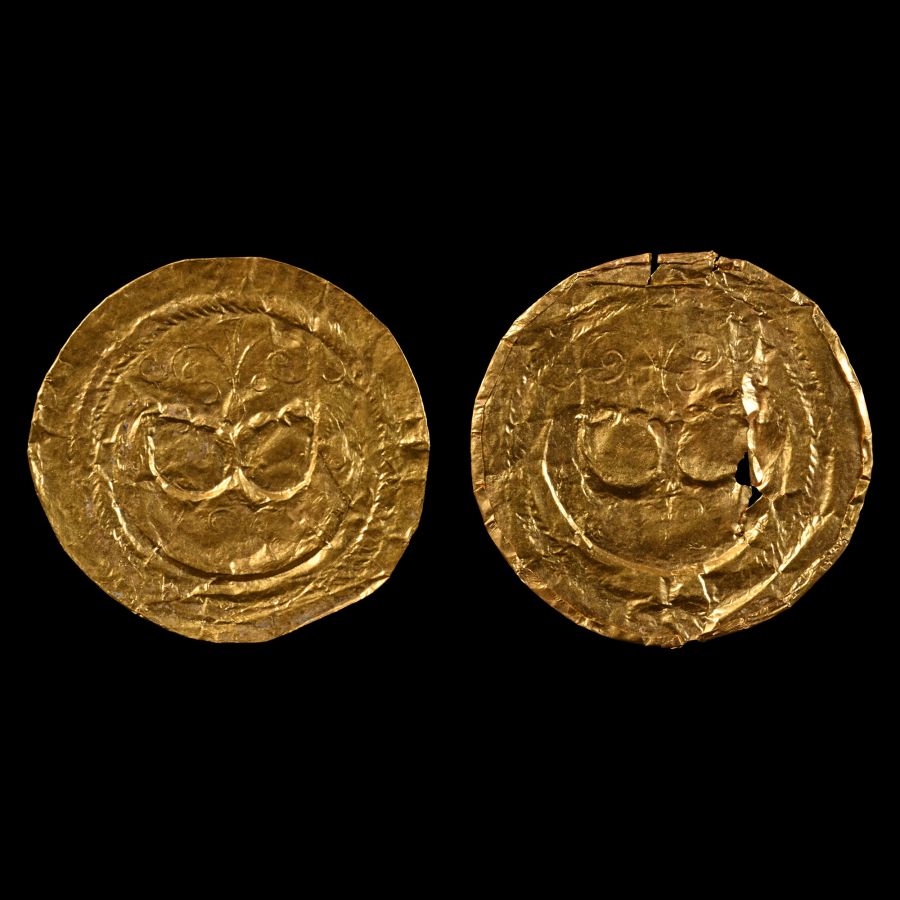
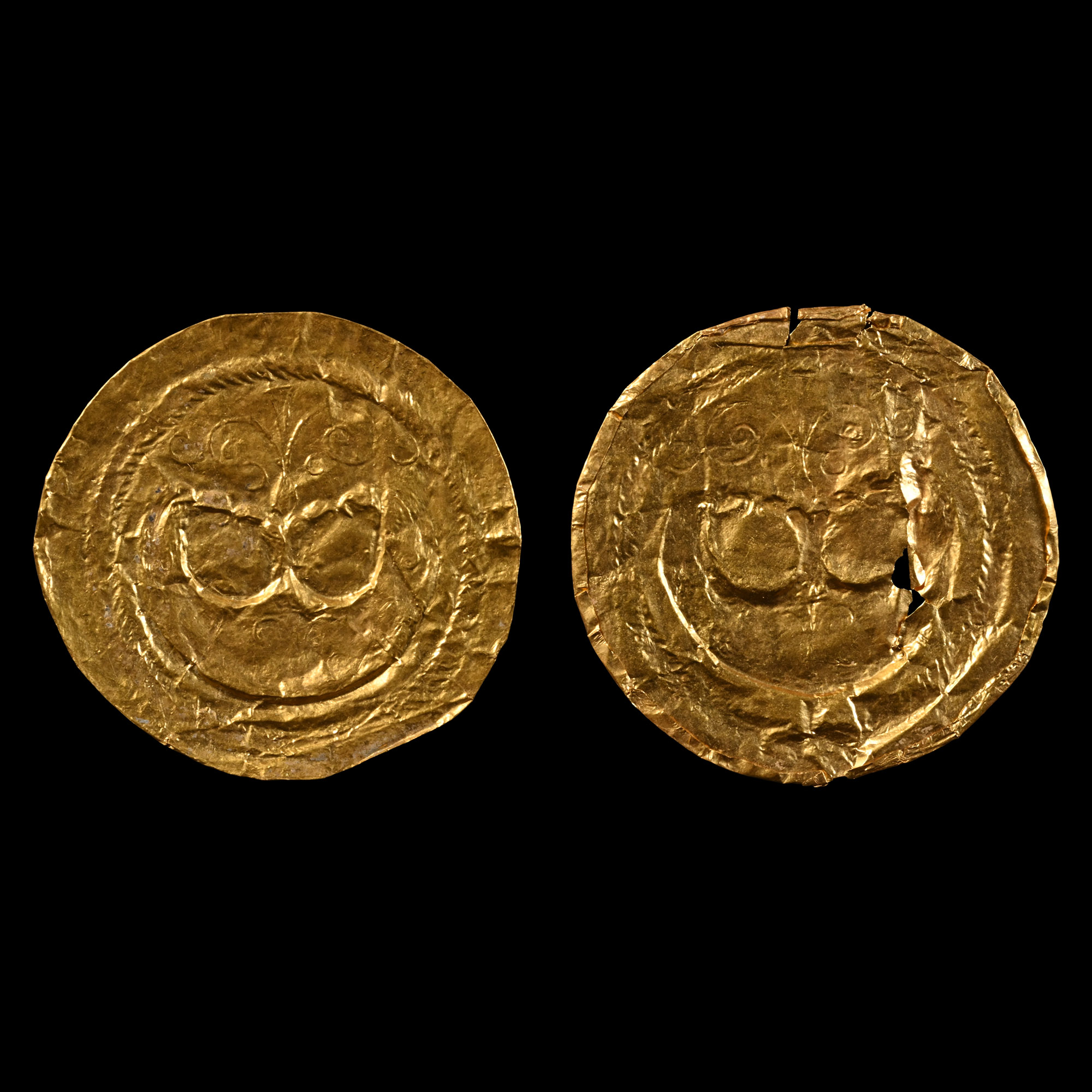
Roman Sheet Gold Phalera Cover Pair with Pelta Shields
4TH-6TH CENTURY A.D.
2 1/2 in. (7.28 grams total, 64-65 mm).
Comprising two discoid ornamental appliqués with beaded rims, each with repoussé pelta-shaped panel terminating in opposed bird-heads, surmounted by scrolled tendrils and a kantharos enclosed in a laurel crown. [2, No Reserve]
ProvenanceAcquired in the early 1990s.
From the collection of a London antiquarian.
Accompanied by an academic report by Dr Raffaele D'Amato.
Cf. Sannazzaro, M., Giostra, C., Petala Aurea, Gold-Sheet-work of Byzantine and Lombard Origin from the Rovati Collection, Truccazzano, 2014, nos.8-9-10, for circular gold sheets with similar decorations; D’Amato, R., Negin, A., Decorated Roman Armour, from the Age of the Kings to the death of Justinian the Great, London, 2017.
FootnotesThe subject represented on these two bracteae is a military shield in the form of a crescent, the so-called pelta, associated in the Late Roman iconography with the Amazon female warriors. This was not necessarily only an iconographic motif, considering that many shields of this typology were represented on the pedestal of the Column of Arcadius in Constantinople (circa 400 A.D.) and they seemed to be associated with the heavy cavalry of the Imperial guard (D’Amato-Negin, 2017, p.252). This could suggest that these gold sheets were applied upon phalerae or military decorations.
CONDITIONTimeLine Auctions follows a vetting process to ensure the authenticity and legality of all items, reinforcing our commitment to integrity and responsible trading. Each antiquity, antique, and coin lot undergoes thorough examination by a vetting committee of at least ten external specialists, professional trade association members, scientists, and archaeologists: Our Vetting Process
AUCTIONS:
TimeLine is a leading auction house specialising in antiquities, ancient art, collectables, natural history, coins, medals, and books. Our auctions offer museums, collectors, historians, and enthusiasts the opportunity to acquire unique and historically significant pieces.
-
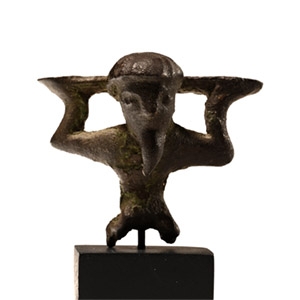
Etruscan Bronze Telamon Statuette
Circa 4th century B.C.Sold for (Inc. bp): £169
Appliqué formed as a kneeling male with arms bent supporting a shelf above the shoulders; the hair cut short but thick above the ears, the nose and beard modelled with pointed profile; mounted on a custom-made stand. 44 grams total, 51 mm including stand
From a collection acquired on the UK art market from various auction houses and collections mostly before 2000. From an important Cambridgeshire estate; thence by descent.
The figure is strangely proportioned with oversized head and small legs; possibly an atlant or support from a vessel. -
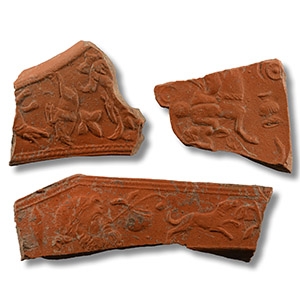
Roman Redware Fragment Collection
Circa 4th century A.D.Sold for (Inc. bp): £325
Comprising three edge fragments: one with a centaur carrying away a woman, amphora below; one showing a butting goat defending itself against a large hound; one showing a profile head of a bearded man with a staff and bag, possibly the god Mercury, a leaping hound before him. 53.1 grams total, 50-97 mm
Ex German art market, 2000s. Acquired from an EU collector living in London. From the collection of Surrey, UK, gentleman. -
.jpg)
Bronze Roman Coin and Limited Edition Framed Print
3rd century A.D. and laterSold for (Inc. bp): £20
The coin of Constantine the Great (272-337 A.D.) mounted on 22 carat gold foil, framed with an art print signed by the artist David McAllister, depicting scenes of Roman military activity; limited edition number 229/1150. 1.26 kg, 49.5 x 37.5 cm
UK gallery, early 2000s. Accompanied by a previous certificate of authenticity.
David McAllister's exciting design is a 'one of a kind' work that portrays the might and riches of the Roman civilisation. This limited edition print is a celebration of the award winning artist's lifetime dedication to historical paintings of the ancient world. To enhance appreciation of this rare and historic work, each individual print is signed and numbered by the artist.
