
Loading, please wait...
LOT 0103
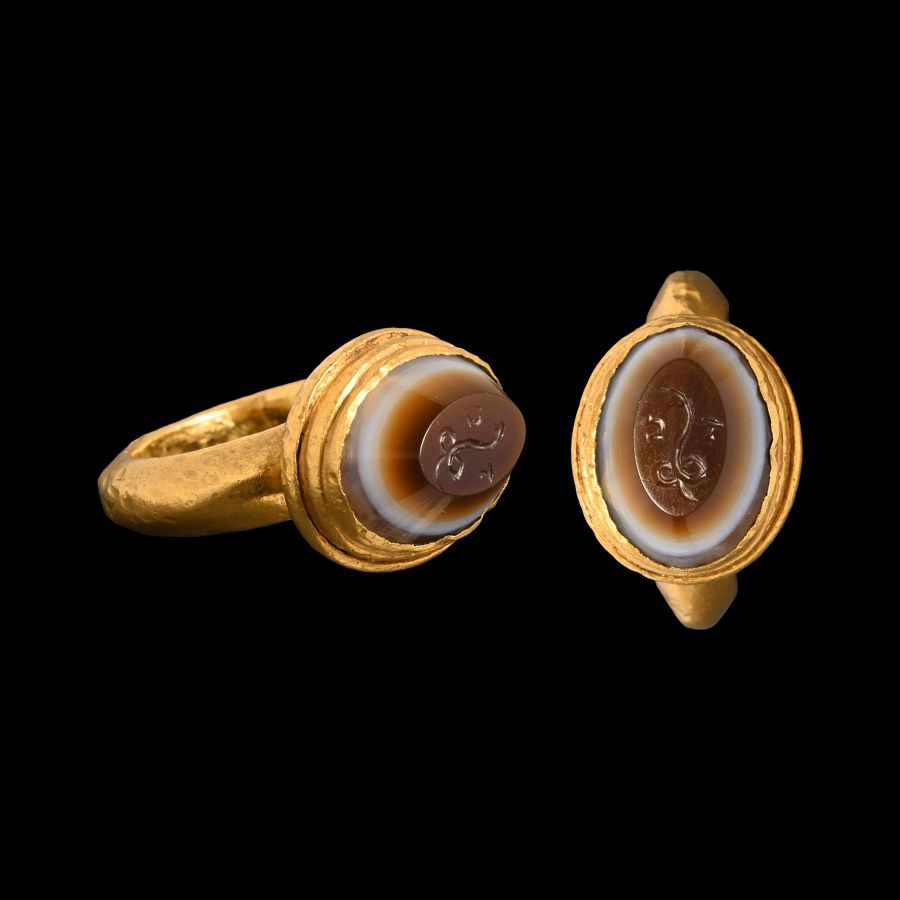
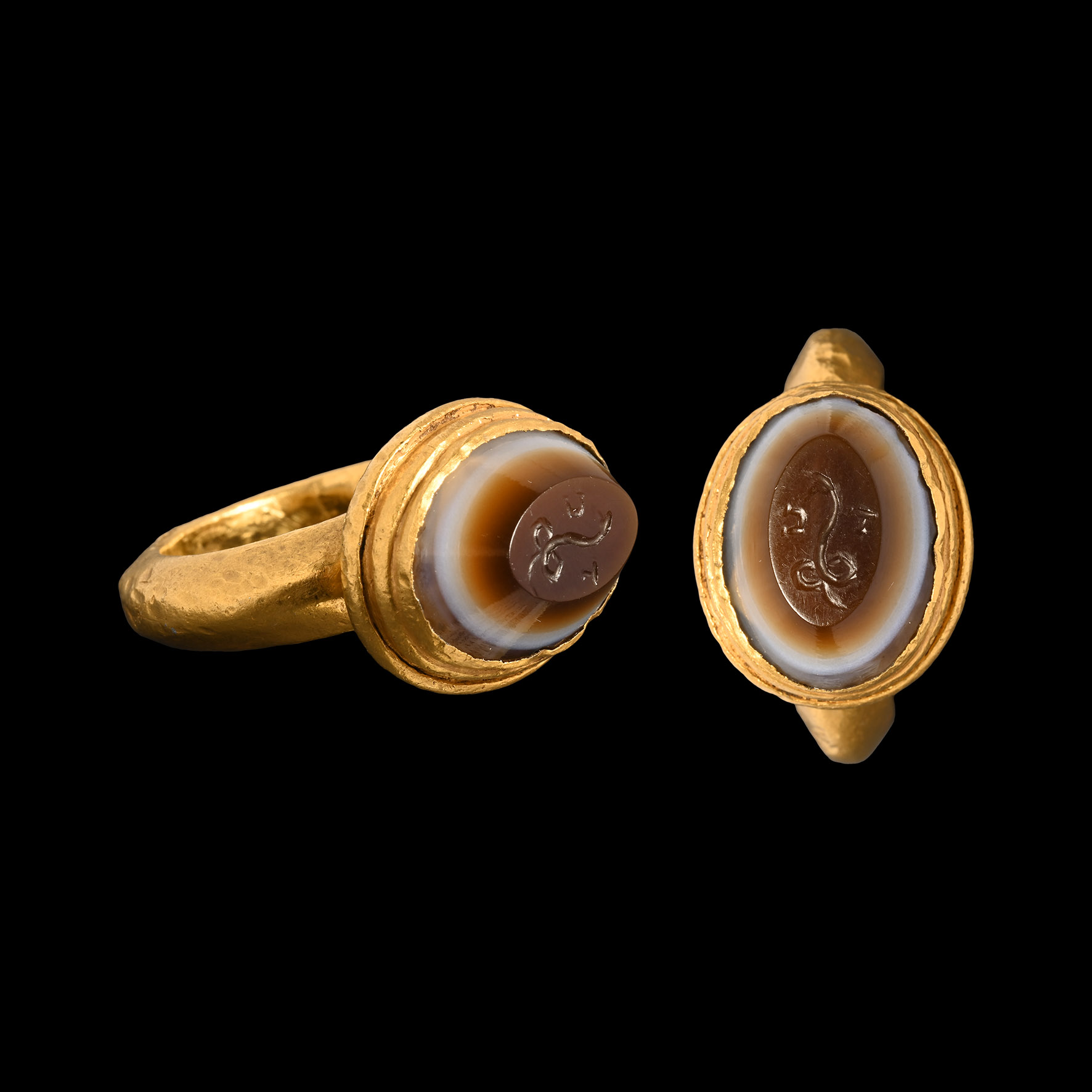
Roman Sardonyx Snake Gemstone in Medieval Gold Ring
4TH-5TH CENTURY A.D. AND LATER
1 1/4 in. (12.73 grams, 31.46 mm overall, 18.56 mm internal diameter (approximate size British P , USA 7 1/2, Europe 16.23, Japan 15)).
The tapering gemstone with attractive brown and white banding, intaglio motif of a rearing serpent flanking reversed letters T and C, the body coiled and forming an infinity sign; set in an eastern medieval gold ring with a keeled hollow-form hoop of heavy construction, and applied stepped bezel. [No Reserve]
ProvenancePrivate collection, USA.
From the Alexander Gallery, New York, USA, in the early 2000s.
This lot has been checked against the Interpol Database of stolen works of art and is accompanied by search certificate no.12107-214337.
Cf. for similar gemstones Faraone, C.A., 'Text, Image and Medium, The Evolution of Graeco-Roman Magical Gemstones' in Entwistle, C., Adams, N., Gems of Heaven, recent research on engraved Gemstones in Late Antiquity, c. AD 200-600, London, 2011, pp.50-61, pls.1a-d.
FootnotesThe image on the gemstone can refer to a simplified representation of the radiant serpent-god Chnoubis, invoked to cure stomach ache and heartburn. According to the Greek physician Galen, when worn as an amulet, it benefitted the stomach and the oesophagus.
CONDITIONTimeLine Auctions follows a vetting process to ensure the authenticity and legality of all items, reinforcing our commitment to integrity and responsible trading. Each antiquity, antique, and coin lot undergoes thorough examination by a vetting committee of at least ten external specialists, professional trade association members, scientists, and archaeologists: Our Vetting Process
AUCTIONS:
TimeLine is a leading auction house specialising in antiquities, ancient art, collectables, natural history, coins, medals, and books. Our auctions offer museums, collectors, historians, and enthusiasts the opportunity to acquire unique and historically significant pieces.
-
Roman Bronze Animal Statuette Group
1st-2nd century A.D.Sold for (Inc. bp): £104
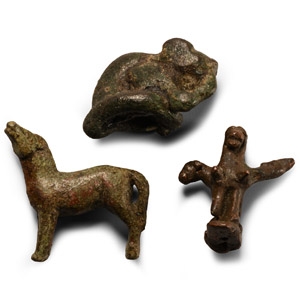
Mixed group comprising: three-headed dog, Cerberus, on an ellipsoid base; mouse holding an item of food to its mouth; baying hound with head raised. 60.5 grams total, 29- 35 mm
From a collection acquired on the UK art market from various auction houses and collections mostly before 2000. From an important Cambridgeshire estate; thence by descent. -
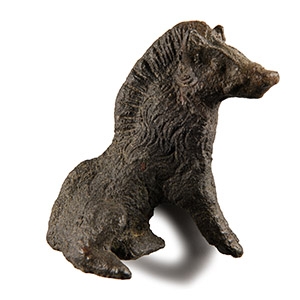
Roman Bronze Seated Wild Boar Statuette
Circa 1st century B.C.-1st century A.D.Sold for (Inc. bp): £260
Hollow-formed figure of a boar resting with hindlegs folded and forelegs straight, thick ridge to the back, fur texture; open underside. 75 grams total, 65 mm
From a collection acquired on the UK art market from various auction houses and collections mostly before 2000. From an important Cambridgeshire estate; thence by descent. -
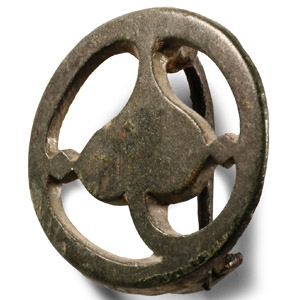
Roman Bronze Plate Brooch with Vine Leaf
Circa 2nd century A.D.Sold for (Inc. bp): £46
Complete with pin lug, pin and catchplate to reverse. 10 grams, 29 mm
Acquired prior to 2000. Ex private collection, Cambridgeshire, UK.
