
Loading, please wait...
LOT 0082
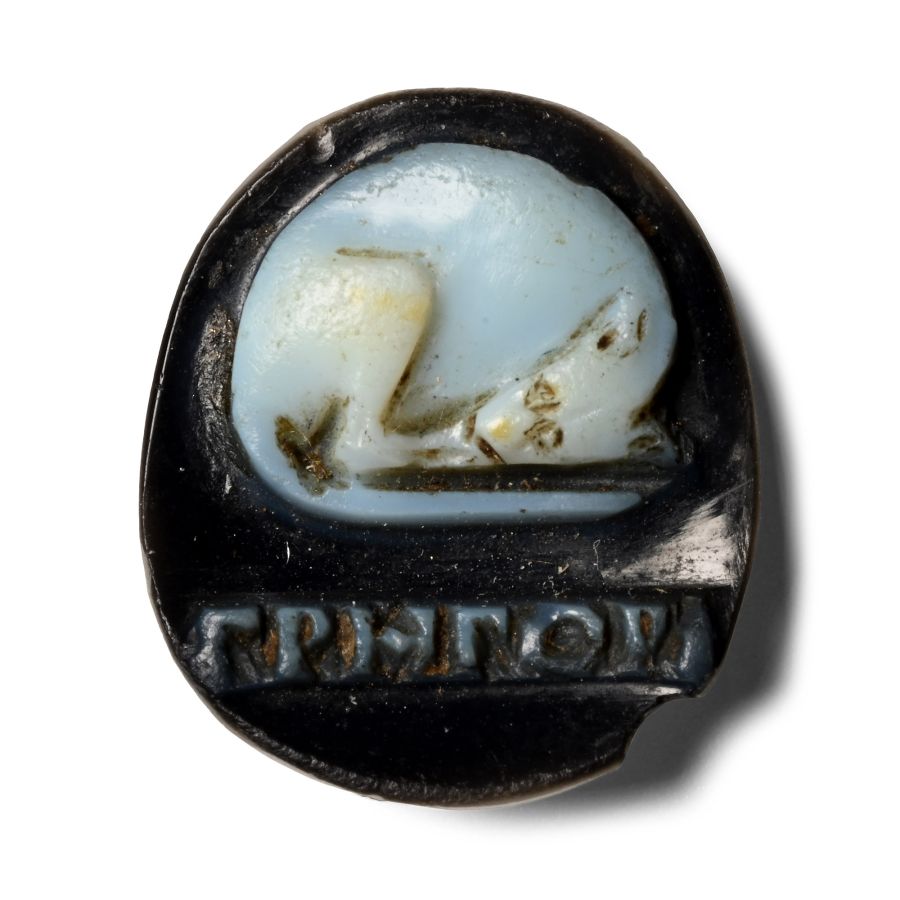
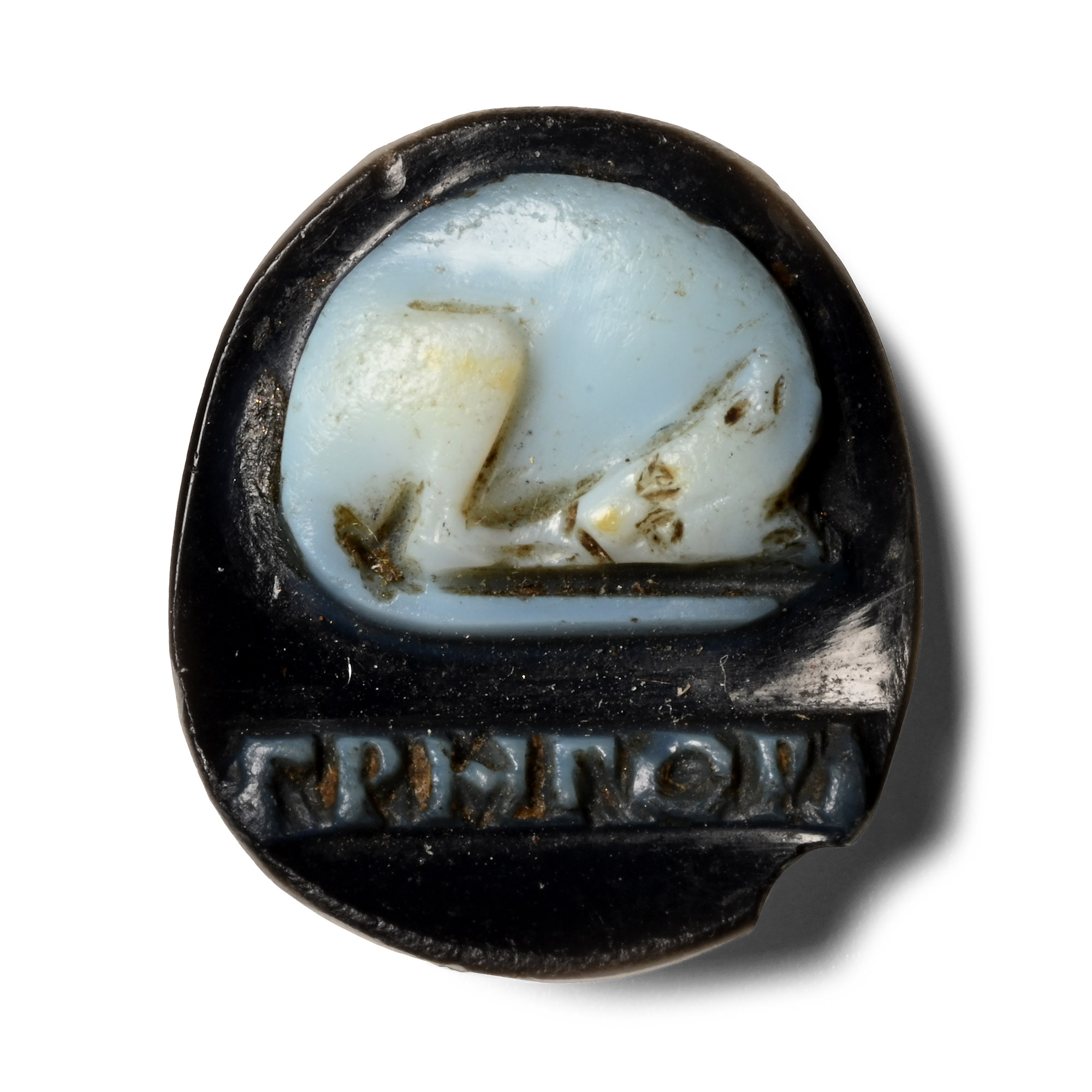
Roman Sardonyx Cameo of a Sleeping Dog with Greek Inscription
2ND-3RD CENTURY A.D.
1/2 in. (0.61 grams, 12 mm).
With a cameo image of a lying dog curled to the right, ancient Greek lettering below 'ΓΡΗΓΟΡΙ (sic)': either 'Be wakeful' or '(ring/seal) of Gregory.
ProvenancePrivate English collection, formed between the late 1970s and early 1990s.
Private collection, London, UK.
Cf. Henig, M., The Content Cameos, p.26, no.47, p.27, n.48.
CONDITIONTimeLine Auctions follows a vetting process to ensure the authenticity and legality of all items, reinforcing our commitment to integrity and responsible trading. Each antiquity, antique, and coin lot undergoes thorough examination by a vetting committee of at least ten external specialists, professional trade association members, scientists, and archaeologists: Our Vetting Process
AUCTIONS:
TimeLine is a leading auction house specialising in antiquities, ancient art, collectables, natural history, coins, medals, and books. Our auctions offer museums, collectors, historians, and enthusiasts the opportunity to acquire unique and historically significant pieces.
LOT 0082
Roman Sardonyx Cameo of a Sleeping Dog with Greek Inscription
Sold for (Inc. bp): £1,690
-
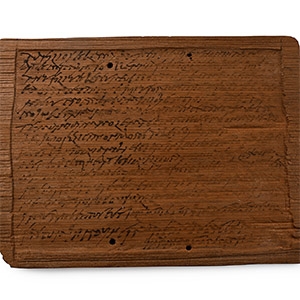
Roman Wooden Tablet from the Will of the Father of Iulia Ianuaria Made on the Goretiano Estate in the Province of Byzacena
Early 4th century A.D.Sold for (Inc. bp): £1,690
Well preserved rectangular tablet with a recessed panel to each face; the third and last tablet of a Roman will; both sides inscribed in Roman cursive script using ink and calamus, twenty-one lines of Roman cursive script written within the recess, some text is lost on the right half of both the inner and outer face; on the inner face partially damaged surface; on the other side sixteen lines of cursive script with a half-line at the right edge; two small holes both near the upper and lower rim (for binding the tablets of this document together); the text consists of testamentary dispositions and ends with the obligatory mancipatory formula of Roman testaments; mentioned is a Iulius Fortunatus. 65 grams, 23.5 x 17.6 cm
Acquired by Albert Sfez in the early 1950s. Formerly the property of Monsieur Alain Sfez, a Belgium collector; acquired by gift from his father Albert Sfez, in 1965. Acquired by a London dealer in 1973. From an important London collection since 1975; thence by descent. Accompanied by a copy of an illustrated academic report by Professor Dr phil. Peter Rothenhöfer. This lot has been checked against the Interpol Database of stolen works of art and is accompanied by search certificate number no.12602-230810.
Professor Dr phil. Peter Rothenhöfer writes: 'Without any doubts this tablet is an original document from Roman times. Because only few Roman testaments have survived this document is of great importance both for Roman Legal and Social History'. -
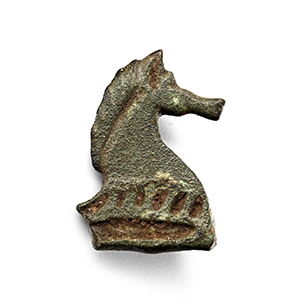
Roman Bronze Horse Plate Brooch
2nd century A.D.Sold for (Inc. bp): £78
Formed as the foreparts of a horse in profile, with catch to verso. 2.41 grams, 21 mm
From the collection of a Buckinghamshire, UK, collector established from the earlier 1960s. -
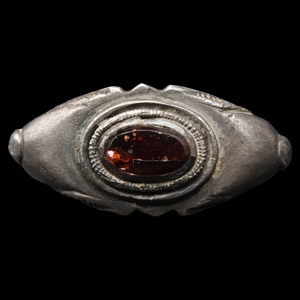
Roman Silver Ring with Garnet
Circa 3rd century A.D.Sold for (Inc. bp): £416
A D-section silver hoop with leaf to each shoulder and ropework border to the void, flat scaphoid plaque with tiered bezel and inset garnet. 21.37 grams, 35.28 mm overall, 20.60 x 15.27 mm internal diameter (approximate size British L, USA 5 3/4, Europe 11.24, Japan 10)
Ex property of a private collector; acquired before 1975.
