
Loading, please wait...
LOT 0088
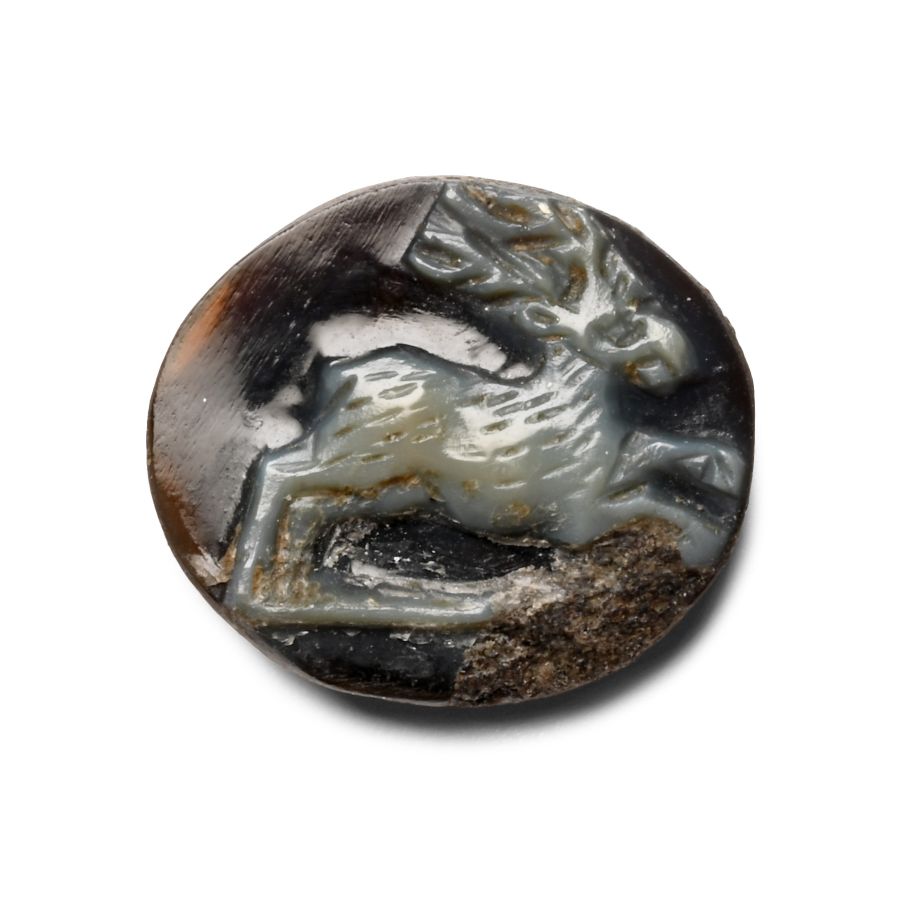
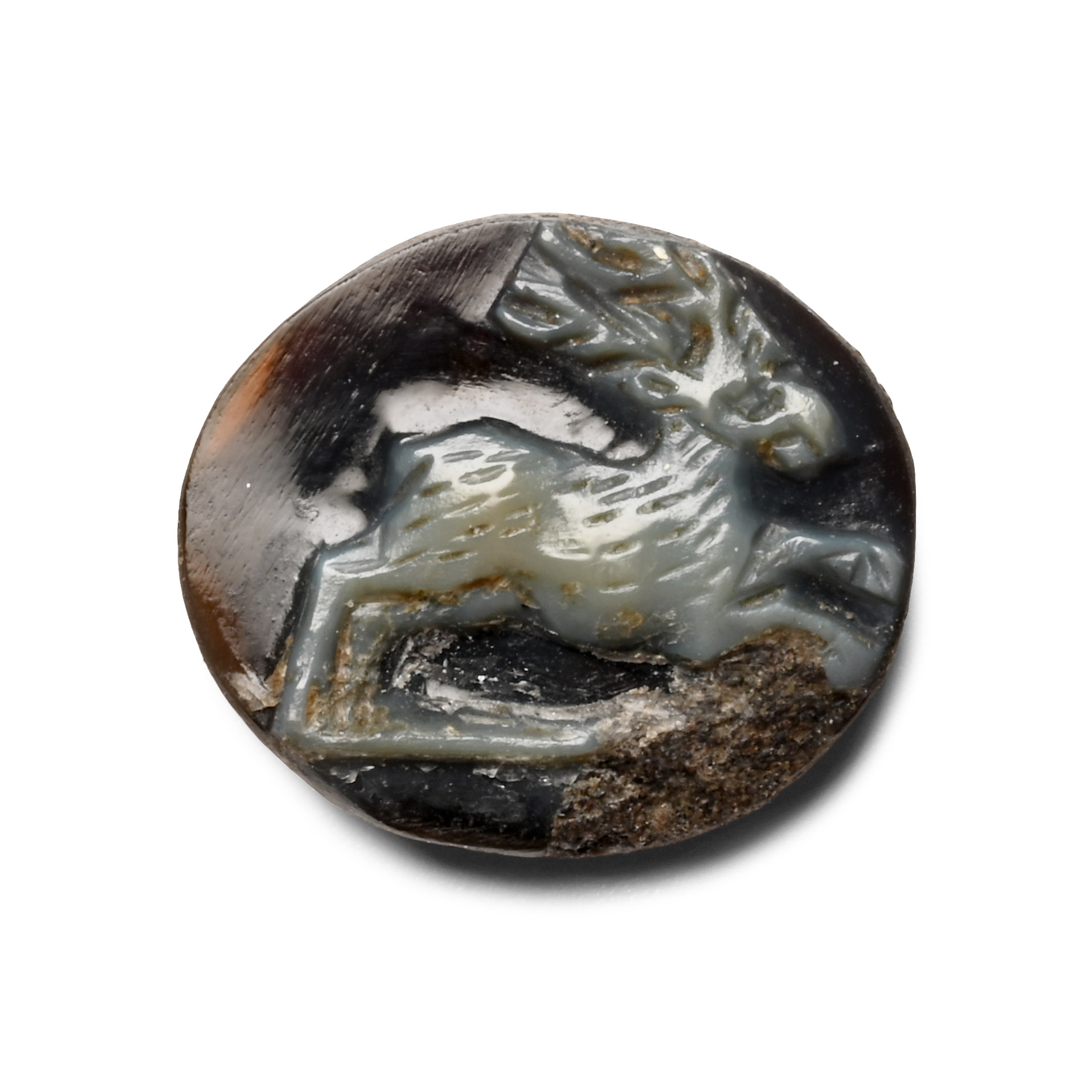
Roman Sardonyx Cameo of a Leaping Stag
2ND-3RD CENTURY A.D.
3/8 in. (0.43 grams, 11 mm).
With a cameo image of a male antelope jumping right; supplied with a museum-quality impression.
ProvenancePrivate English collection, formed between the late 1970s and early 1990s.
Private collection, London, UK.
TimeLine Auctions follows a vetting process to ensure the authenticity and legality of all items, reinforcing our commitment to integrity and responsible trading. Each antiquity, antique, and coin lot undergoes thorough examination by a vetting committee of at least ten external specialists, professional trade association members, scientists, and archaeologists: Our Vetting Process
AUCTIONS:
TimeLine is a leading auction house specialising in antiquities, ancient art, collectables, natural history, coins, medals, and books. Our auctions offer museums, collectors, historians, and enthusiasts the opportunity to acquire unique and historically significant pieces.
LOT 0088
Roman Sardonyx Cameo of a Leaping Stag
Estimate £500 - 700€580 - 810 (for guidance only)$680 - 950 (for guidance only)
-
.jpg)
Roman Bronze Ring with Standing Goddess
2nd-4th century A.D.Sold for (Inc. bp): £59
Comprising a D-section hoop (split), and an oval bezel with standing goddess, possibly Venus. 3.39 grams, 21.26 mm overall, 18.03 mm internal diameter (approximate size British M 1/2, USA 6 1/4, Europe 13.09, Japan 12)
Ex German art market, 2000s. Acquired from an EU collector living in London. From the collection of a Surrey, UK, gentleman. -
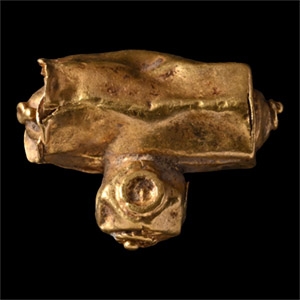
Roman Gold Amulet Case
5th-6th century A.D.Sold for (Inc. bp): £124
Cylindrical body with domed finials with applied pellets, cornerless cube-shaped suspension loop with applied pellet and filigree annulets. 0.78 grams, 14 mm
Ex property of a late Japanese collector, 1970-2000s. This lot is accompanied by an illustrated lot declaration signed by the Head of the Antiquities Department, Dr Raffaele D'Amato.
Assessing the typology and chronology of such amulet capsules is very difficult, and precise dating is usually impossible, especially since the context of the find is often unknown, as in this case. According to Schienerl, prismatic, usually hexagonal amulet capsules only appear in the 2nd or 3rd century, while the use of amulets in the Eastern Roman Empire ceased after the 7th century. -
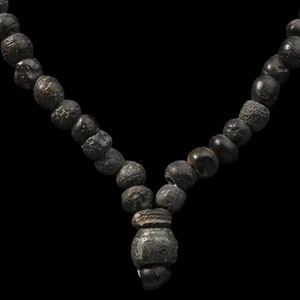
Roman Black Glass Bead Necklace String
1st-4th century A.D. and laterSold for (Inc. bp): £85
Restrung designer necklace string of annular, oblate and other types with pendant centrepiece. 24.3 grams, 44.5 cm
London, UK, collection, 2000s.
