
Loading, please wait...
LOT 0605
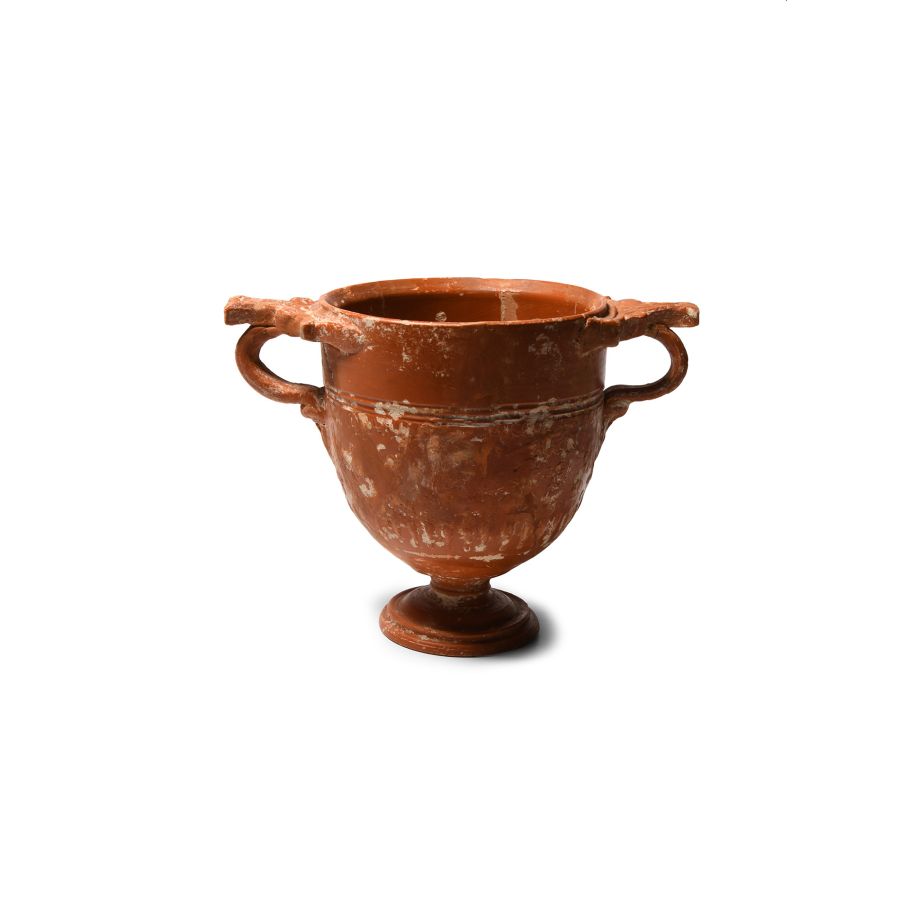
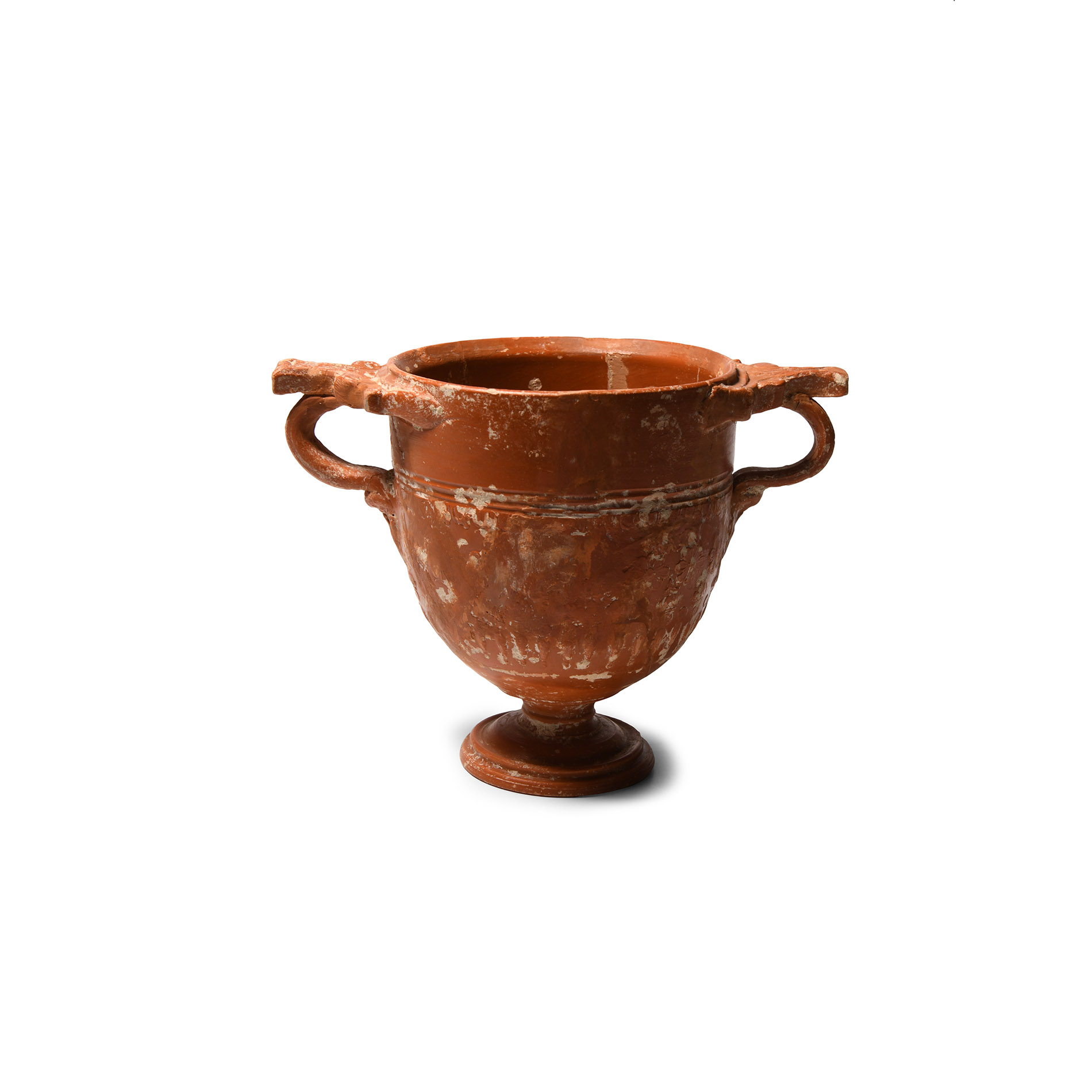
Roman Samian Ware Wine Cup
1ST CENTURY B.C.-1ST CENTURY A.D.
5 in. (111 grams, 12.5 cm wide).
Or a scyphus drinking cup, composed of a conical body, moulded foot, volute plates with gusseted handles below, bearded mature male mask plaques to the handle bases; floral, geometric and architectural decorative motifs to the body; possible maker's finger prints in the clay; some restoration.
ProvenanceEnglish collection, 1990s.
Ex property of a Suffolk, UK, gentleman.
Cf. The Metropolitan Museum, New York, accession number 17.194.894, for a comparable vessel.
FootnotesProlific workshops making such terracotta operated at Arretium (modern Arezzo, Italy) during the Julio-Claudian period. They displayed lavish relief depictions of mythological scenes or floral and foliate ornamentation.
CONDITIONTimeLine Auctions follows a vetting process to ensure the authenticity and legality of all items, reinforcing our commitment to integrity and responsible trading. Each antiquity, antique, and coin lot undergoes thorough examination by a vetting committee of at least ten external specialists, professional trade association members, scientists, and archaeologists: Our Vetting Process
AUCTIONS:
TimeLine is a leading auction house specialising in antiquities, ancient art, collectables, natural history, coins, medals, and books. Our auctions offer museums, collectors, historians, and enthusiasts the opportunity to acquire unique and historically significant pieces.
-
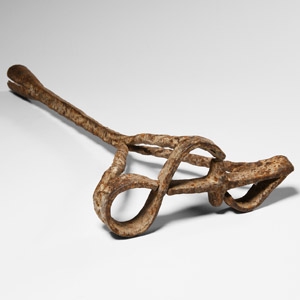
Late Roman Iron Branding Signaculum
5th-6th century A.D.Estimate: £100 - 140 (+bp*)
Opening Bid: £40
Featuring an elaborate monogram composed of Greek letters M and O, supported by decoratively twisted prongs; tapering cylindrical socket. 521 grams, 37.5 cm
Acquired 1990s-early 2000s. East Anglian private collection.
Branding stamps or signacula, in particular those with large single letters, were used for marking livestock to identify the ownership, the breed, the quality and other features of the animal. The signacula were usually made in bronze, but iron examples are also preserved. -
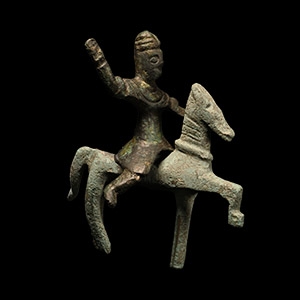
Roman Bronze Horse and Rider
3rd-4th century A.D.Sold for (Inc. bp): £176
Each figure modelled separately in the round; the horse standing with one foreleg raised at a right angle, simple stylised head detailing; the rider modelled seated with one leg either side of the horse, one arm extended above the head, the other held forwards, stylised facial detailing. 35 grams total, 39-45 mm
Acquired on the EU art market around 2000. From the collection of North American gentleman. -
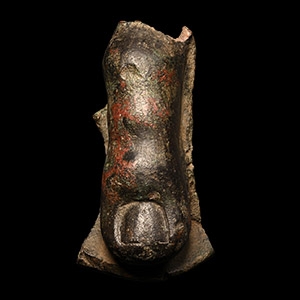
Large Roman Bronze Statue Toe
1st-2nd century A.D.Sold for (Inc. bp): £312
Modelled with naturalistic nail detailing. 155 grams, 69 mm
Acquired early 2000s. Property of a Birmingham, UK, collector. Property of an Essex, UK, gentleman.
