
Loading, please wait...
LOT 0642
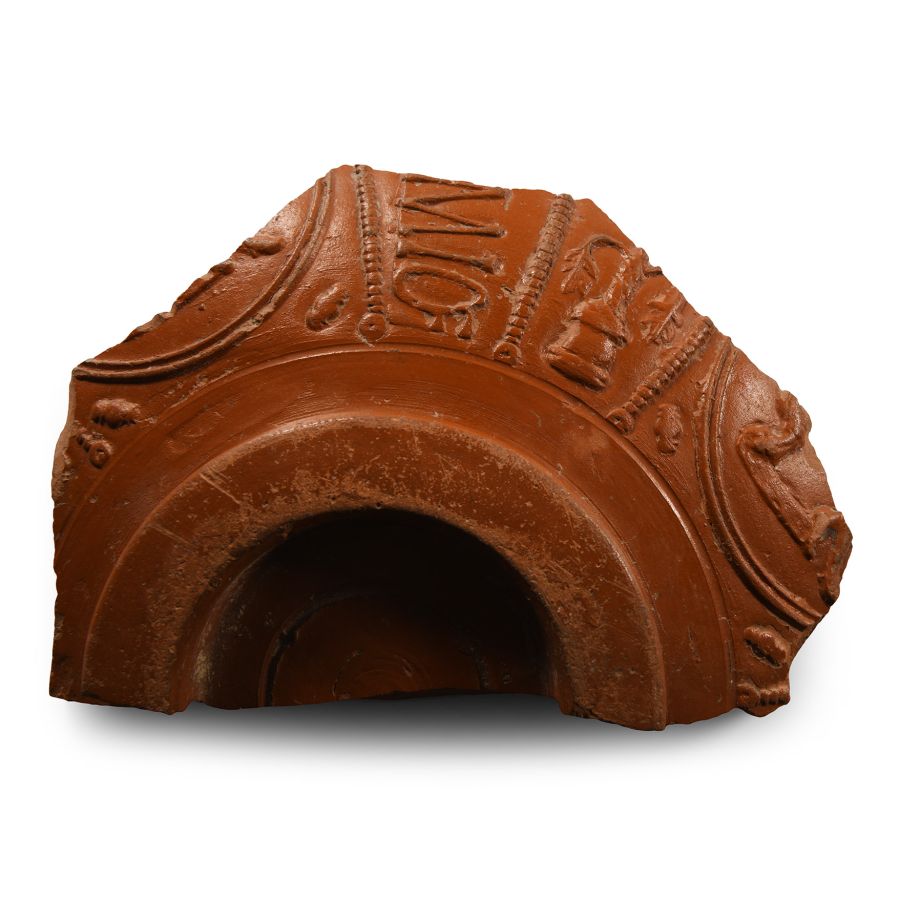
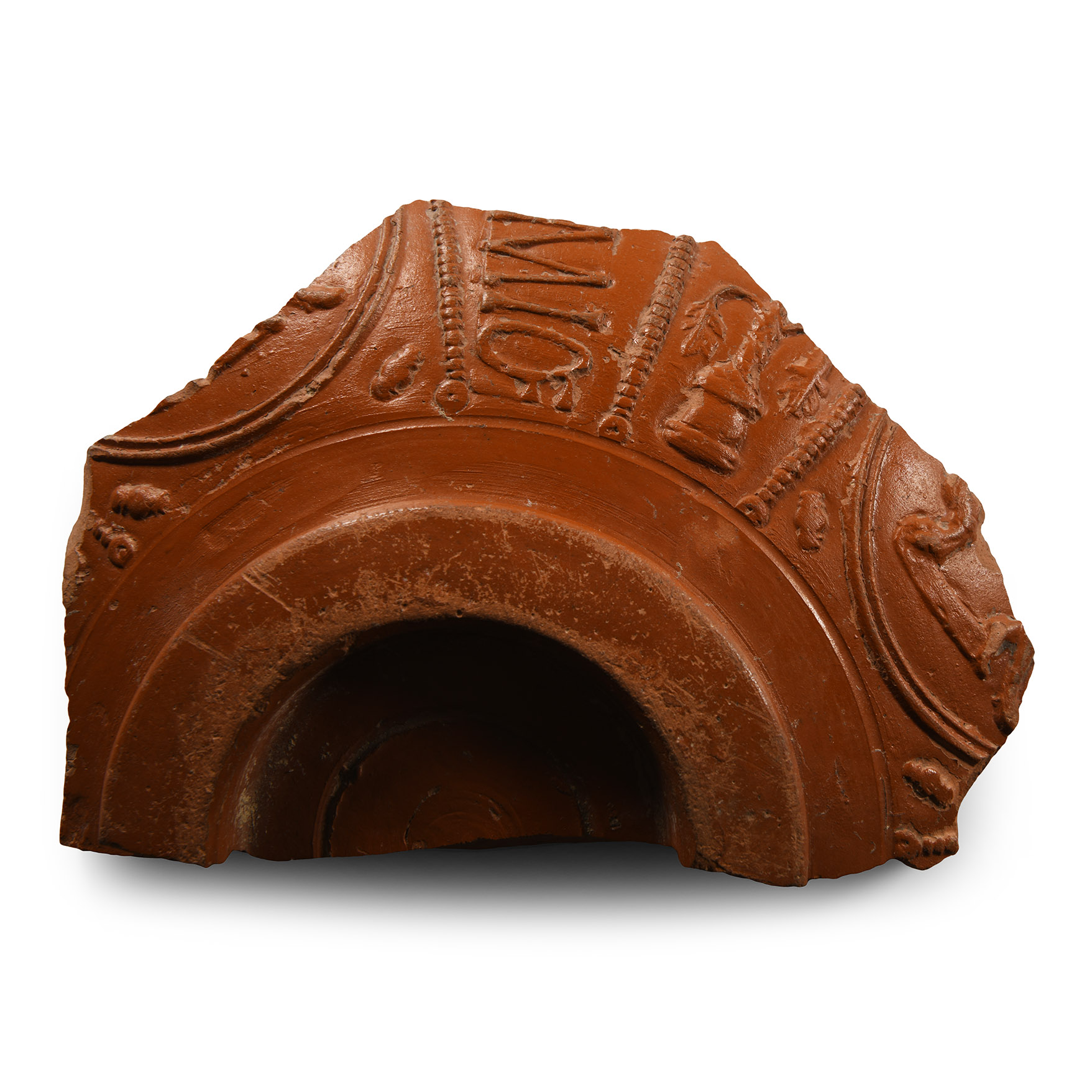
Roman Samian Ware Sherd with Inscription
2ND CENTURY A.D.
4 3/4 in. (140 grams, 12 cm).
Bowl fragment in burnished redware with high-relief swags and gadroons; one with epigraphic '[..]MIO' legend. [No Reserve]
ProvenanceFrom the collection of a late East Anglian teacher and antiquarian who retired to the Isle of Wight in Hampshire, UK.
He amassed a large collection of objects between the 1960s-1980s.
See Curle, J., A Roman Frontier Post and its People, Glasgow, 1911, figs.pp.223,227, pl.XLIV, for bowls with similar decoration.
FootnotesThe surface divided into panels by conventional palm-leaf ornament reports often the inscription [CINNAMI]. The letter here left could be the end of the stamp CINNAMI, if we consider the last letter O just an ornament. His work was common throughout Gallia and Britannia. He belongs to a period of great activity at Lezoux, but also to a time when the potteries on the Rhine had to some extent displaced the wares of the south. In Scotland we must associate his wares with the Antonine occupation.
CONDITIONTimeLine Auctions follows a vetting process to ensure the authenticity and legality of all items, reinforcing our commitment to integrity and responsible trading. Each antiquity, antique, and coin lot undergoes thorough examination by a vetting committee of at least ten external specialists, professional trade association members, scientists, and archaeologists: Our Vetting Process
AUCTIONS:
TimeLine is a leading auction house specialising in antiquities, ancient art, collectables, natural history, coins, medals, and books. Our auctions offer museums, collectors, historians, and enthusiasts the opportunity to acquire unique and historically significant pieces.
-
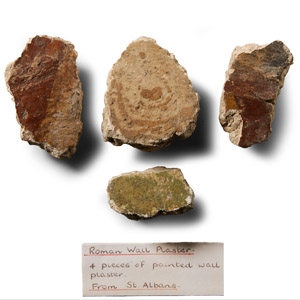
Romano-British 'St Albans' Painted Fresco Wall Plaster Fragment Collection
1st-4th century A.D.Sold for (Inc. bp): £26
With painted stripe, swirl and other motifs, supplied with old collector's record card 'Roman Wall Plaster / 4 pieces of painted wall plaster. From St. Albans'. 70 grams total, 36-51 mm
Found St Albans, Hertfordshire, UK. From the collection of a late East Anglian teacher and antiquarian who retired to the Isle of Wight in Hampshire, UK. He amassed a large collection of objects between the 1960s-1980s. -
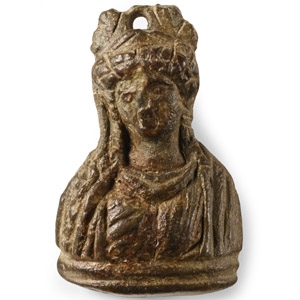
Roman Bronze Steelyard Weight
3rd-4th century A.D.Sold for (Inc. bp): £338
Formed as a female bust with stola and tunic, braided hair dressed in a chignon; transverse ribbing above the flat base, pierced lug forming part of the hairstyle. 22.5 grams, 33 mm
Found Wiltshire, UK, before 1974. -
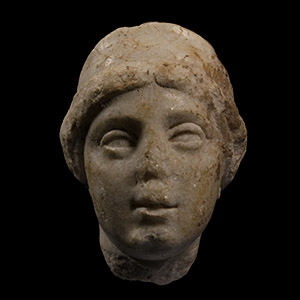
Roman Marble Head of a Woman
1st-3rd century A.D.Estimate: £1,800 - 2,400 (‡+bp*)
Opening Bid: £1,000
Carved in the round with carinated diadem in the hair, heavily lidded eyes, small mouth with pursed lips. 620 grams, 95 mm
Acquired in the mid 1980s-1990s. From the family collection of Mr S.A., Switzerland, thence by descent. Private collection since the late 1990s. This lot has been checked against the Interpol Database of stolen works of art and is accompanied by a search certificate number no.12102-218191.
