
Loading, please wait...
LOT 0699
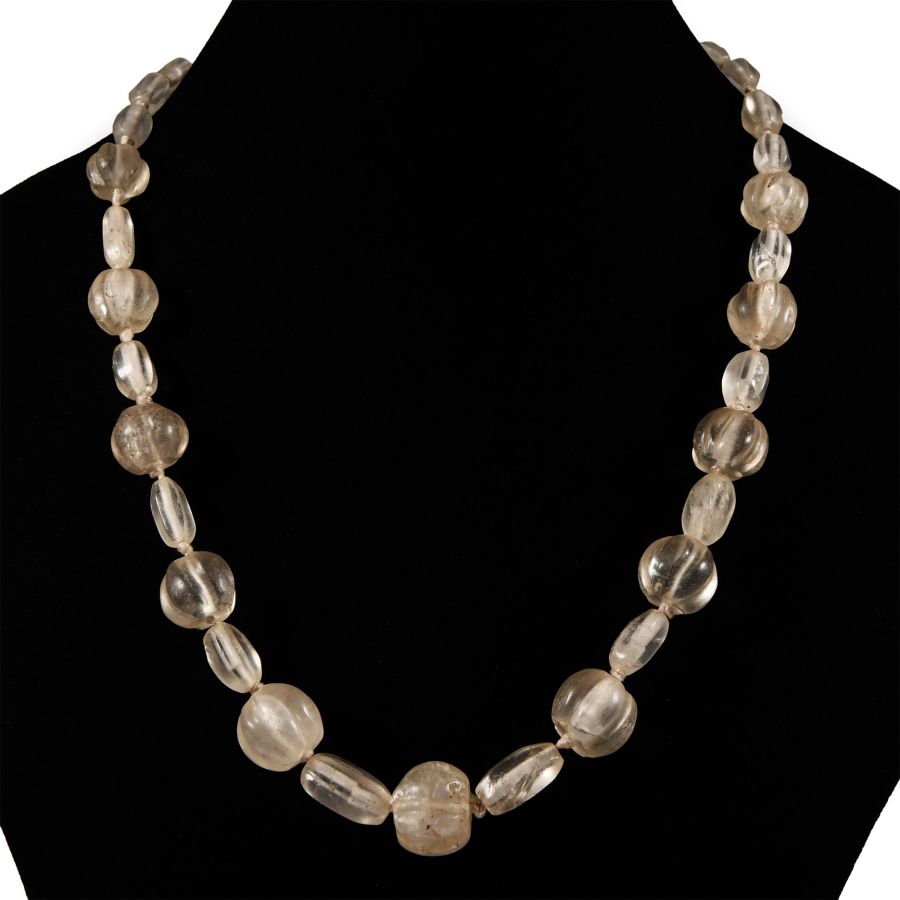
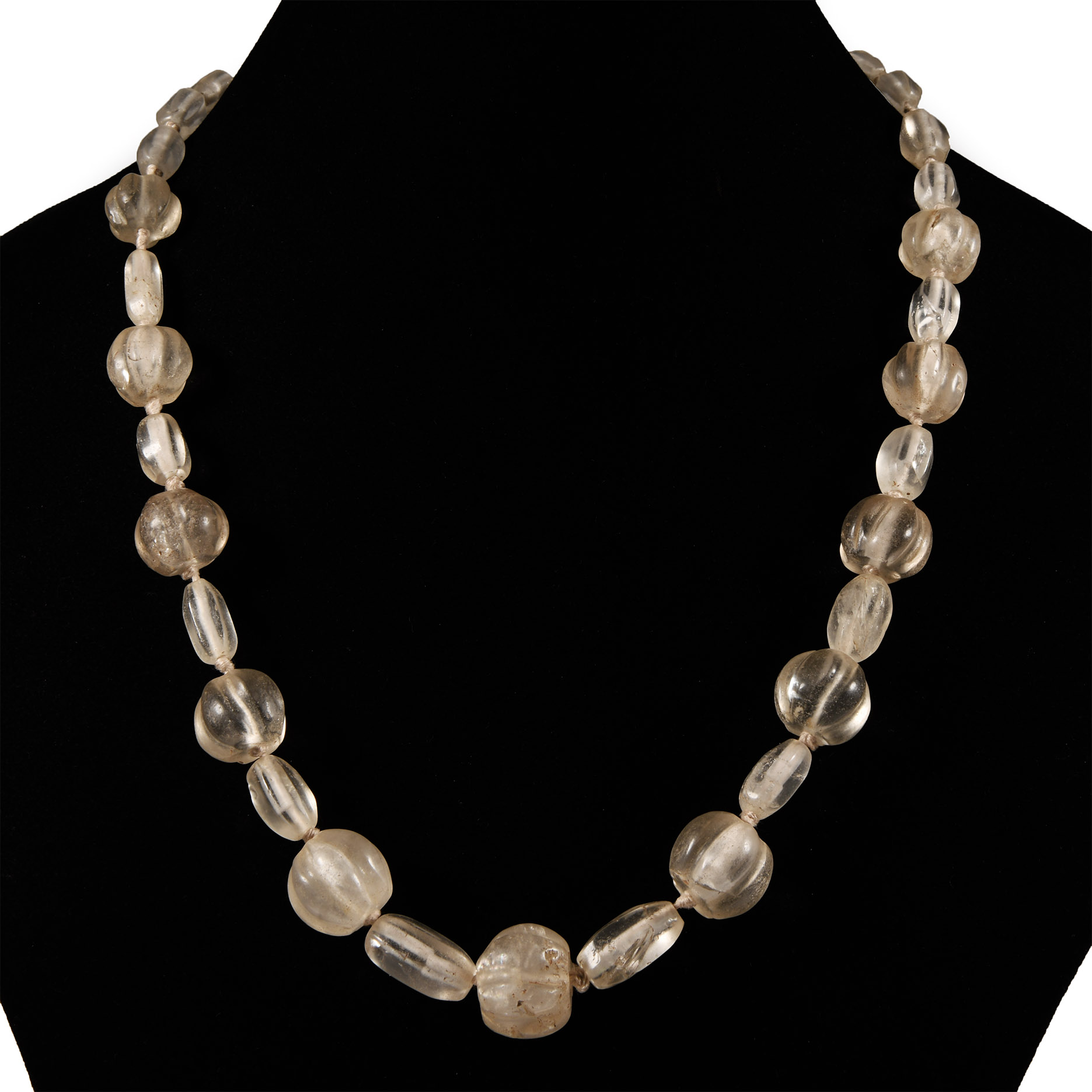
Roman Rock Crystal Bead Necklace
2ND-3RD CENTURY A.D.
21 in. (103 grams, 53.5 cm long).
Restrung group of clear quartz melon bead and hexagonal-section tubular beads.
Provenancewith a London, UK gallery 1971.
CONDITIONTimeLine Auctions follows a vetting process to ensure the authenticity and legality of all items, reinforcing our commitment to integrity and responsible trading. Each antiquity, antique, and coin lot undergoes thorough examination by a vetting committee of at least ten external specialists, professional trade association members, scientists, and archaeologists: Our Vetting Process
AUCTIONS:
TimeLine is a leading auction house specialising in antiquities, ancient art, collectables, natural history, coins, medals, and books. Our auctions offer museums, collectors, historians, and enthusiasts the opportunity to acquire unique and historically significant pieces.
-
.jpg)
Roman Mosaic and Other Glass Necklace Bead Group
Circa 1st-4th century A.D.Sold for (Inc. bp): £117
Comprising thirty glass beads of various sizes, including mosaic beads and some with drawn decoration. 49 grams total, 7-13 mm
UK gallery, early 2000s.
The mass production of glass in Ancient Rome prompted the development of glass jewellery of unique qualities. The ancient Romans considered jewellery to be an essential accessory, being a public display of the wealth of high social classes. Recent excavations have provided better information on the use of glass beads for necklaces and bracelets, and in some case has been possible to understand the exact arrangement of a necklace or other jewellery made of glass. Many of the examples here presented belongs to the so-called category of ‘eye-beads’. -
.jpg)
Roman Decorated Votive Lead Mirror
2nd-3rd century A.D.Sold for (Inc. bp): £117
With ribbed handle, discoid plate with raised rib to one face, running scrolls to the other, lateral struts. 43 grams, 11 cm
Ex German art market, 2000s. Acquired from an EU collector living in London. From the collection of Surrey, UK, gentleman.
Many examples of this category from the Danube region were found in female graves, where they possibly served as grave goods considered appropriate for their connection with general issues of fertility, good fortune, and beauty, or even as protective amulets. Since lead mirror frames have been found in this Roman province only in graves of women, it is probable that these miniature mirrors, fitted with a central glass, were expected to serve as ritual or magical tools to assist souls of dead women in the afterlife. -
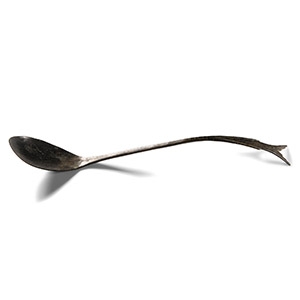
Roman Swallow-Tailed Bronze Spoon
Circa 1st-3rd century A.D.Sold for (Inc. bp): £260
With shallow lenticular bowl, swept handle, swallow-tail finial with notched edges. 48 grams, 28 cm
From a collection acquired on the UK art market from various auction houses and collections mostly before 2000. From an important Cambridgeshire estate; thence by descent.
