
Loading, please wait...
LOT 0883
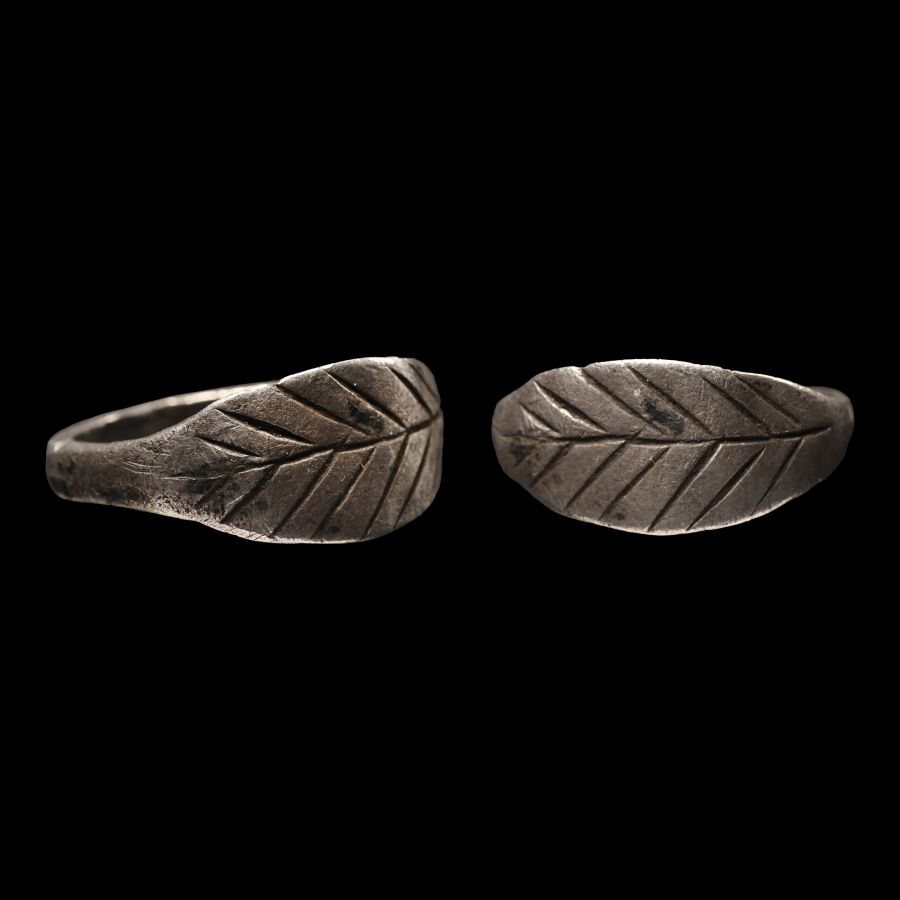
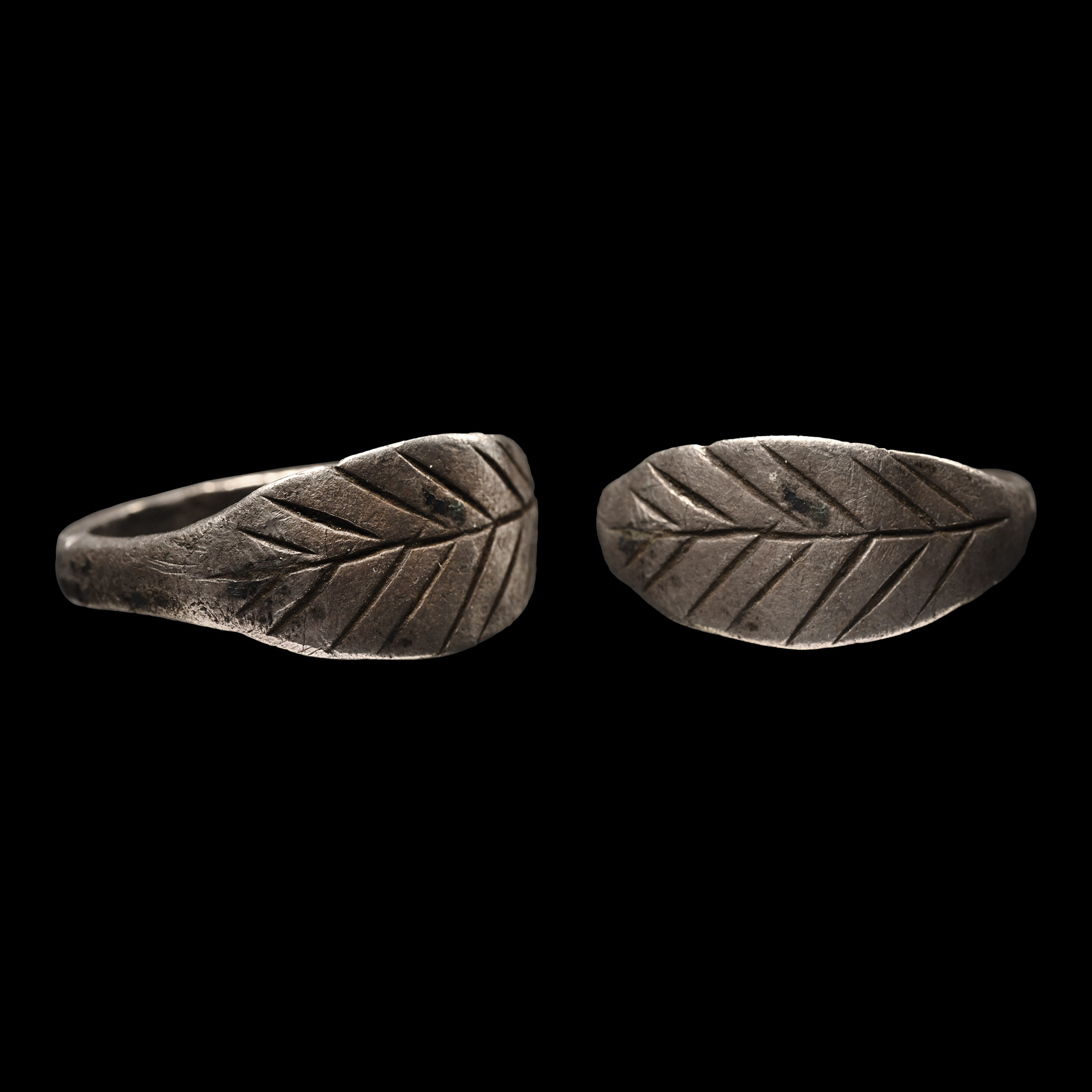
Roman Ring with Palm Branch
3RD-4TH CENTURY A.D.
3/4 in. (2.47 grams, 19.30 mm overall, 16.66 x 14.81 mm internal diameter (approximate size British H 1/2, USA 4, Europe 6.81, Japan 6)).
Rectangular hoop with a lentoid bezel bearing an incised palm branch motif. [No Reserve]
ProvenanceEx German art market, 2000s.
Acquired from an EU collector living in London.
From the collection of a Surrey, UK, gentleman.
This lot is accompanied by an illustrated lot declaration signed by the Head of the Antiquities Department, Dr Raffaele D'Amato.
TimeLine Auctions follows a vetting process to ensure the authenticity and legality of all items, reinforcing our commitment to integrity and responsible trading. Each antiquity, antique, and coin lot undergoes thorough examination by a vetting committee of at least ten external specialists, professional trade association members, scientists, and archaeologists: Our Vetting Process
AUCTIONS:
TimeLine is a leading auction house specialising in antiquities, ancient art, collectables, natural history, coins, medals, and books. Our auctions offer museums, collectors, historians, and enthusiasts the opportunity to acquire unique and historically significant pieces.
-
.jpg)
Roman Gold Amuletic Case Pendant with Menorah
1st-4th century A.D.Sold for (Inc. bp): £5,460
Comprising a barrel-shaped hematite body with gold-sheet caps to each end with suspension loop above and a central band with similar loop above; the central band with an applied menorah to the centre, lulav, etrog, shofar and incense shovel on the sides; lower edge with small suspension attachments with a horizontal gold wire holding three pomegranate pendants and two amethyst beads, one of the pomegranates retaining its original pearl. 9.67 grams, 37 mm
Private collection, kept in Europe since the 1960s. Accompanied by a positive scientific statement from Striptwist Limited, a London-based company run by historical precious metal specialist Dr Jack Ogden, reference number 190901. This lot has been checked against the Interpol Database of stolen works of art and is accompanied by a search certificate number no.12679-235461. This lot has been cleared against the Art Loss Register database, and is accompanied by an illustrated lot declaration signed by the Head of the Antiquities Department, Dr Raffaele D'Amato. -
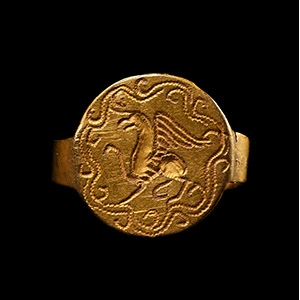
Late Roman Gold Ring with Engraved Bezel
Iberia, 4th-7th century A.D.Sold for (Inc. bp): £1,580
Flat-section hoop and disc bezel, scrolled tendril border and stylised gryphon. 1.78 grams, 17.72 mm overall, 15.63 mm internal diameter (approximate size British H, USA 3 3/4, Europe 6.18, Japan 6)
Acquired in the mid 1980s-1990s. Private collection, Switzerland, thence by descent. Private collection, since the late 1990s. This lot has been cleared against the Art Loss Register database, and is accompanied by an illustrated lot declaration signed by the Head of the Antiquities Department, Dr Raffaele D'Amato. -
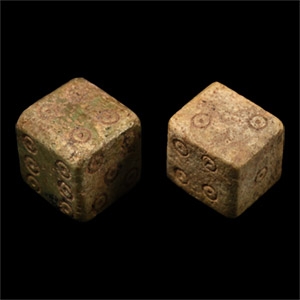
Roman Bone Gaming Dice Pair
1st-3rd century A.D.Sold for (Inc. bp): £234
Each cuboid with ring-and-dot markings disposed 1:6, 2:5, 3:4. 5384 grams total, 12 mm each
Acquired in the mid 1980s-1990s. Private collection, Switzerland, thence by descent. Private collection, since the late 1990s. This lot is accompanied by an illustrated lot declaration signed by the Head of the Antiquities Department, Dr Raffaele D'Amato.
