
Loading, please wait...
LOT 0862
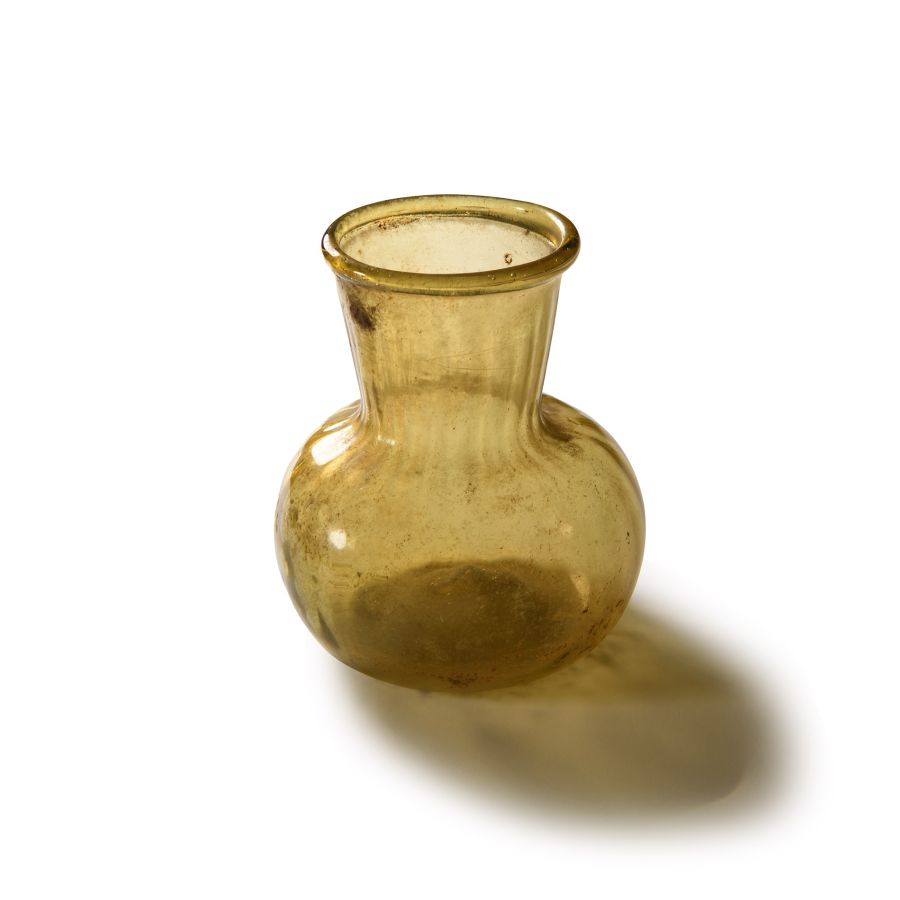
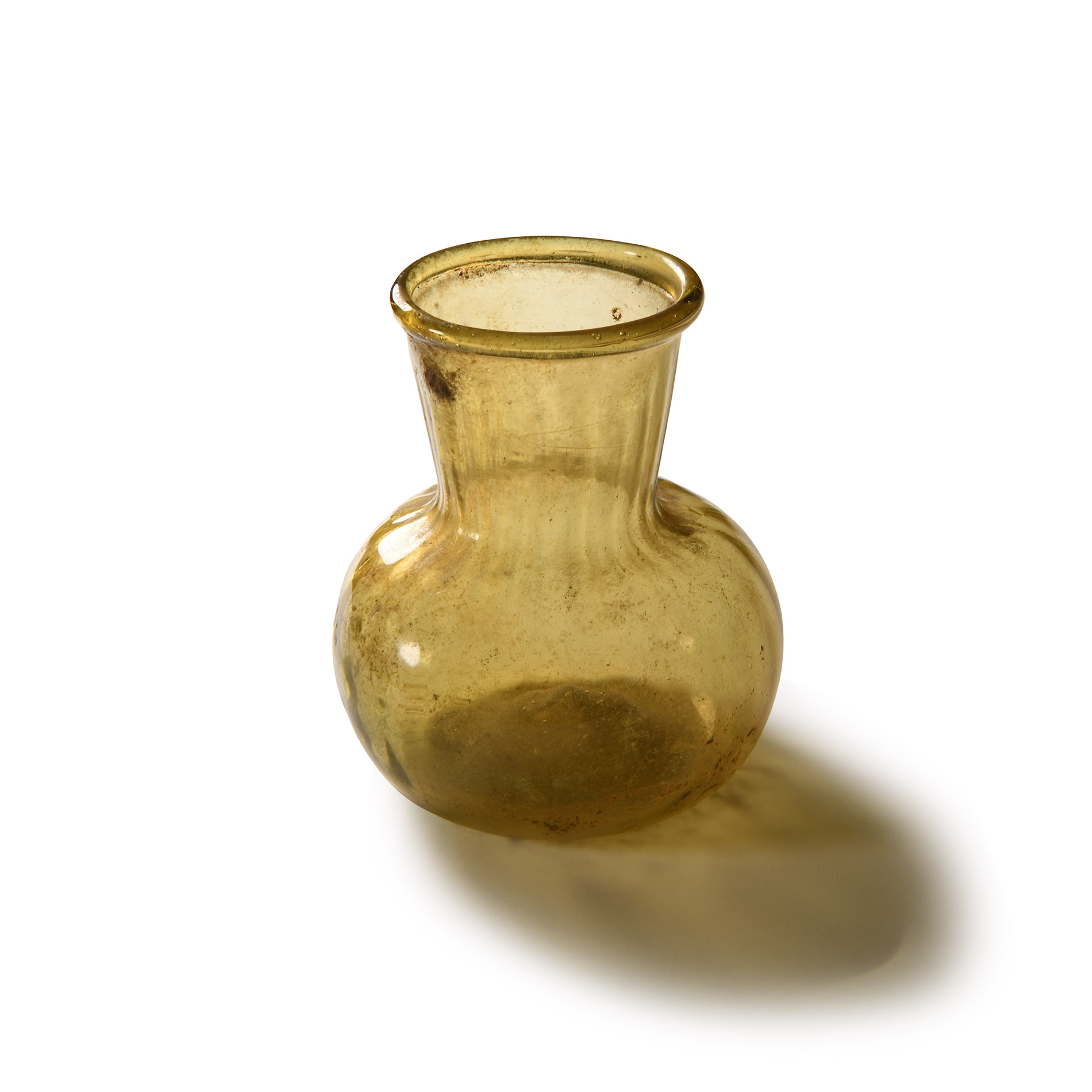
Roman Ribbed Glass Vessel
3RD-4TH CENTURY A.D.
2 3/8 in. (33 grams, 62 mm).
With globular body, vertical ribbing, broad funicular mouth with rounded rim.
ProvenanceAcquired 1980-2015.
Ex Abelita family collection.
Cf. Whitehouse, D., Roman Glass in the Corning Museum of Glass, vol.1, New York, 1997, item 286, for type.
CONDITIONTimeLine Auctions follows a vetting process to ensure the authenticity and legality of all items, reinforcing our commitment to integrity and responsible trading. Each antiquity, antique, and coin lot undergoes thorough examination by a vetting committee of at least ten external specialists, professional trade association members, scientists, and archaeologists: Our Vetting Process
AUCTIONS:
TimeLine is a leading auction house specialising in antiquities, ancient art, collectables, natural history, coins, medals, and books. Our auctions offer museums, collectors, historians, and enthusiasts the opportunity to acquire unique and historically significant pieces.
-
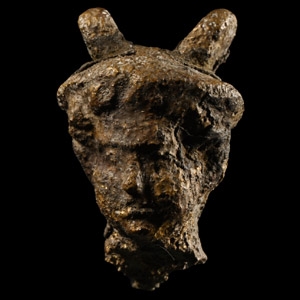
Roman Bronze Statuette Head of Mercury
Circa 2nd century A.D.Sold for (Inc. bp): £130
Wearing a broad-brimmed petasos with wings above, curls of hair beneath, youthful features. 41 grams, 31 mm
From a collection acquired on the UK art market from various auction houses and collections mostly before 2000. From an important Cambridgeshire estate; thence by descent.
Mercury was the god of trade and industry, whose principle shrine in the city of Rome was at the Circus Maximus. Originally he was one of the gods of riches and profit and it was not until he was equated with the Greek Hermes that he became the god of tradesmen and merchants. He was also the god of thieves and was associated with healing mainly in Gaul where he had a number of important temples connected to sacred springs. -
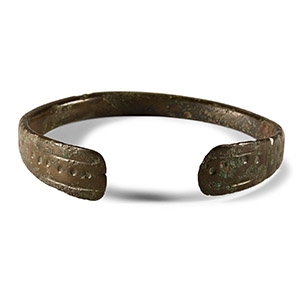
Roman Bronze Decorated Bracelet
1st-3rd century A.D.Sold for (Inc. bp): £72
Composed of a D-section hoop, flattened terminals with rounded ends decorated with horizontal rows of shallow dots and quatrefoils between parallel tracks. 17 grams, 53 mm wide
German art market, 1990s. Mr A.H., a North American collector living in the UK. -
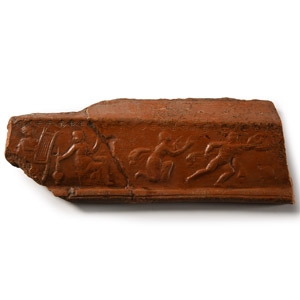
Roman Redware Pottery Sherd with Achilles and Thetis
4th-5th century A.D.Sold for (Inc. bp): £169
From the upper part of a vessel, displaying a frieze of profile images and figural scenes from Graeco-Roman mythology: a musician in late Roman garments playing a harp (Orpheus?), a seated woman weaving with a distaff in her hand (Penelope?), a kneeling naked woman imploring a naked warrior fighting with shield and spear (Achilles and Thetis?). 202 grams, 18 cm
Acquired 1960s-1990s. From the late Alison Barker collection, a retired London barrister.
This terra sigillata fragment appears to have been part of a large tray. Elements of dying paganism were still used to celebrate the deeds of the new imperial heroes. Note the detailed late Roman clothing of the harpist, with a chlamys-paludamentum on the right shoulder and the tunic decorated with clavi and orbiculi.
