
Loading, please wait...
LOT 0970
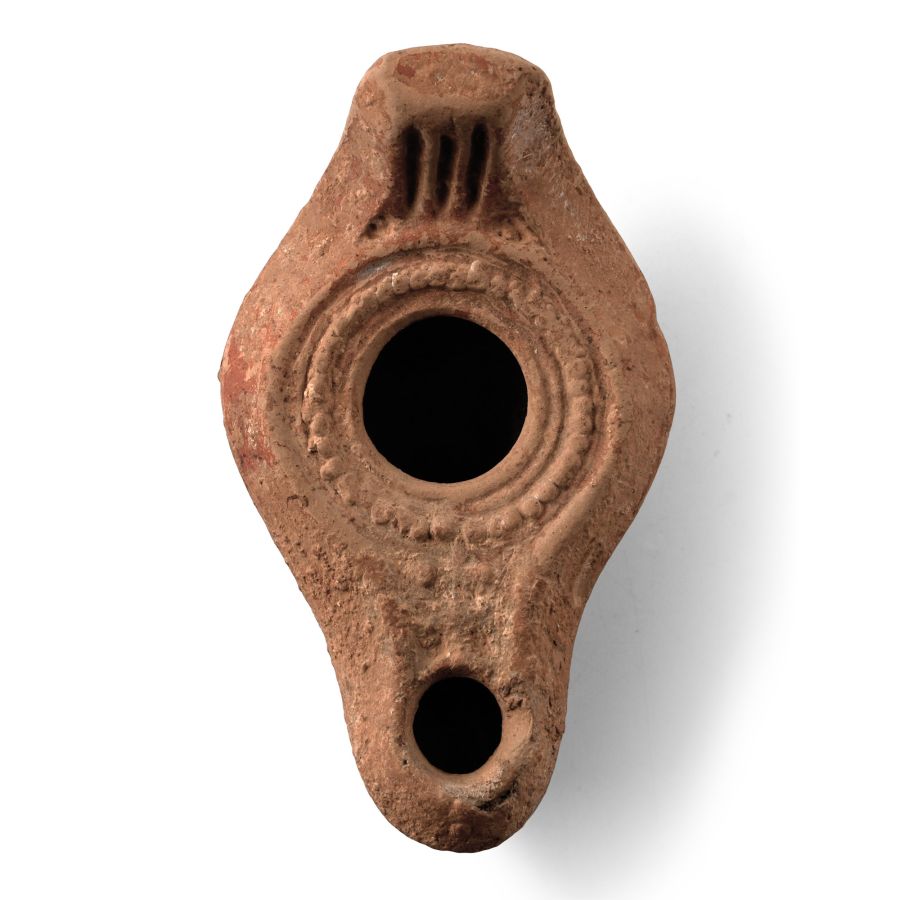
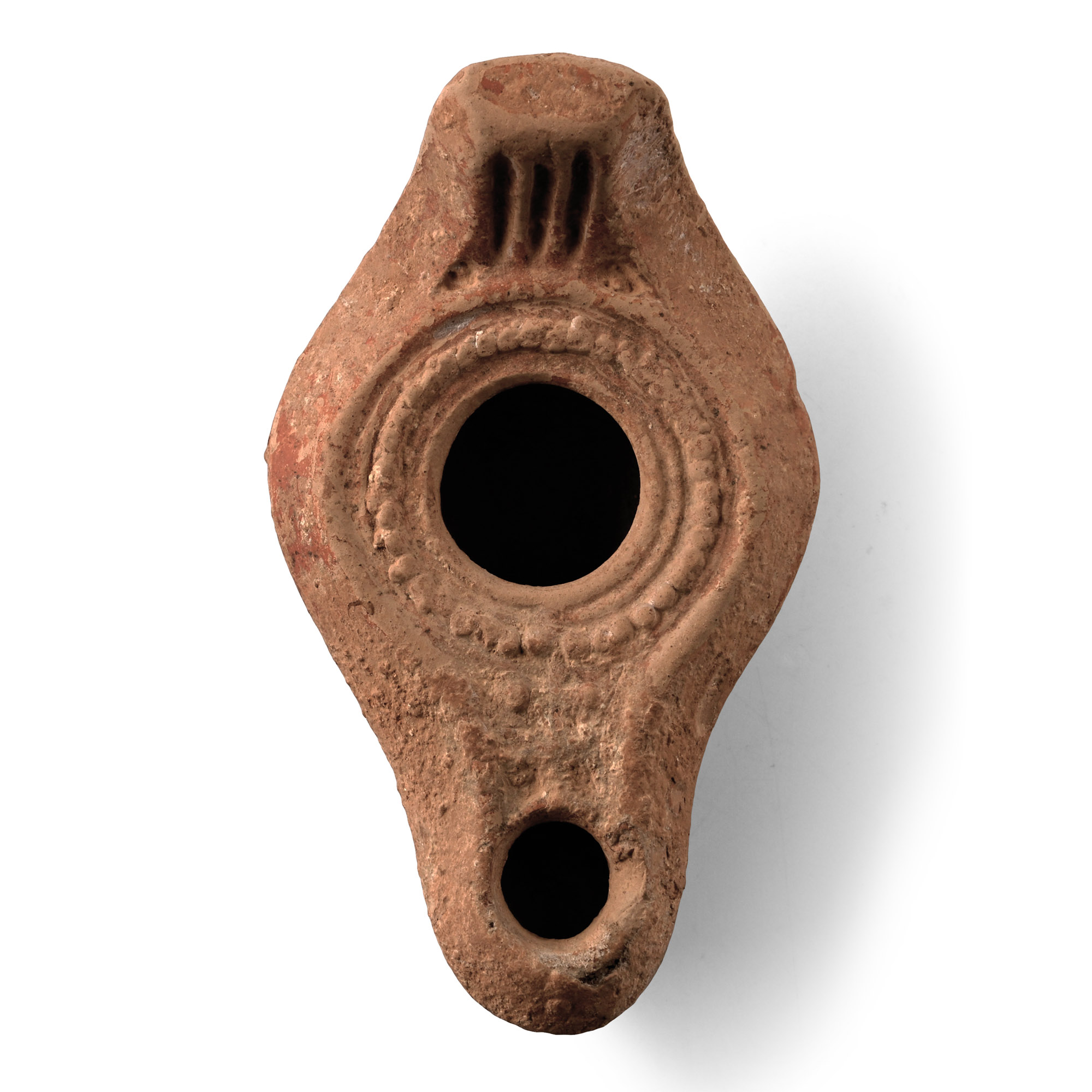
Roman Redware Terracotta Oil Lamp
3RD-4TH CENTURY A.D.
4 1/4 in. (120 grams, 10.8 cm).
Slipper-shaped type with stub nozzle, broad discus with beaded border to the filler-hole, ribbed reflector, incised detail to underside. [No Reserve]
ProvenanceFrom the old private collection of a retired UK gentleman; his collection formed in the 1990s.
LiteratureCf. Porat, R., Davidovich, U., Langford, B., Zissu, B., 'Votive Offerings from the Late Roman Period in the Te' omim Cave, Western Jerusalem Hills' in Taal, O., Weiss, Z., Expression of Cult in Southern Levant in the Greco-Roman Period, Turnhout, 2017, pp.111-130.
CONDITIONTimeLine Auctions follows a vetting process to ensure the authenticity and legality of all items, reinforcing our commitment to integrity and responsible trading. Each antiquity, antique, and coin lot undergoes thorough examination by a vetting committee of at least ten external specialists, professional trade association members, scientists, and archaeologists: Our Vetting Process
AUCTIONS:
TimeLine is a leading auction house specialising in antiquities, ancient art, collectables, natural history, coins, medals, and books. Our auctions offer museums, collectors, historians, and enthusiasts the opportunity to acquire unique and historically significant pieces.
-
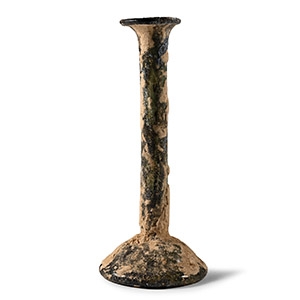
Roman Glass Vessel
1st-3rd century A.D.Estimate: £100 - 140 (+bp*)
Opening Bid: £50
Tall thin translucent pale green vessel with wide foot and dimpled base, tapering stem and flared rim. 27.6 grams, 12.5 cm
From a London, UK, collection, 1990s. This lot is accompanied by an illustrated lot declaration signed by the Head of the Antiquities Department, Dr Raffaele D’Amato.
Similar bottles were produced in Roman Cyprus, mainly. Hayes had divided the Cypriot products into three classes on the basis of the character of the glass. This example belongs to the third class, i.e. ‘very thin walled pieces in a pale fabric, almost colorless in parts’. -
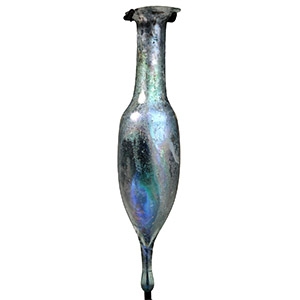
Roman Iridescent Blue Glass Flask
2nd-3rd century A.D.Sold for (Inc. bp): £845
Of fusiform type with a rolled lip and thick rounded bottom; iridescent surface. 198 grams total, 16.2 cm including stand
From an important collection of glass, London, UK, 1990s. -
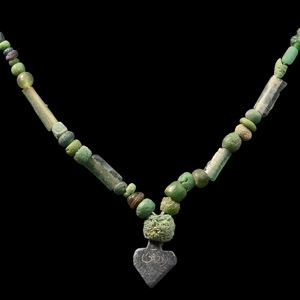
Roman Green Glass Bead Necklace String
1st-4th century A.D. and laterSold for (Inc. bp): £52
Restrung designer necklace string of tubular, oblate and other types with heart-shaped pendant centrepiece. 14.4 grams, 38.5 cm
London, UK, collection, 2000s.
