
Loading, please wait...
LOT 0790
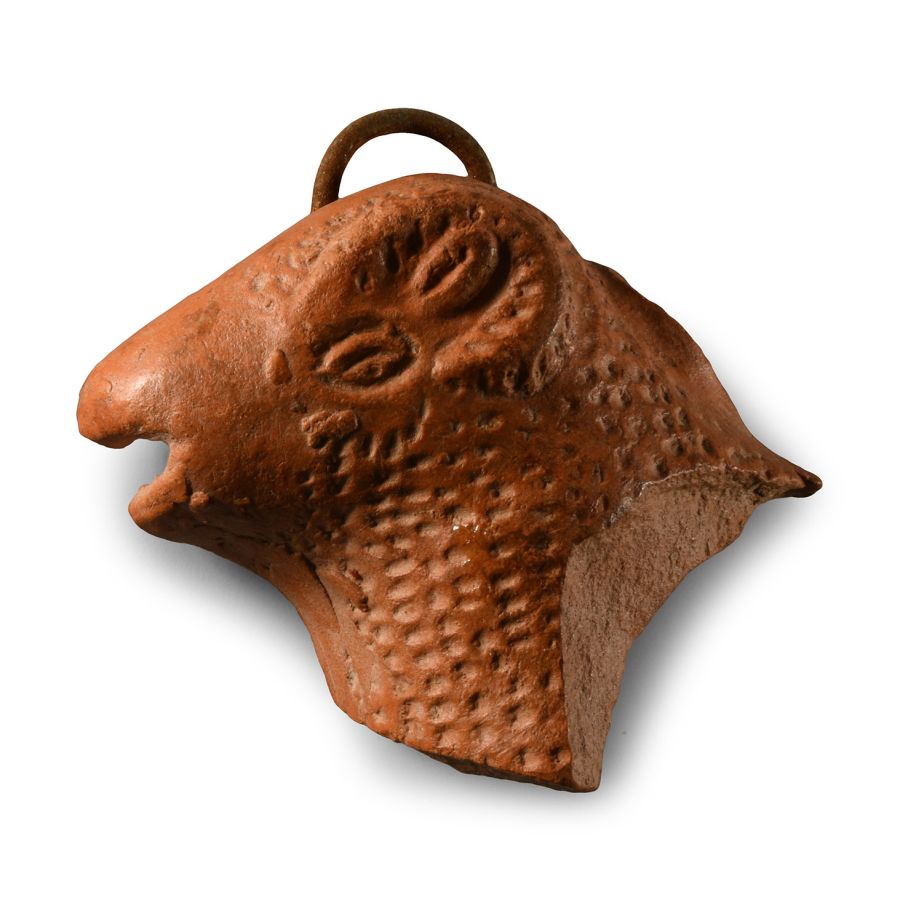
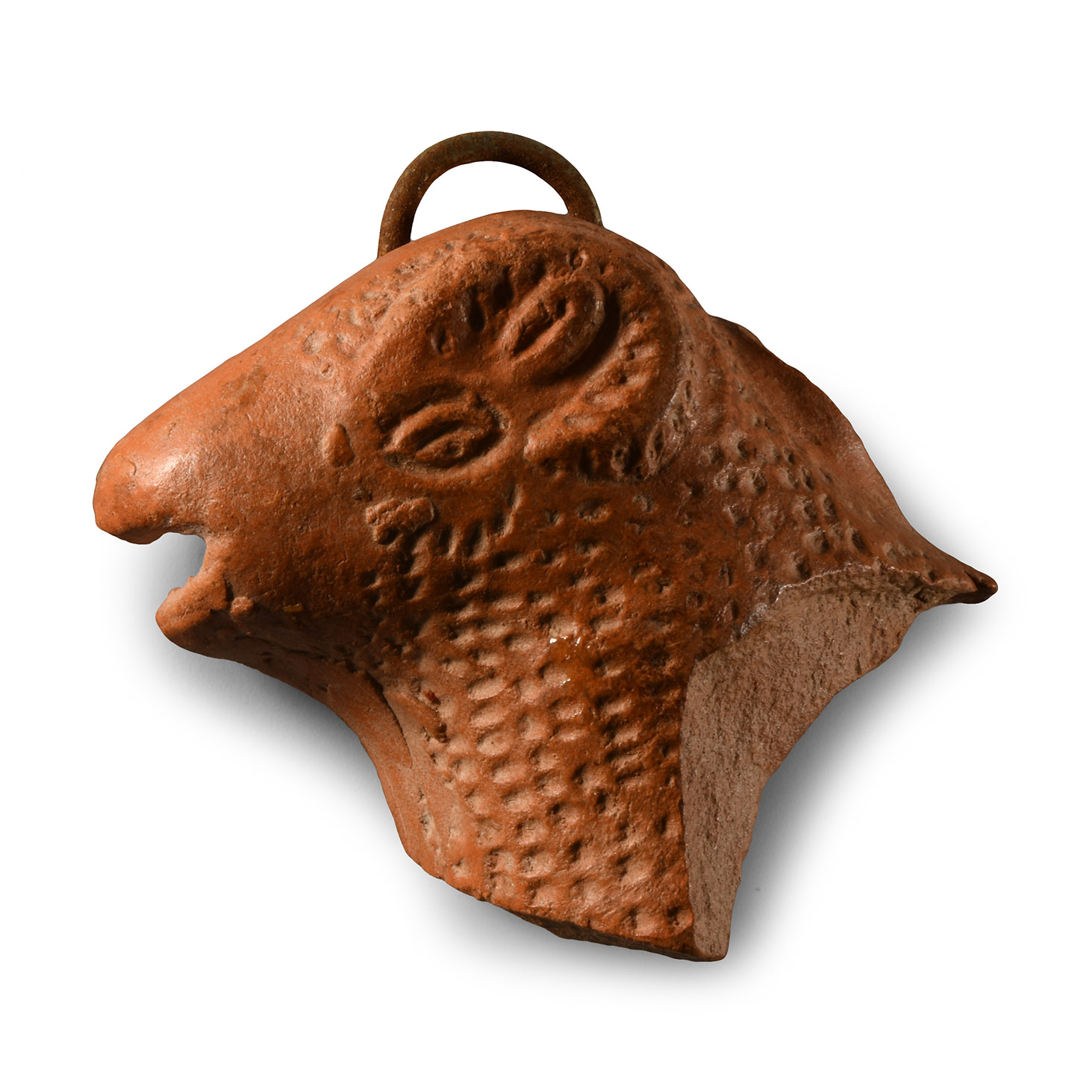
Roman Redware Ram Pottery Sherd
CIRCA 4TH-5TH CENTURY A.D.
3 in. (50 grams, 77 mm wide).
Fragment of a terracotta votive statuette representing a ram, detail to the horns, ears and fleece; set with a suspension ring on the reverse. [No Reserve]
ProvenanceAcquired 1960s-1990s.
From the late Alison Barker collection, a retired London barrister.
Cf. Burr, D., ‘The terracotta figurines’ in Hesperia: The Journal of the American School of Classical Studies at Athens, Vol. 2, No. 2, The American Excavations in the Athenian Agora: First Report, (1933), pp.184-194, fig.7, no.636, T50, for similar.
FootnotesMany figurines of this type have been found in the Hellenised Roman provinces of the east and one identical in the Athenian Agora. They are all rendered with incisions that are characteristic of the technique of the late fourth century. Many similar examples were found in the Kerameikos and some are in the National Museum of Archaeology, Athens. A similar technique is observable in the plastic handles representing animal heads which occur on red pottery ornamented with white paint.
CONDITIONTimeLine Auctions follows a vetting process to ensure the authenticity and legality of all items, reinforcing our commitment to integrity and responsible trading. Each antiquity, antique, and coin lot undergoes thorough examination by a vetting committee of at least ten external specialists, professional trade association members, scientists, and archaeologists: Our Vetting Process
AUCTIONS:
TimeLine is a leading auction house specialising in antiquities, ancient art, collectables, natural history, coins, medals, and books. Our auctions offer museums, collectors, historians, and enthusiasts the opportunity to acquire unique and historically significant pieces.
-
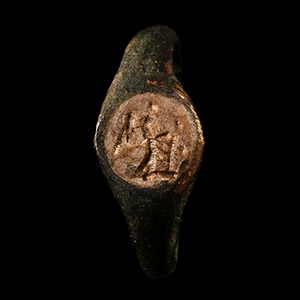
Roman Bronze Ring with Victory Gemstone
Circa 1st century B.C.Sold for (Inc. bp): £78
A Henig Type I ring circular in shape set with a chalcedony intaglio decorated with Victory standing in front of a column. 1.01 grams, 16.06 mm overall, 13.31 mm internal diameter (approximate size British D 1/2, USA 2, Europe 1.78, Japan 1)
Found near Welshpool, Wales, UK, on 23 October 2019. Accompanied by a copy of a Welshpool Portable Antiquities data sheet with PAS reference no.WREX-2A4F27. -
.jpg)
Roman Silver Statuette of Aesculapius
1st-2nd century A.D.Sold for (Inc. bp): £650
Standing wearing a loosely draped himation, with caduceus resting on the right hip; mounted on a custom-made stand. 75 grams total, 55 mm including stand
Ex Ancient Art, North London, UK. From a collection acquired on the UK art market from various auction houses and collections mostly before 2000. From an important Cambridgeshire estate; thence by descent. -
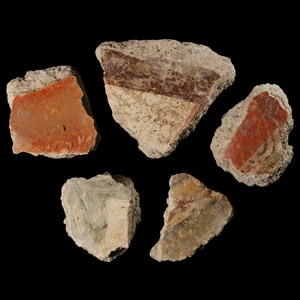
Roman Fresco Wall Plaster Collection
1st century B.C.Sold for (Inc. bp): £111
Second style, painted in red, blue and cream and decorated in contrasting colours. 631 grams total, 6.3-10.5 cm
Acquired in the 19th century. Ex Jeger collection, Switzerland.
These small fragments, with analogies with the fragments from Pompeii, seem to belong to the second style of Roman painting, where several simpler walls had an entirely yellow socle or a yellow socle with a darker main zone (more common in the middle phase of the style).
