
Loading, please wait...
LOT 0688
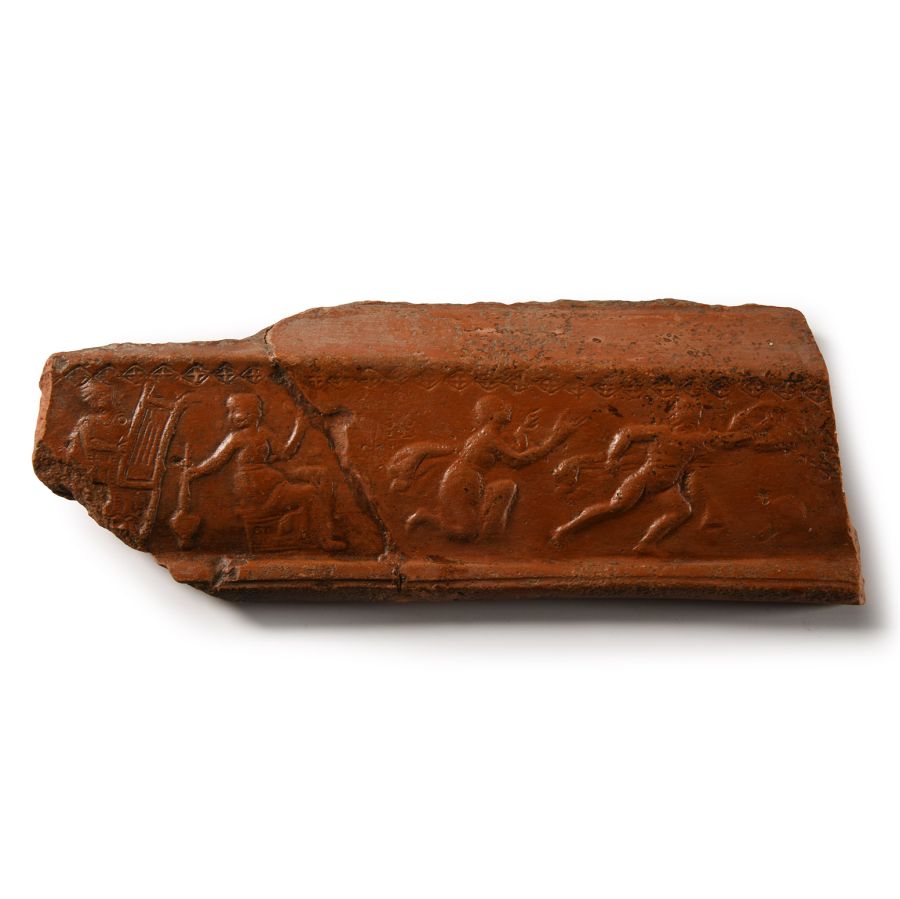
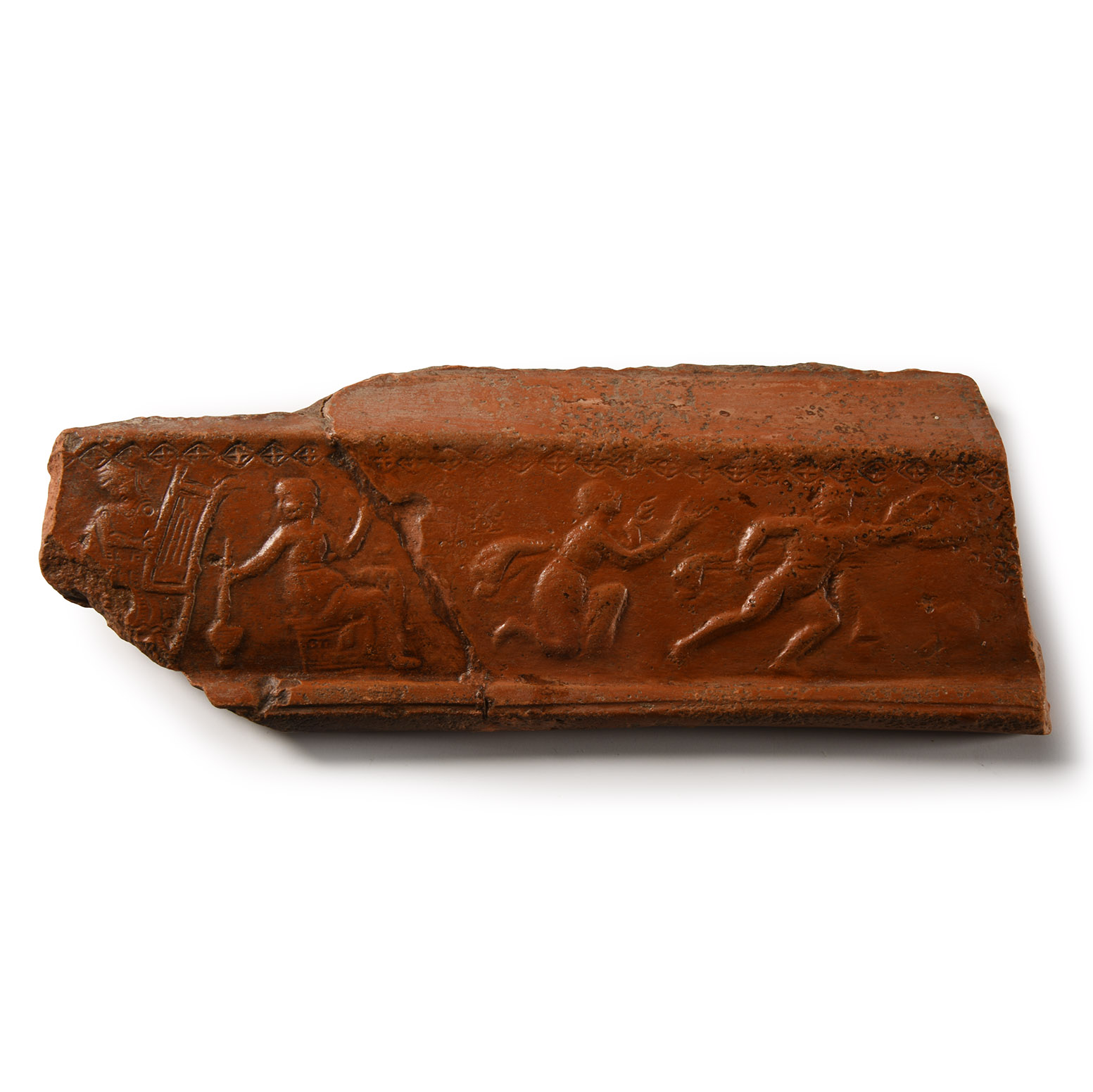
Roman Redware Pottery Sherd with Achilles and Thetis
4TH-5TH CENTURY A.D.
7 in. (202 grams, 18 cm).
From the upper part of a vessel, displaying a frieze of profile images and figural scenes from Graeco-Roman mythology: a musician in late Roman garments playing a harp (Orpheus?), a seated woman weaving with a distaff in her hand (Penelope?), a kneeling naked woman imploring a naked warrior fighting with shield and spear (Achilles and Thetis?). [No Reserve]
ProvenanceAcquired 1960s-1990s.
From the late Alison Barker collection, a retired London barrister.
Cf. Beutler, F. et al., Der Adler Roms. Carnuntum und die Armee der Cäsaren, Bad-Deutsch-Altenburg, 2017, item 697, for a frieze in similar style.
FootnotesThis terra sigillata fragment appears to have been part of a large tray. Elements of dying paganism were still used to celebrate the deeds of the new imperial heroes. Note the detailed late Roman clothing of the harpist, with a chlamys-paludamentum on the right shoulder and the tunic decorated with clavi and orbiculi.
CONDITIONTimeLine Auctions follows a vetting process to ensure the authenticity and legality of all items, reinforcing our commitment to integrity and responsible trading. Each antiquity, antique, and coin lot undergoes thorough examination by a vetting committee of at least ten external specialists, professional trade association members, scientists, and archaeologists: Our Vetting Process
AUCTIONS:
TimeLine is a leading auction house specialising in antiquities, ancient art, collectables, natural history, coins, medals, and books. Our auctions offer museums, collectors, historians, and enthusiasts the opportunity to acquire unique and historically significant pieces.
-
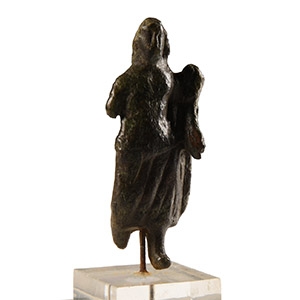
Roman Bronze Fortuna Statuette
Circa 2nd-3rd century A.D.Sold for (Inc. bp): £143
The goddess standing wearing a knee-length robe, bearing a cornucopia on her left arm. 89 grams total, 87 mm including stand
From a collection acquired on the UK art market from various auction houses and collections mostly before 2000. From an important Cambridgeshire estate; thence by descent.
Statuettes of Fortuna, the goddess of Chance, were evidently popular during the Roman Imperial times judging from the large number that have been found, and with the advent of the cult of Isis inside the Roman Empire the two divinities were identified as a single goddess. -
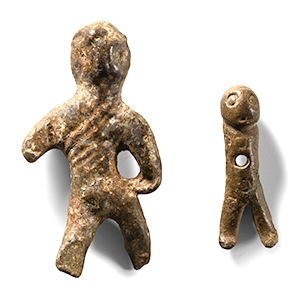
Roman Bronze Statuette Group
2nd century B.C-1st century A.D.Sold for (Inc. bp): £78
Comprising: small figure pierced at the middle wit pellet detailing to face and body, legs spread; figure in active pose with slanting stripes across the body, possibly intended for Hercules; probably votives for deposition at a temple. 42 grams total, 30-47 mm
From a collection acquired on the UK art market from various auction houses and collections mostly before 2000. From an important Cambridgeshire estate; thence by descent. -
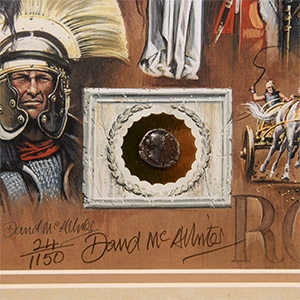
Roman Coin and Limited Edition Framed Print
3rd century A.D. and laterSold for (Inc. bp): £7
The coin mounted on 22 carat gold foil, framed with an art print signed by the artist David McAllister, depicting scenes of Roman military activity; limited edition number 24/1150. 1.3 kg, 49 x 36 cm
UK gallery, early 2000s. Accompanied by an old certificate of authenticity.
David McAllister's exciting design is a 'one of a kind' work that portrays the might and riches of the Roman civilisation. This limited edition print is a celebration of the award winning artist's lifetime dedication to historical paintings of the ancient world. To enhance appreciation of this rare and historic work, each individual print is signed and numbered by the artist.
