
Loading, please wait...
LOT 0848
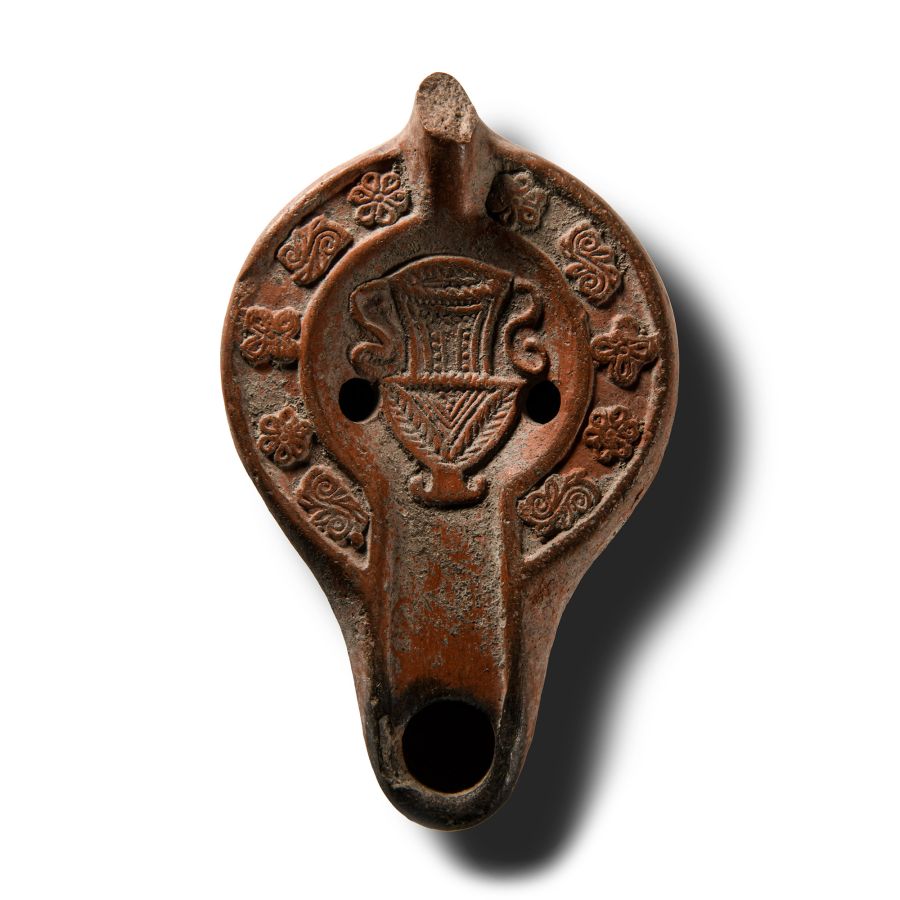
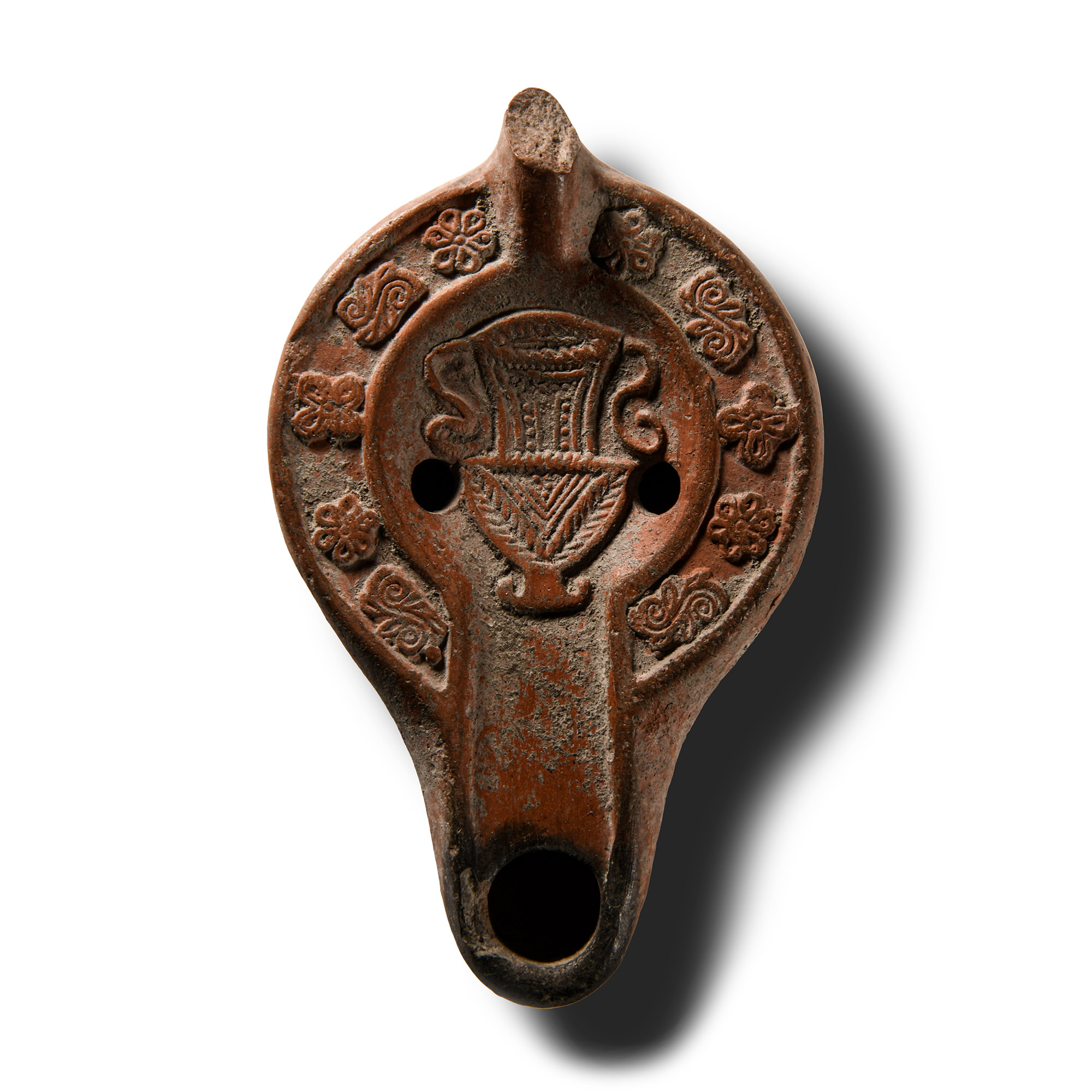
Roman Redware Oil Lamp with Amphora
NORTH AFRICA, 5TH CENTURY A.D.
5 3/4 in. (226 grams, 14.5 cm).
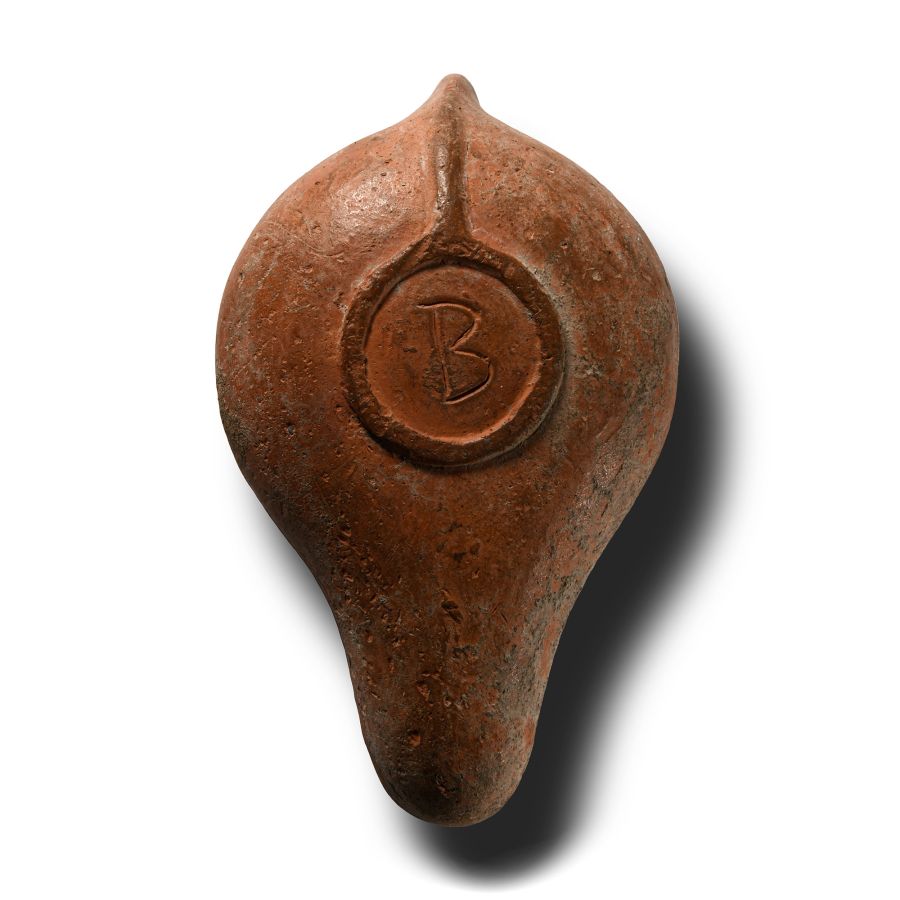
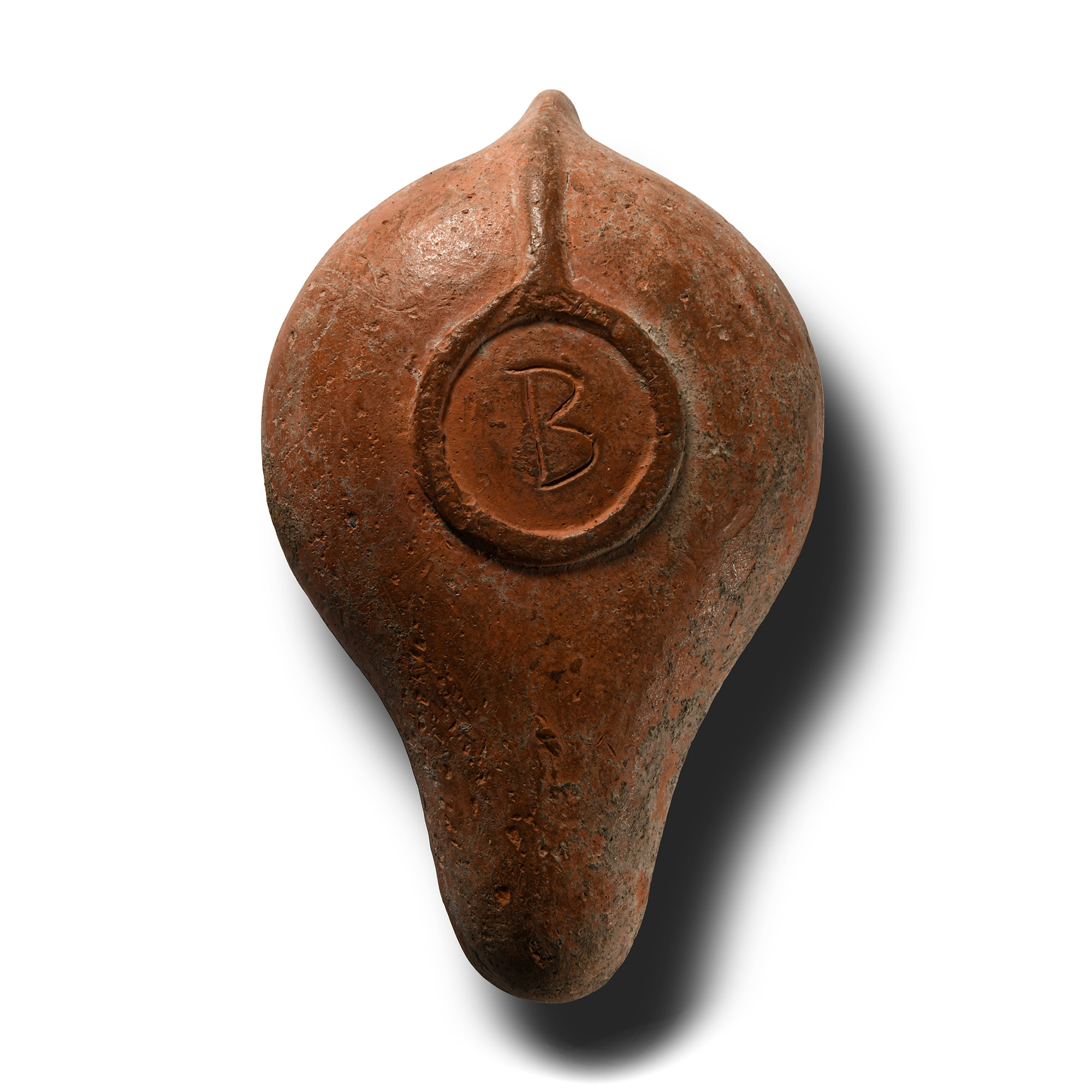
With a lug handle and oval elongated body, two central filling-holes flanking the image of a kantharos, enclosed within a decorative shallow border on the shoulders with alternating floral S’s, concentric circles and quatrefoils; two thin concentric circles on the base with letter B in the middle, possibly the potter’s mark. [No Reserve]
ProvenanceFrom a collection acquired on the UK art market from various auction houses and collections mostly before 2000.
From an important Cambridgeshire estate; thence by descent.
See Bussière, J., Lindros Wohl, B., Ancient Lamps in the J. Paul Getty Museum, Malibu, 2017, nos.499-500, p.357.
FootnotesThe lamp belongs to the type Atlante X or Hayes II A. The so-called Christian lamps in Terra Sigillata Africana have been classified by Hayes into two major types, I and II. He has distinguished two classes in his type II, according to geographic place of manufacture or origin. Subtype II A group lamps from central Tunisia are characterised by a fine clay, glossy light orange slip, and carefully executed decoration using a great number of neatly drawn shoulder motifs. The kantharos is a fairly common motif in Early Christian imagery, as a container of life giving water.
CONDITIONTimeLine Auctions follows a vetting process to ensure the authenticity and legality of all items, reinforcing our commitment to integrity and responsible trading. Each antiquity, antique, and coin lot undergoes thorough examination by a vetting committee of at least ten external specialists, professional trade association members, scientists, and archaeologists: Our Vetting Process
AUCTIONS:
TimeLine is a leading auction house specialising in antiquities, ancient art, collectables, natural history, coins, medals, and books. Our auctions offer museums, collectors, historians, and enthusiasts the opportunity to acquire unique and historically significant pieces.
-
Roman Bronze Statue Arm
1st-3rd century A.D.Sold for (Inc. bp): £338
Right arm from a small statue of a female with long, slender fingers; socket to the upper end; the thumb and forefinger closed. 58 grams, 62 mm
Private collection of Mr S.A., Switzerland, 1990s, thence by descent. -
Roman Bronze Brooch Group
1st century A.D.Sold for (Inc. bp): £65
Including P-shaped, T-shaped, La Tène III, and other types. 39 grams total, 2.9-11.1 cm
Ex property of an Essex gentleman. Property of a Scottish collector, acquired in 2013. -
.jpg)
Roman Bronze Strigil
1st-2nd century A.D.Sold for (Inc. bp): £1,105
With C-section profile to the blade, rectangular handle with openwork slots to the upper end, impressed fishtail motif at the lower; mounted on a custom-made stand. 394 grams total, 20.5 cm high including stand
Ex Louis-Gabriel Bellon (1819?-1899), France. Acquired from Jack-Philippe Ruellan, 4 April 2009, no.279. Accompanied by a copy of a French cultural passport no.111441.
