
Loading, please wait...
LOT 0631
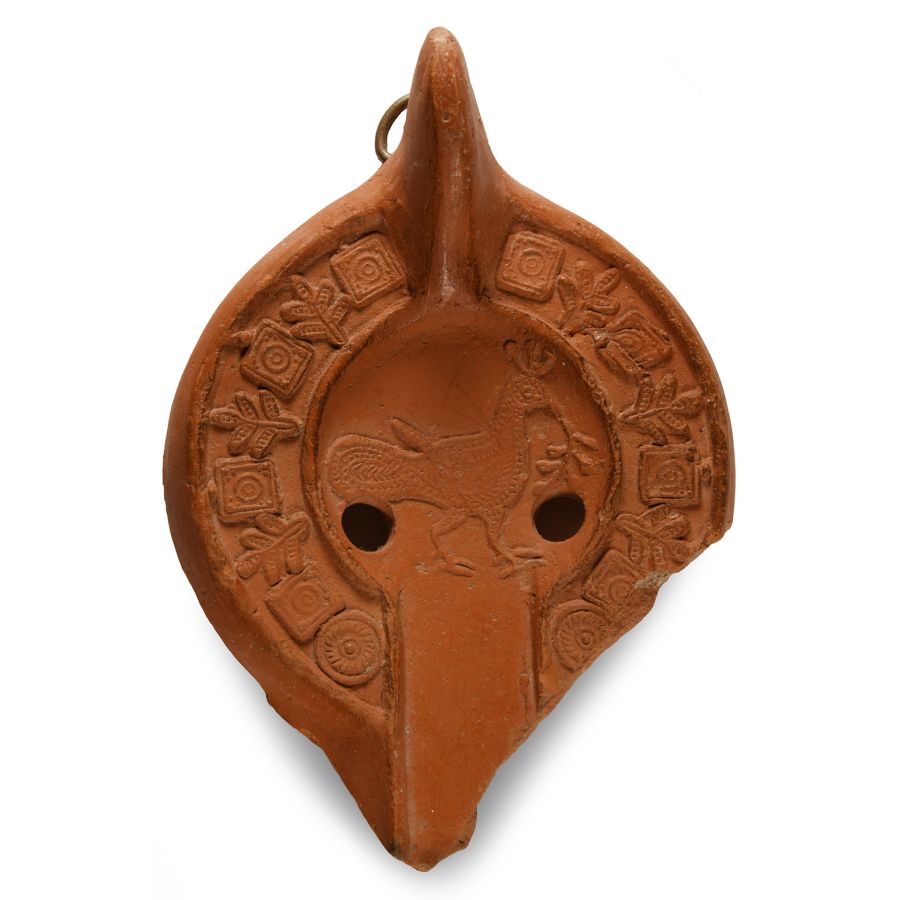
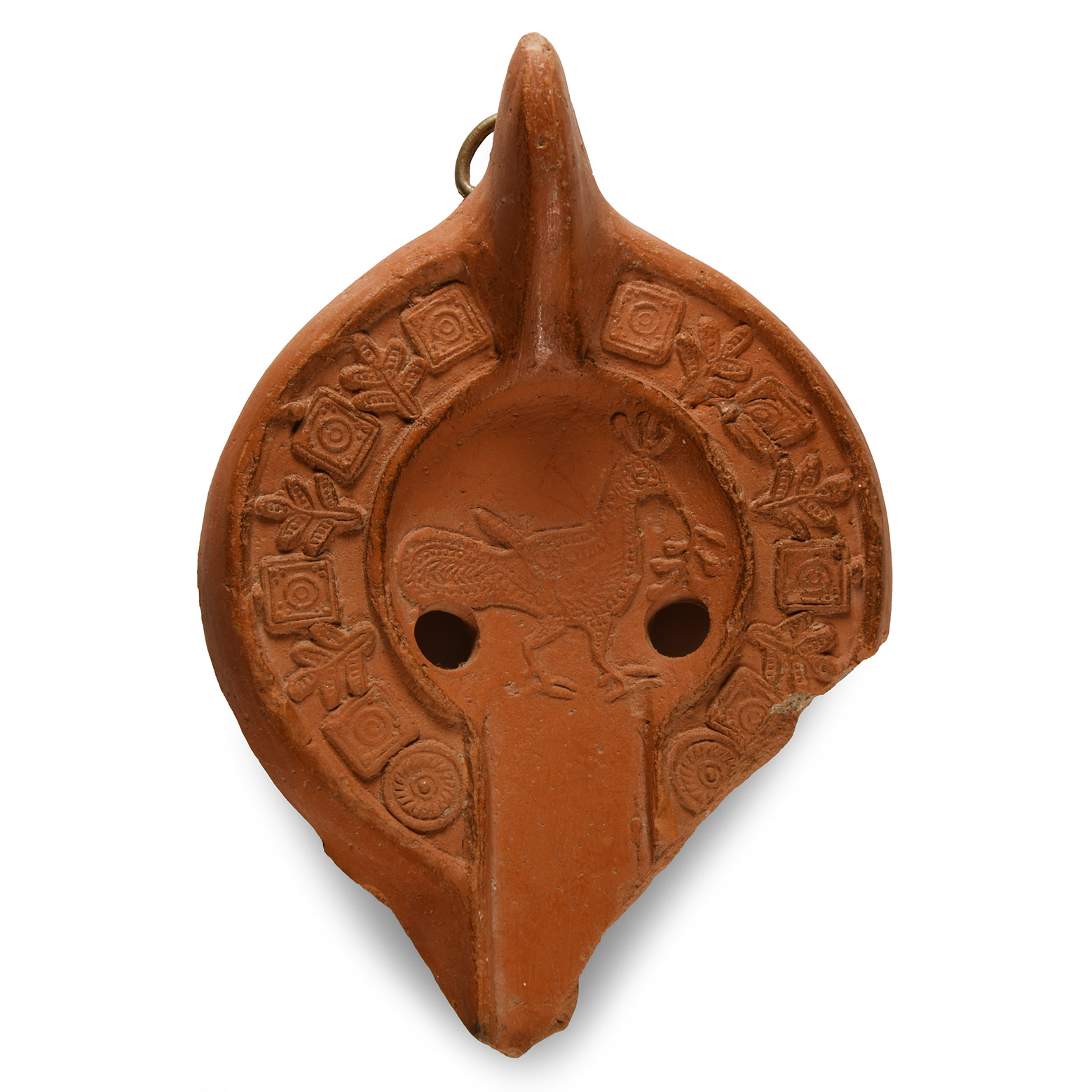
Roman Redware Lamp Sherd with Bird
4TH-5TH CENTURY A.D.
4 3/4 in. (83 grams, 12.1 cm).
With flange handle to the rear, band of fronds and squares to the shoulder, dove with olive branch in its beak to the discus. [No Reserve]
ProvenanceAcquired 1960s-1990s.
From the late Alison Barker collection, a retired London barrister.
TimeLine Auctions follows a vetting process to ensure the authenticity and legality of all items, reinforcing our commitment to integrity and responsible trading. Each antiquity, antique, and coin lot undergoes thorough examination by a vetting committee of at least ten external specialists, professional trade association members, scientists, and archaeologists: Our Vetting Process
AUCTIONS:
TimeLine is a leading auction house specialising in antiquities, ancient art, collectables, natural history, coins, medals, and books. Our auctions offer museums, collectors, historians, and enthusiasts the opportunity to acquire unique and historically significant pieces.
-
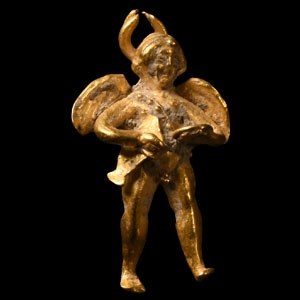
Roman Gold Cupid Pendant
Circa 1st-4th century A.D.Sold for (Inc. bp): £364
Standing nude and holding a patera and lyre, wings spread to the rear, suspension loop to rear of head. 2.44 grams, 18 mm
From the collection of a gentleman, acquired on the London art market in the 1990s. -
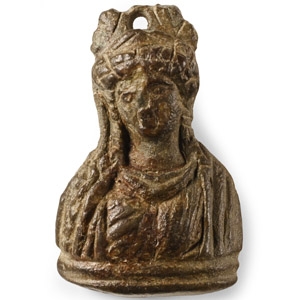
Roman Bronze Steelyard Weight
3rd-4th century A.D.Sold for (Inc. bp): £338
Formed as a female bust with stola and tunic, braided hair dressed in a chignon; transverse ribbing above the flat base, pierced lug forming part of the hairstyle. 22.5 grams, 33 mm
Found Wiltshire, UK, before 1974. -
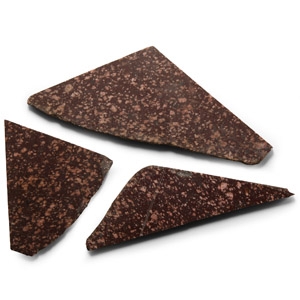
Roman Historic Cut & Polished Porphyry Slice Group
1st-5th century A.D. and laterSold for (Inc. bp): £104
Comprising three lacquered porphyry slices of rectangular shape, cut on both faces and polished on one face; probably from recycled material mined in ancient Roman times between the 1st and 5th century A.D.; intended for use as inlay panels. 81 grams total, 5.8-12.2 cm
From Egypt. Ex Mineral Imports, London, UK. Gregory, Bottley & Lloyd (Gregory's).
Mons Porphyrites (today Jabal Abu Dukhkhan) is the mountainous site of a group of ancient quarries in the Red Sea Hills of the inhospitable eastern desert in Egypt, a five day trip from the Nile during Roman times. They were discovered by Caius Cominus Leugas in 18 A.D., and during the Roman Empire the mines officially belonged to the emperor and were the only known source of the Imperial Porphyry, Mons Porphyrites. This dark purple stone was associated with royalty and used for prestigious sculpture and architecture. The location of the mines was lost some time in the 5th century, and rediscovered in the early 19th century. Excavations in the area have revealed the well-preserved quarries and the dwelling places of the quarry men, and also thousands of ostraca have been discovered containing messages that provide details of how the quarrying took place, and of how the highly skilled quarrymen ordered their food.
