
Loading, please wait...
LOT 0802
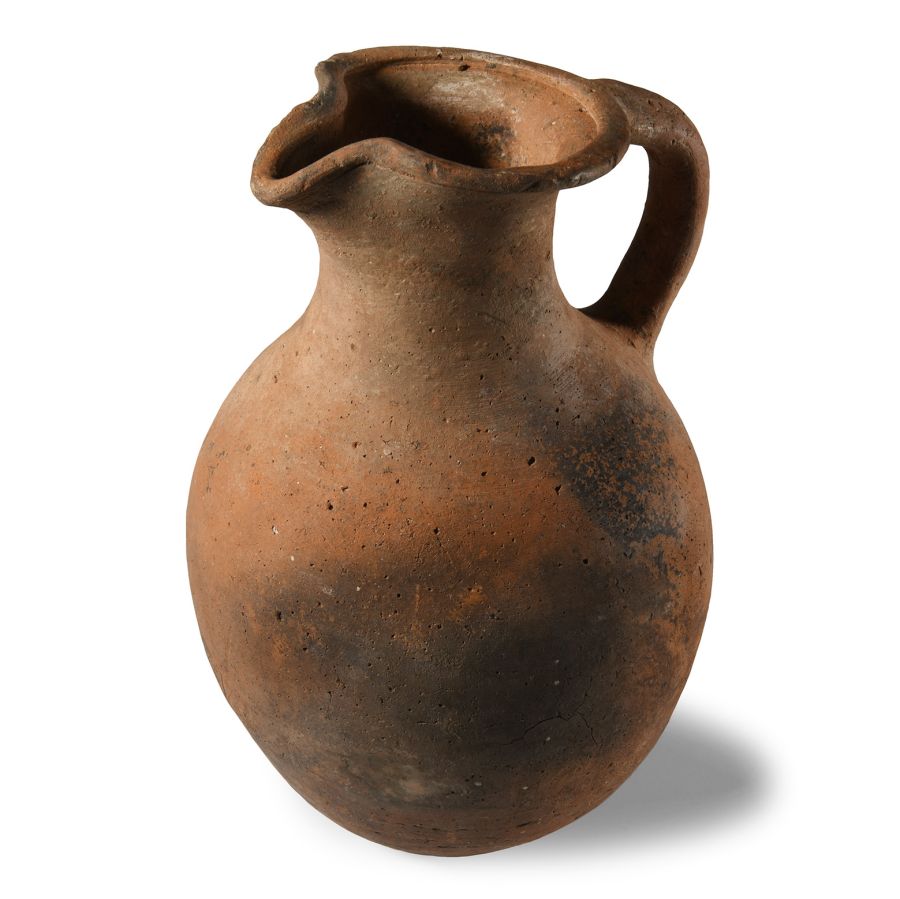
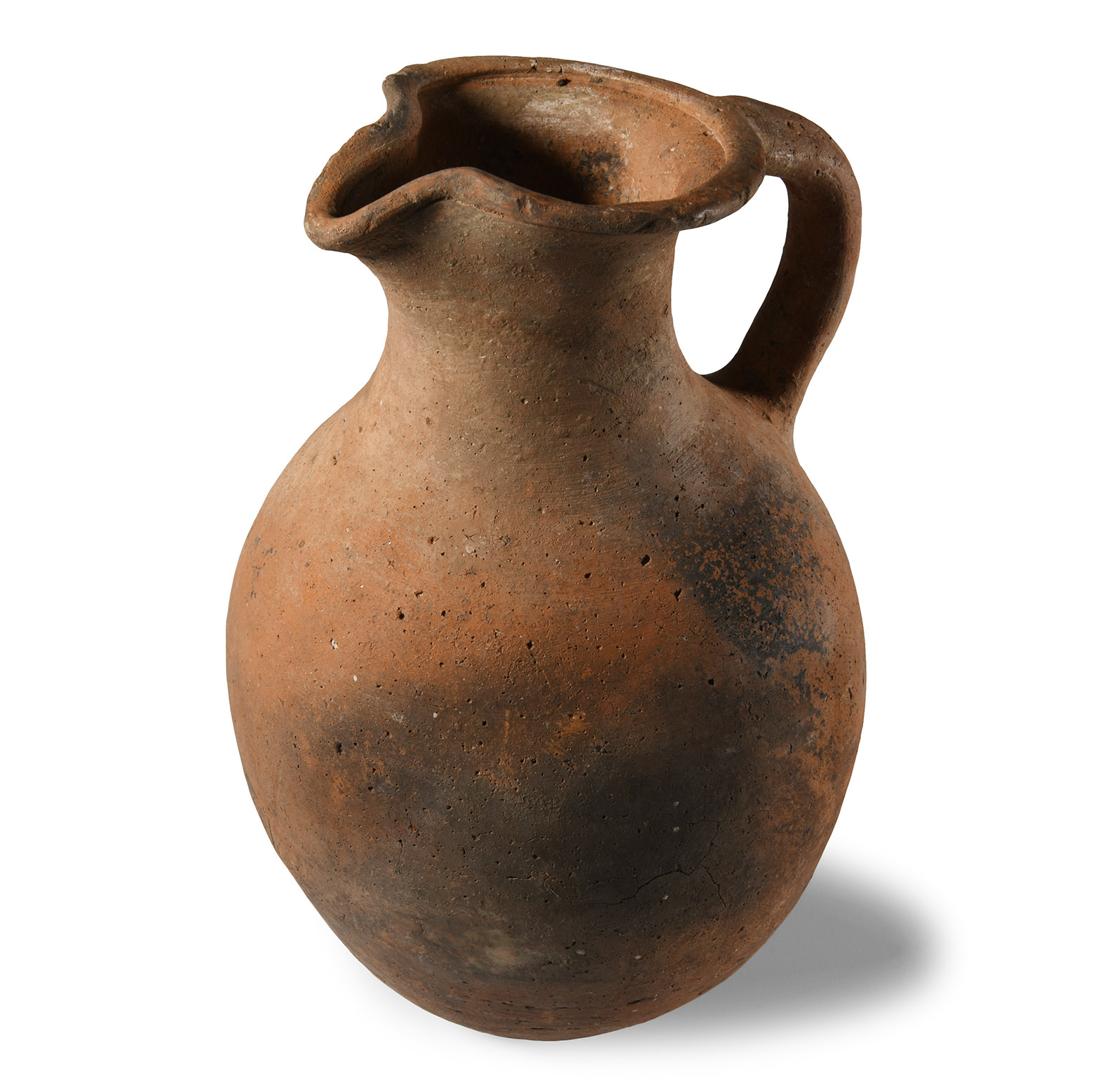
Roman Redware Jug with Trefoil Mouth
1ST-4TH CENTURY A.D.
9 5/8 in. (943 grams, 24.5 cm).
With conical lower body and rounded shoulder, broad mouth with pinched pouring lip and thick handle to the rear. [No Reserve]
ProvenanceFrom a collection acquired on the UK art market from various auction houses and collections mostly before 2000.
From an important Cambridgeshire estate; thence by descent.
TimeLine Auctions follows a vetting process to ensure the authenticity and legality of all items, reinforcing our commitment to integrity and responsible trading. Each antiquity, antique, and coin lot undergoes thorough examination by a vetting committee of at least ten external specialists, professional trade association members, scientists, and archaeologists: Our Vetting Process
AUCTIONS:
TimeLine is a leading auction house specialising in antiquities, ancient art, collectables, natural history, coins, medals, and books. Our auctions offer museums, collectors, historians, and enthusiasts the opportunity to acquire unique and historically significant pieces.
-
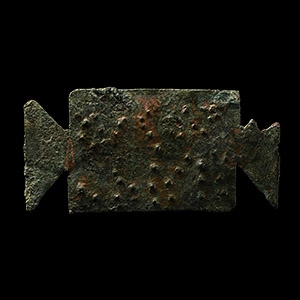
Roman Bronze Punched Tabula Ansata Appliqué
2nd century A.D.Sold for (Inc. bp): £1,170
Rectangular plate with trapezoidal ends, pointillé decoration. 2.5 grams, 45 mm
Ex German art market, 2000s. Acquired from an EU collector living in London. From the collection of Surrey, UK, gentleman.
These tabulae ansatae with pointillé decoration were used for votive inscriptions to the gods, offered on the occasion of a vow made during a situation of danger or an invocation of help to the gods. They were often used in the military field. A particularly important example is the one found in Carnuntum dedicated to Jupiter Dolichenus, offered by the centurion Titius Moderatus of the Legio XI Gemina. -
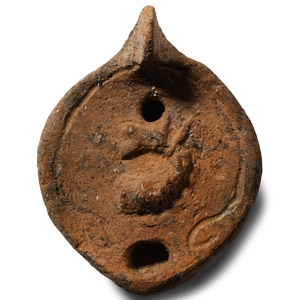
Roman Buffware Oil Lamp with Seahorse
Circa 3rd-4th century A.D.Sold for (Inc. bp): £104
Mould made with a solid round unpierced handle, broad horizontal shoulder separated from the discus by a shallow circular groove; upper filling-hole over the central part of the discus decorated by a seahorse leaping to the left, surrounded by volutes; slightly raised rounded nozzle, base-ring marked with two circular grooves. 57 grams, 76 mm
From a collection acquired on the UK art market from various auction houses and collections mostly before 2000. From an important Cambridgeshire estate; thence by descent.
The depiction of various animals is common on Roman lamps, appearing just as frequently as they do elsewhere in Roman art. Animals formed part of the decorative and symbolic schemes on monumental and funerary sculpture, frescoes and mosaics. The hippocampus symbolised water, power, bravery, and helpfulness. It was also defined as a symbol of hope, strength, and agility because of its ability to help people. This popular sea creature was connected with imagination and creativity and also associated with the god of the sea, Poseidon. -
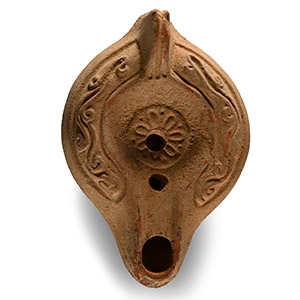
Roman Terracotta Oil Lamp with Floral Motif
5th century A.D.Sold for (Inc. bp): £221
Grooved lug handle to rear, discus with two filling holes and a central rosette motif, foliate border to the shoulder; low basal ring and maker's mark 'E'. 173 grams, 11.5 cm
Acquired on the European art market, 1980s. English private collection.
Many lamps of this category (late lamps of Asia Minor types, sometimes just called 'late Ephesian lamps' but diffused in all of the Roman Levant) were discovered in the Seven Sleepers Cemetery at Ephesus. These lamp types have either a circular or an oval elongated body that is sharply carinated, with protruding nozzle. The shoulders are outward sloping and offer a variety of characteristic decorations in both relief and sunken patterns: rows of globules, slanted radiating grooves, ovolos, vine-tendrils and grapes, tongues or petals, and concentric rings.
