
Loading, please wait...
LOT 0683
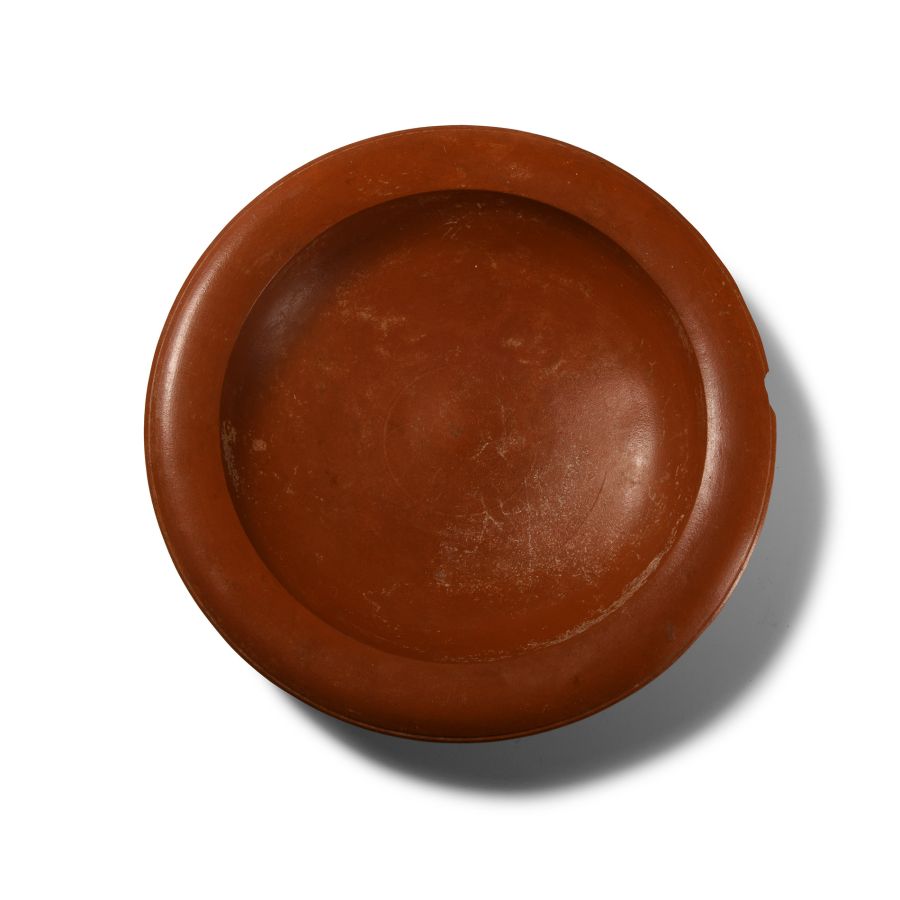
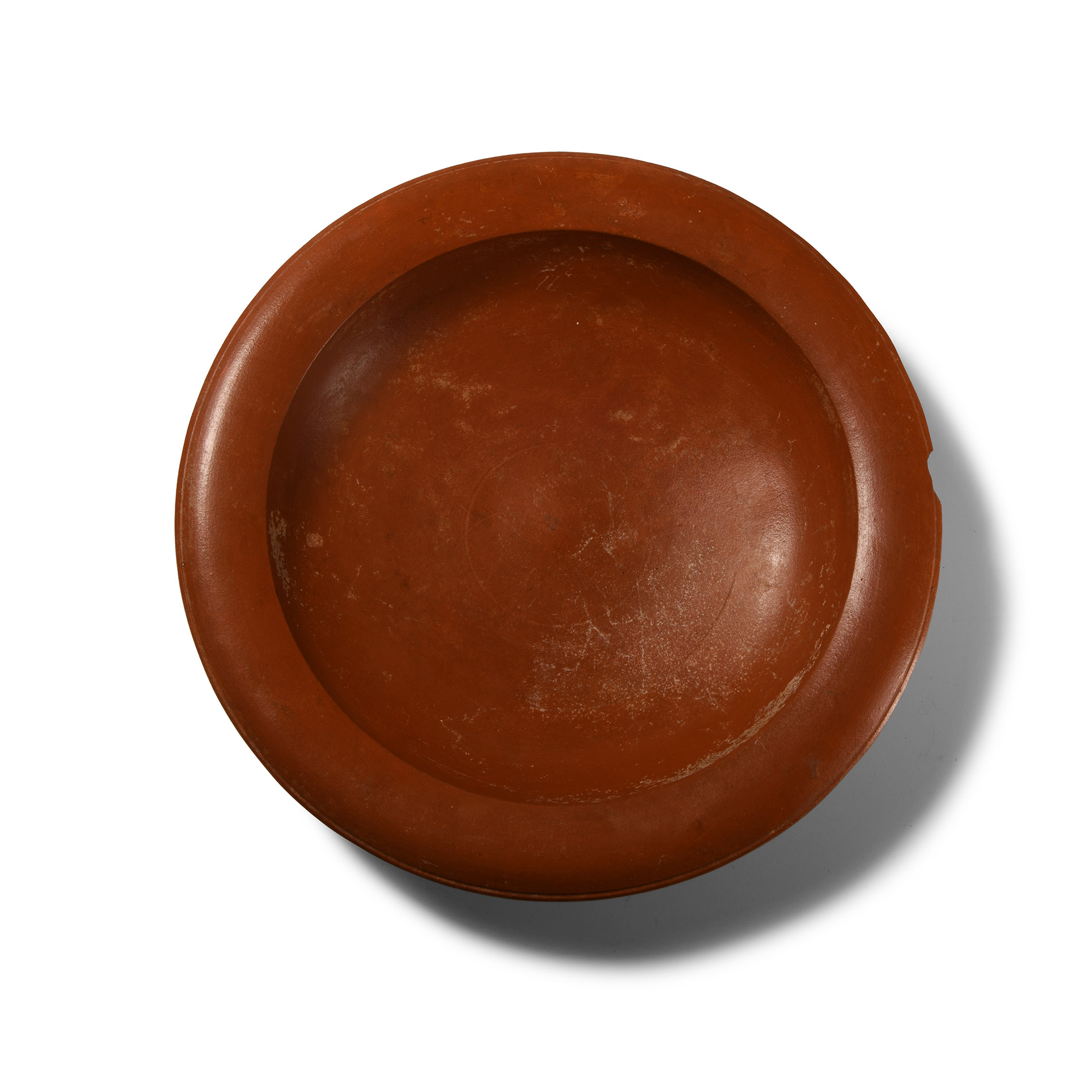
Roman Redware Bowl
NORTH AFRICA, 3RD-4TH CENTURY A.D.
9 1/4 in. (350 grams, 23.5 cm).
Broad dish or shallow bowl with rounded flange rim and base. [No Reserve]
ProvenanceFrom a collection acquired on the UK art market from various auction houses and collections mostly before 2000.
From an important Cambridgeshire estate; thence by descent.
TimeLine Auctions follows a vetting process to ensure the authenticity and legality of all items, reinforcing our commitment to integrity and responsible trading. Each antiquity, antique, and coin lot undergoes thorough examination by a vetting committee of at least ten external specialists, professional trade association members, scientists, and archaeologists: Our Vetting Process
AUCTIONS:
TimeLine is a leading auction house specialising in antiquities, ancient art, collectables, natural history, coins, medals, and books. Our auctions offer museums, collectors, historians, and enthusiasts the opportunity to acquire unique and historically significant pieces.
-
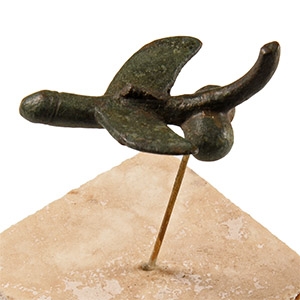
Roman Bronze Flying Phallus
2nd-3rd century A.D.Sold for (Inc. bp): £234
Amuletic model phallus with swept lateral wings; mounted on a custom-made stand. 99 grams total, 67 mm high including stand
From a collection acquired on the UK art market from various auction houses and collections mostly before 2000. From an important Cambridgeshire estate; thence by descent. -
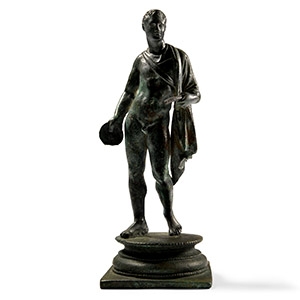
Roman Bronze Statuette of Mercury
1st-2nd century A.D.Estimate: £5,000 - 7,000 (+bp*)
Opening Bid: £2,750
Standing erect on a tiered socle base in contrapposto pose; pointillé-textured mantle draped to the left shoulder, left arm bent, hand holding a wand; right arm loose at the side, hand holding a patera; finely modelled face with short wavy hair; shallow dimple or socket to the crown; standing on a possibly later tiered disc base with square foot. 957 grams, 16 cm high
Acquired on the German art market, 1990s. Ex Cambridgeshire collection, UK. Accompanied by an academic report by Dr Raffaele D’Amato. This lot has been checked against the Interpol Database of stolen works of art and is accompanied by search certificate number no.12013-213587.
Mercury was the god of trade and industry, whose principle shrine in the city of Rome was at the Circus Maximus. The draped mantle is typical of statuary of Mercury from the 1st-2nd century A.D. (Boucher, pl.40, 43) and the 'baton' may in fact be the stem of a caduceus (Boucher, pl.46 (211)). -
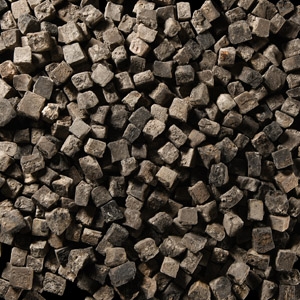
Roman Stone Tesserae Group
1st-4th century A.D.Sold for (Inc. bp): £130
A mixed group of four hundred and thirty single stone tesserae of various colours and sizes. 830 grams total, 10-17 mm
From a collection acquired on the UK art market from various auction houses and collections mostly before 2000. From an important Cambridgeshire estate; thence by descent.
