
Loading, please wait...
LOT 0758
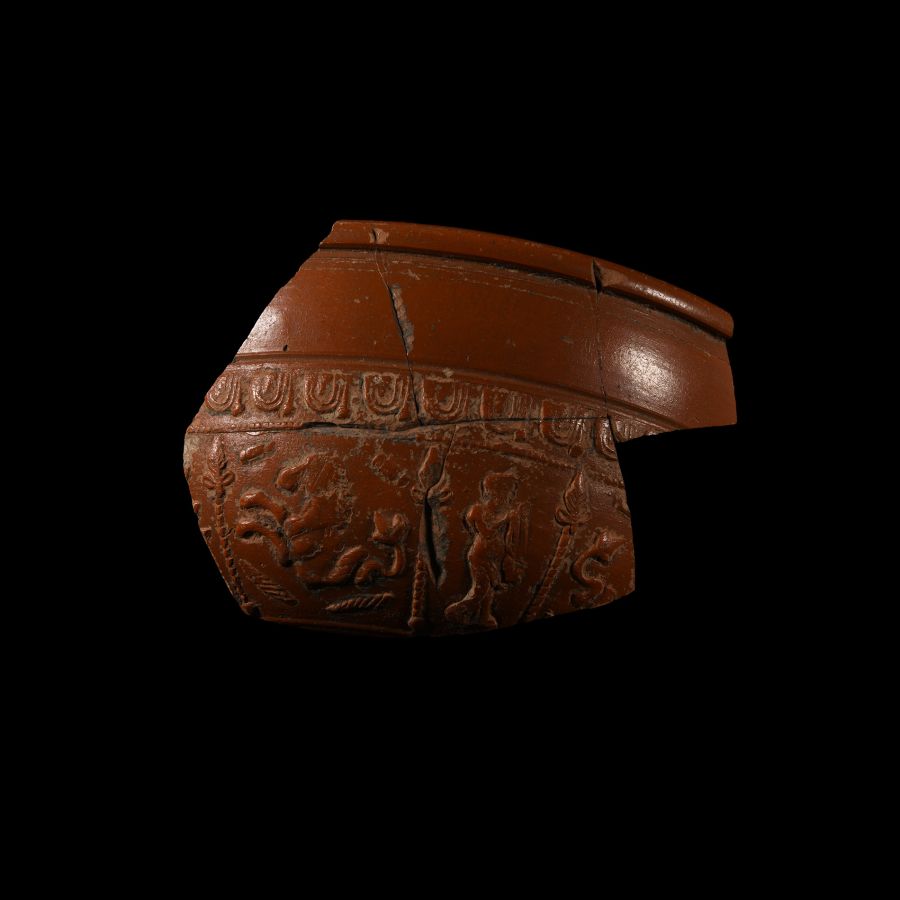
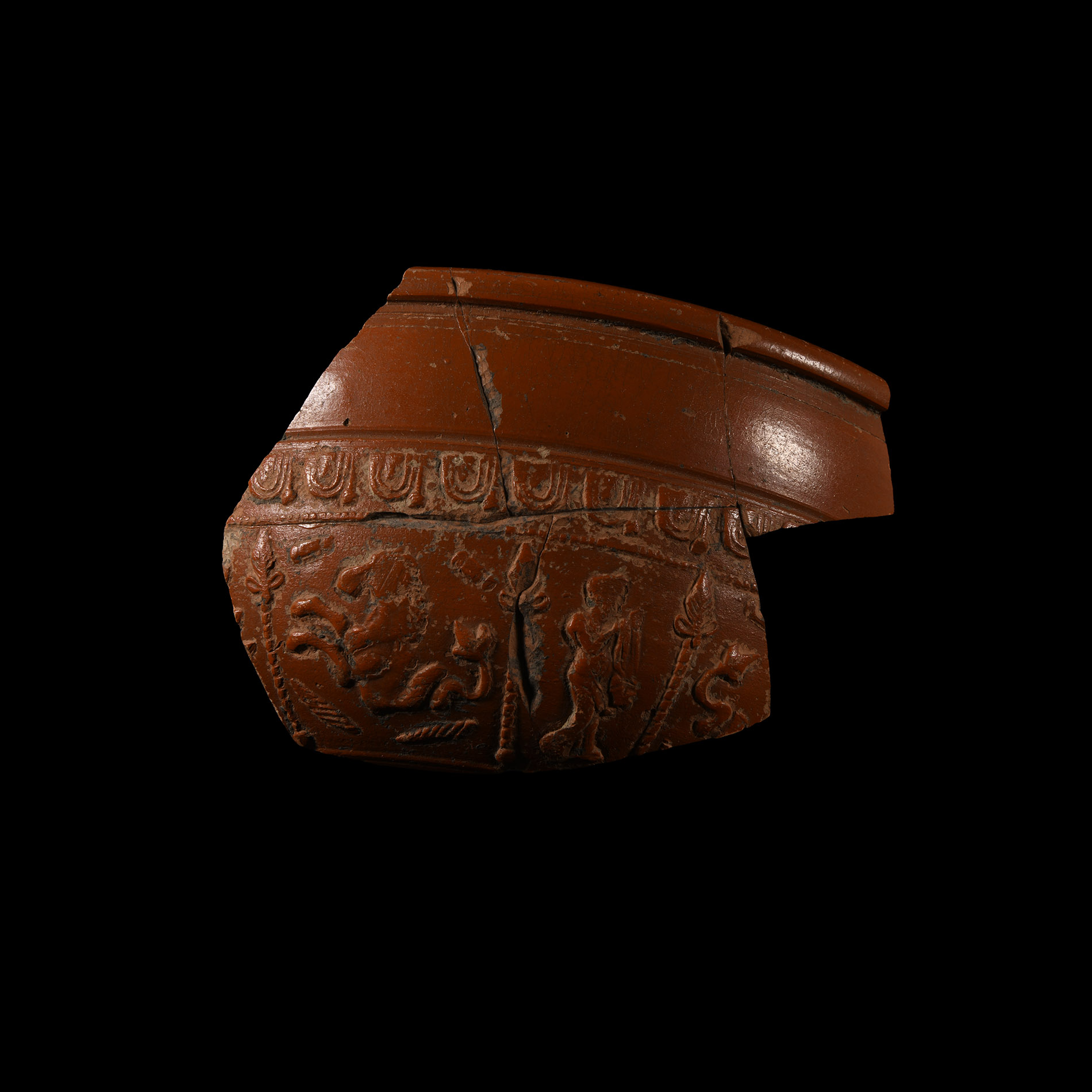
Roman Redware Bowl Fragment with Hippocampus and Standing Nereid
1ST-2ND CENTURY A.D.
4 3/4 in. (77 grams, 12 cm).
From the upper part of a vessel with two hippocampi (one partial) and a standing figure of a Nereid, floral and foliage decoration to the field, ornamental upper border; repaired. [No Reserve]
ProvenanceAcquired 1960s-1990s.
From the late Alison Barker collection, a retired London barrister
Cf. Beutler, F. et al., Der Adler Roms. Carnuntum und die Armee der Cäsaren, Bad-Deutsch-Altenburg, 2017, item 697, for similar fragment.
FootnotesThe complete vessel probably represented scenes linked with the cult of Poseidon and Amphitrite. The riches of the sea and the dangers of navigation were merged by the ancients into a myth of great fame known as the wedding procession between Poseidon - brother of Zeus and Hades, god of the sea and the Nereid Amphitrite. The Nereids were the divinities of the sea, grandchildren of the ocean. Like the nymphs, all the Nereids were beautiful young women who spent their time singing or weaving. Also involved in the procession were the tritons and hippocampi, who provocatively played shells or were ridden by Nereids.
CONDITIONTimeLine Auctions follows a vetting process to ensure the authenticity and legality of all items, reinforcing our commitment to integrity and responsible trading. Each antiquity, antique, and coin lot undergoes thorough examination by a vetting committee of at least ten external specialists, professional trade association members, scientists, and archaeologists: Our Vetting Process
AUCTIONS:
TimeLine is a leading auction house specialising in antiquities, ancient art, collectables, natural history, coins, medals, and books. Our auctions offer museums, collectors, historians, and enthusiasts the opportunity to acquire unique and historically significant pieces.
LOT 0758
Roman Redware Bowl Fragment with Hippocampus and Standing Nereid
Sold for (Inc. bp): £104
-
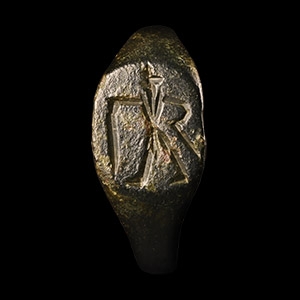
Roman Period Bronze Ring with Warrior
2nd-4th century A.D. or laterSold for (Inc. bp): £52
Ellipsoid bezel with incuse figure holding a sword and dagger. 3.68 grams, 22.36 mm overall, 19.10 mm internal diameter (approximate size British S, USA 9, Europe 20 , Japan 19)
Private collection formed since the 1940s. UK art market. Property of an Essex gentleman. -
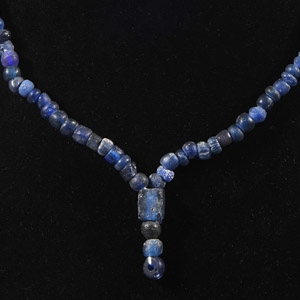
Roman Glass Bead Necklace
2nd-5th century A.D. or laterSold for (Inc. bp): £46
Composed of graduated glass beads of various shades of blue and type of bead, including carinated, oblate, coin-shaped and cuboid example, together with other types; restrung. 13.1 grams, 70 cm long
Ex W.J. collection, 1990s. -
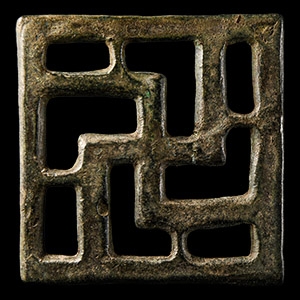
Roman Bronze Swastika Mount
3rd-4th century A.D.Sold for (Inc. bp): £72
The gammadion design created from an openwork square-shaped plate; semi-circular suspension loop to centre reverse. 32.4 grams, 49 mm
Acquired on the EU art market around 2000. From the collection of a North American gentleman.
