
Loading, please wait...
LOT 0833
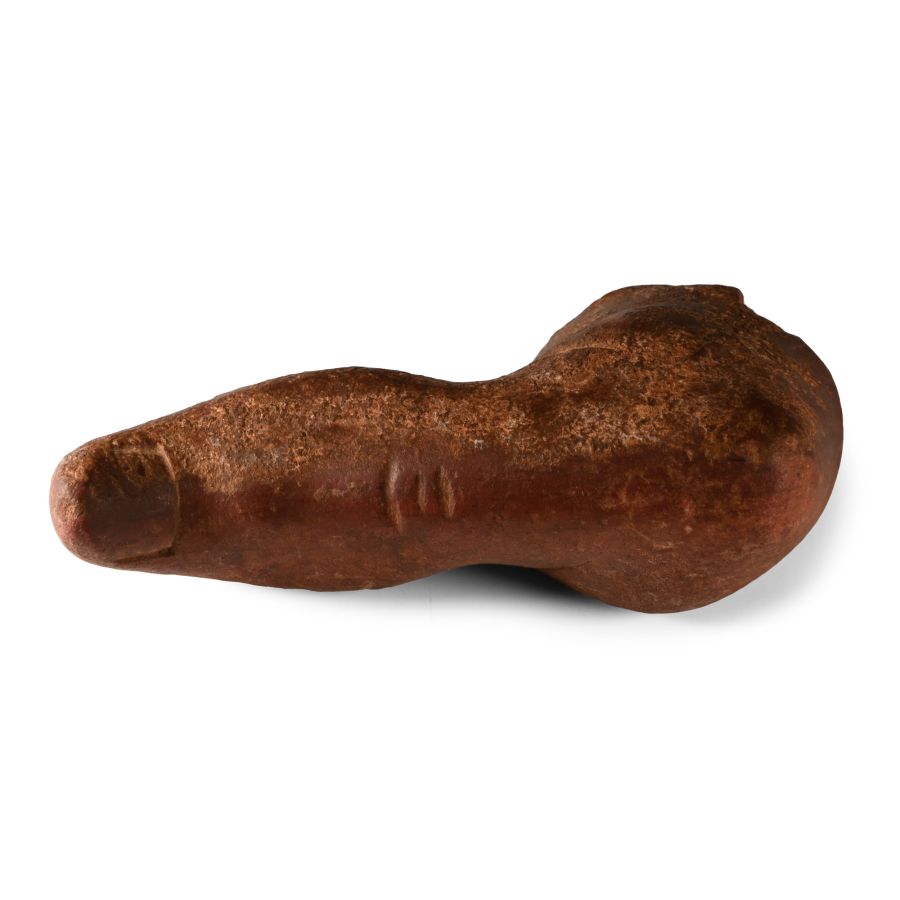
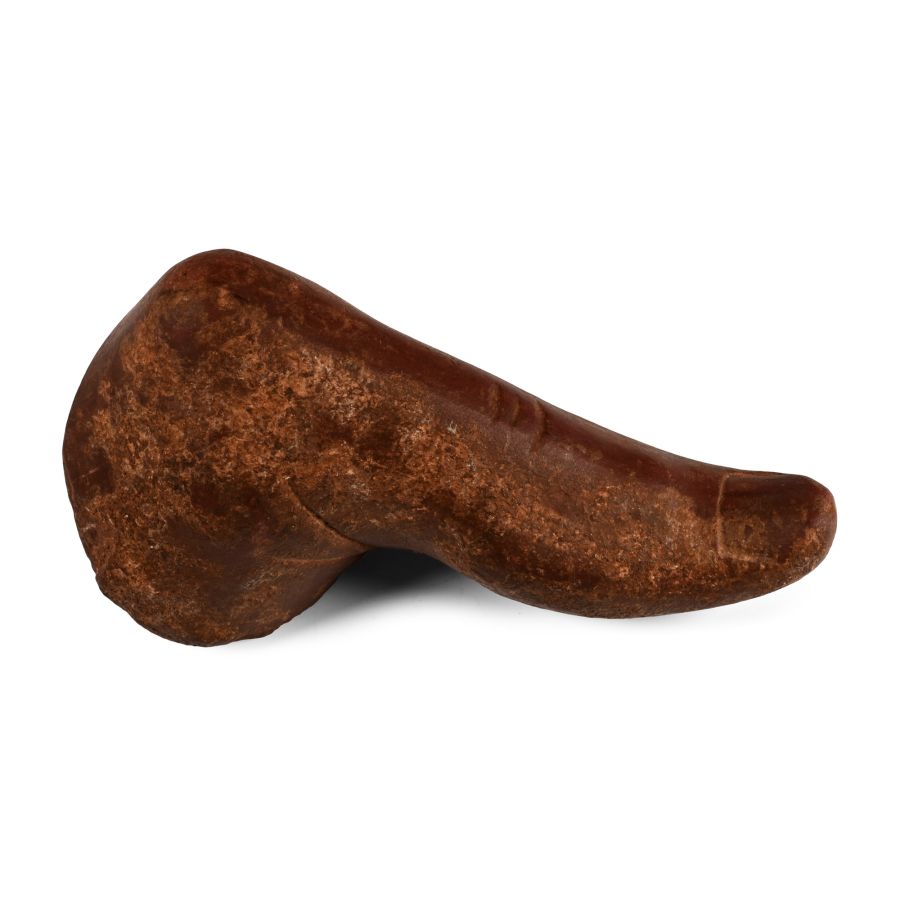
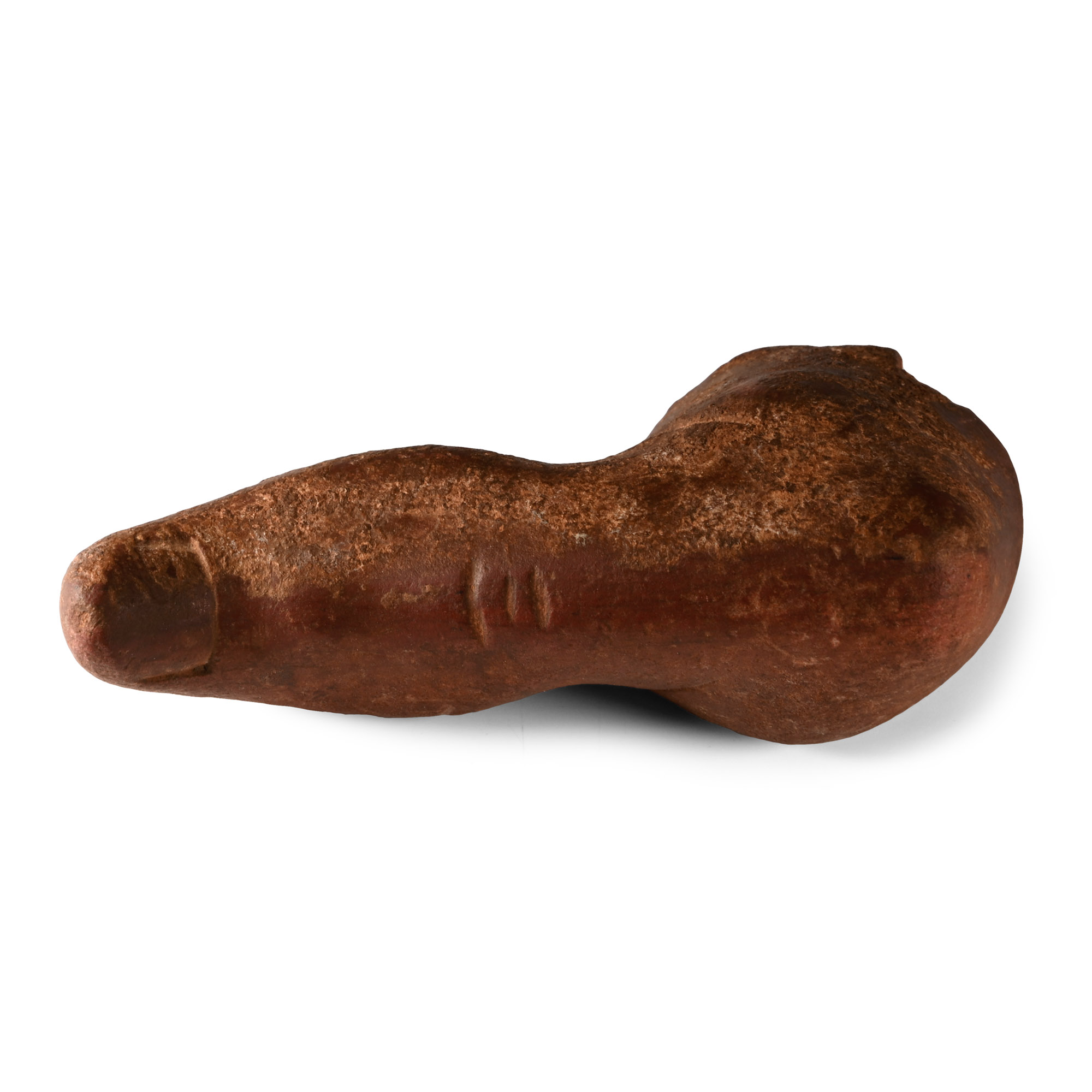
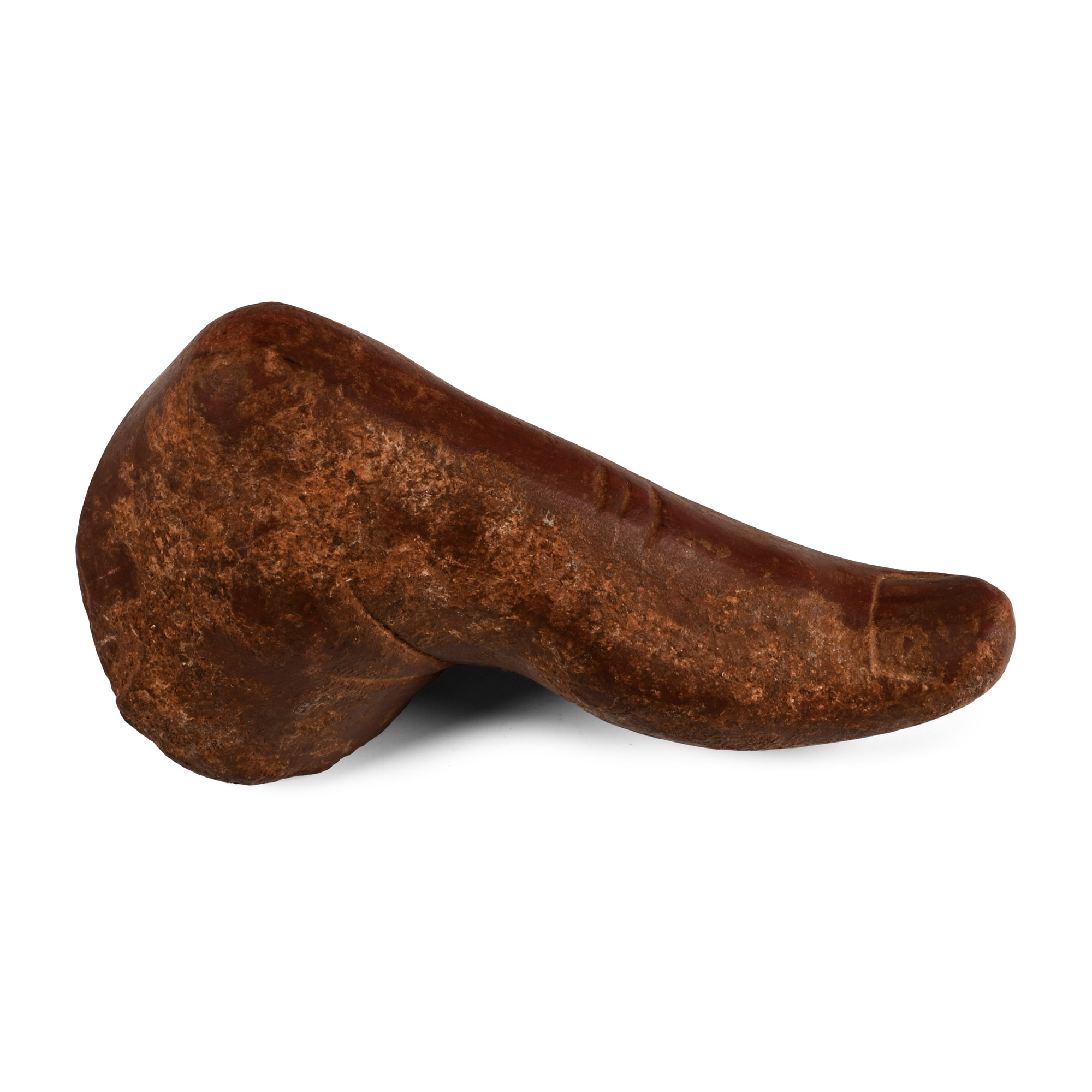
Roman Red Stone Thumb Pestle
3RD-6TH CENTURY A.D.
4 3/4 in. (312 grams, 12 cm).
Red marble pestle or grinding tool, the handle formed as a thumb with knuckle and nail detailing; old collector's label '2' to underside.
ProvenanceEx private collection, Mrs L.S., 1980s.
Acquired from the above, 1999.
Private European collection.
This lot has been checked against the Interpol Database of stolen works of art and is accompanied by a search certificate number no.12096-218201.
This lot is accompanied by an illustrated lot declaration signed by the Head of the Antiquities Department, Dr Raffaele D'Amato.
Cf. Beutler, F. et al., Der Adler Roms. Carnuntum und der Armee der Cäsaren, Bad-Deutsch Altenberg, 2017, item 25. for type.
FootnotesSuch items were mainly used by medical staff for grinding ingredients such as medicinal compounds, cosmetics and culinary spices.
CONDITIONTimeLine Auctions follows a vetting process to ensure the authenticity and legality of all items, reinforcing our commitment to integrity and responsible trading. Each antiquity, antique, and coin lot undergoes thorough examination by a vetting committee of at least ten external specialists, professional trade association members, scientists, and archaeologists: Our Vetting Process
AUCTIONS:
TimeLine is a leading auction house specialising in antiquities, ancient art, collectables, natural history, coins, medals, and books. Our auctions offer museums, collectors, historians, and enthusiasts the opportunity to acquire unique and historically significant pieces.
LOT 0833
Roman Red Stone Thumb Pestle
Estimate £1,200 - 1,700€1,390 - 1,970 (for guidance only)$1,620 - 2,300 (for guidance only)
-
Roman Glass Bottle
2nd-3rd century AD.Sold for (Inc. bp): £117
Translucent pale green vessel with wide foot and dimpled base, tapering stem and flared rim. 130 grams, 95 mm
Ex German art market, 2000s. Acquired from an EU collector living in London. From the collection of a Surrey, UK, gentleman. This lot is accompanied by an illustrated lot declaration signed by the Head of the Antiquities Department, Dr Raffaele D'Amato. -
'The Kempsey' Roman Bronze Military Eagle Statuette
Circa 43-410 A.D.Sold for (Inc. bp): £390
Modelled in the round as a standing eagle with its wings spread, the overlapping wingtips covering the short tail; incised feather detailing to the body and wings, wide head with detailed eyes, remains of a military insignia (a victory wreath or fish?) held in its hooked beak; mounted on a custom-made display stand. 180 grams total, 76 mm high including stand
Found Kempsey, Malvern Hills, Worcestershire, UK. Accompanied by a copy of the British Museum's Portable Antiquities Scheme (PAS) report no.WAW-19C7C8. This lot is accompanied by an illustrated lot declaration signed by the Head of the Antiquities Department, Dr Raffaele D'Amato.
Both Ovid and Plutarch place the inception of manipular ensigns with Romulus, where bundles (manipuli) of hay were tied to high poles which served as rallying points for units of the army. Eventually, icons of animals replaced these ensigns: the eagle, wolf, Minotaur, horse, and boar. In 107 B.C., Gaius Marius made sweeping military reforms and the Aquila became the sole standard of the legion, which according to (Pliny NH. 10.5.16) ‘By making the Aquila the standard for all legions improved unity and gave soldiers a symbol that expressed their attachment to an all-encompassing body, to which the soldiers’ loyalty could be directed’. Due to its place at the head of each legion, it became the emblem of the Roman legions, which enforced Roman rule in the provinces, giving the eagle its connotation of dominion. -
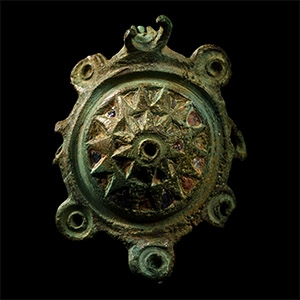
Roman Enamelled Bronze Umbonate Brooch
Circa 100-250 A.D.Sold for (Inc. bp): £65
Domed body decorated with two concentric circles of narrow, inward pointing triangles with traces of blue enamel, small bosses to the outer rim; pin-lugs and remains of pin to the reverse. 10.37 grams, 38 mm
Found Braintree, Essex, UK. Accompanied by a copy of the British Museum's Portable Antiquities Scheme (PAS) report no.ESS-CB128D. This lot is accompanied by an illustrated lot declaration signed by the Head of the Antiquities Department, Dr Raffaele D'Amato.
