
Loading, please wait...


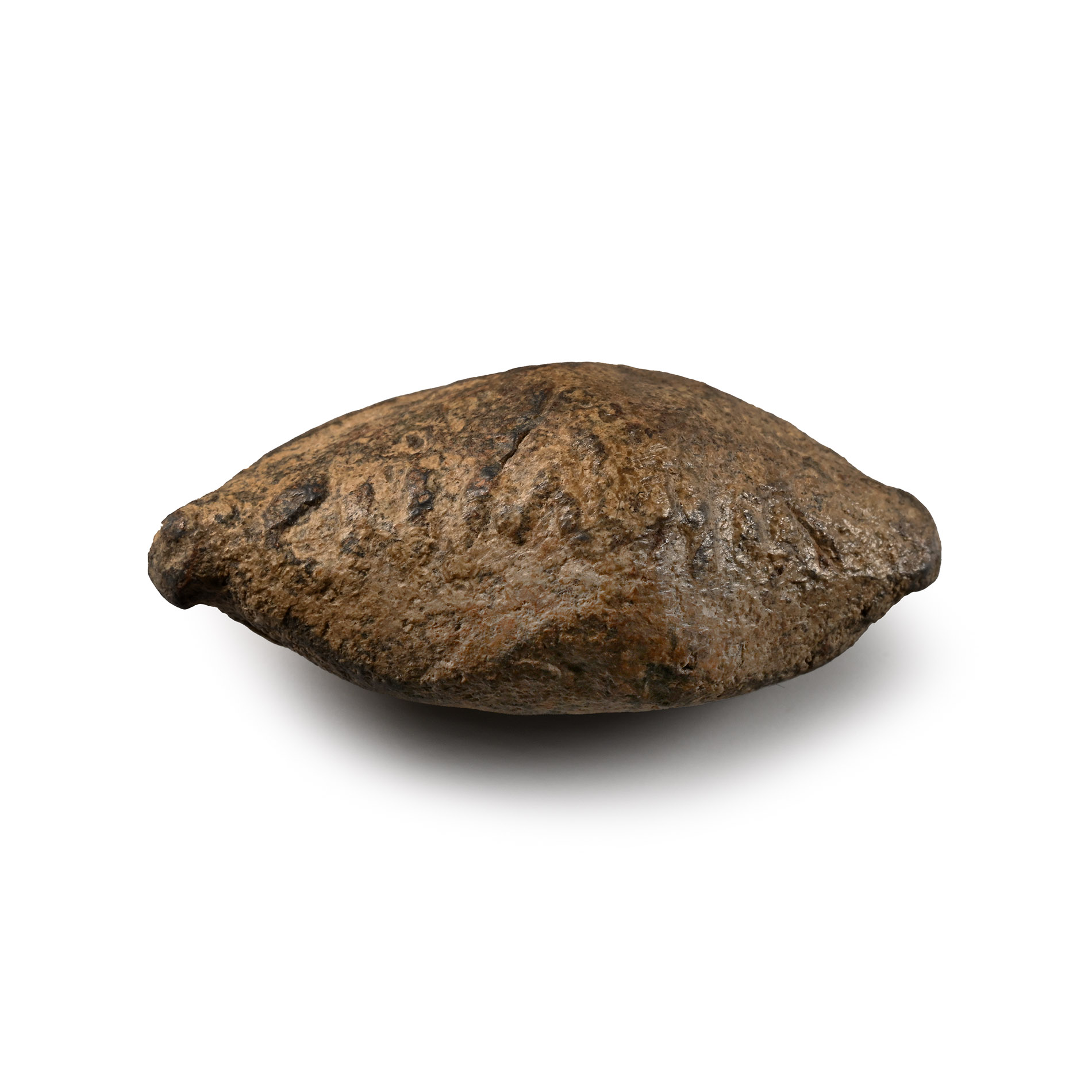
LOT 1422
Roman 'Pompey the Great' Lead Slingshot
1ST CENTURY B.C.
1 5/8 in. (59.6 grams, 40 mm).
Biconical lead slingshot (glans) with inscription in Latin letters 'CN' (Cneius) 'MAG' (Magnus) on one side, and 'IMP' for 'IMPERATOR' (victorious general) to the other side, i.e Gnaeus Pompeius Magnus Imperator (Pompey the Great the victorious general).
ProvenanceEx German art market, 2000s.
Acquired from an EU collector living in London.
From the collection of Surrey, UK, gentleman.
Accompanied by an academic paper by military specialist Dr Raffaele D'Amato, dated 4th May 2022 and titled 'Roman Res Publica - Lead Slingshots (glandes) of Caesarian Age - 45 B.C circa'.
Cf. D'Amato, R. and Sumner, G., Arms and Armour of the Imperial Roman Soldier: From Marius to Commodus, 112 BC-AD 192, London, 2009, fig.32, p.45, for a similar glandes from Zaragoza Museum, the one with the name of Pompey inscribed coming from Munda battlefield.
FootnotesThe shot (Völling type 1C) is marked with the abbreviated name of Gnaeus Pompey; it was used in quantity at the Battle of Monda (or Munda) against Julius Caesar, 17th March 45 BC. The projectiles were made of different materials: lead (glandes) or in pottery or stone (lapides missiles). Sometimes they were signed with the name of the general, like our specimen.
CONDITIONTimeLine Auctions follows a vetting process to ensure the authenticity and legality of all items, reinforcing our commitment to integrity and responsible trading. Each antiquity, antique, and coin lot undergoes thorough examination by a vetting committee of at least ten external specialists, professional trade association members, scientists, and archaeologists: Our Vetting Process
AUCTIONS:
TimeLine is a leading auction house specialising in antiquities, ancient art, collectables, natural history, coins, medals, and books. Our auctions offer museums, collectors, historians, and enthusiasts the opportunity to acquire unique and historically significant pieces.
-
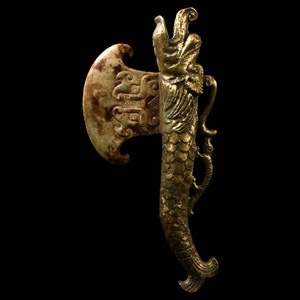
Chinese Serpentine and Gilt Bronze Ceremonial Axe
Qing Dynasty, 19th-early 20th century A.D.Sold for (Inc. bp): £98
Comprising a serpentine pelta-shaped blade with taotie motif, bronze socket formed as a stylised fish with a lizard on its back, open mouth to accept the staff; in archaic style. 513 grams, 23.5 cm
Acquired UK, in the 1980s. Property of a retired South West London doctor -
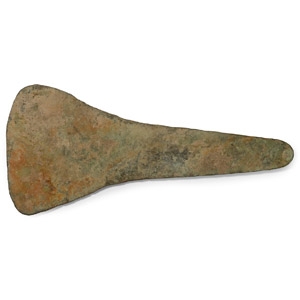
Luristan Copper Flat Axe
13th-6th century B.C.Sold for (Inc. bp): £65
Formed with a rounded butt and flared cutting edge; flat in cross-section. 113 grams, 16.9 cm
Acquired 1980-2015. Ex Abelita family collection. -
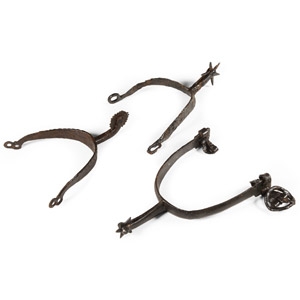
Medieval 'Published' Iron Spur Collection
Circa 13th-17th century A.D.Sold for (Inc. bp): £143
Comprising: a rowel spur of early 13th century date with short neck; a 14th century U-shaped rowel spur with straight neck, five star rowel and squared terminals with fittings and a buckle; a 17th century drop neck spur with multi-pointed rowel, the arched body decorated with transversal lines and bilobate terminals. 280 grams total, 13.2-16.5 cm
From the collection of the famous author, writer and speaker, Gordon Bailey, Essex, UK; formed since 1968.
By the late 13th century A.D., rowel spurs in the West had virtually replaced the old single prick point type spur. The rowel spurs were more effective as a goad and at the same time less damaging to the flank of the horse.
