
Loading, please wait...
LOT 0609
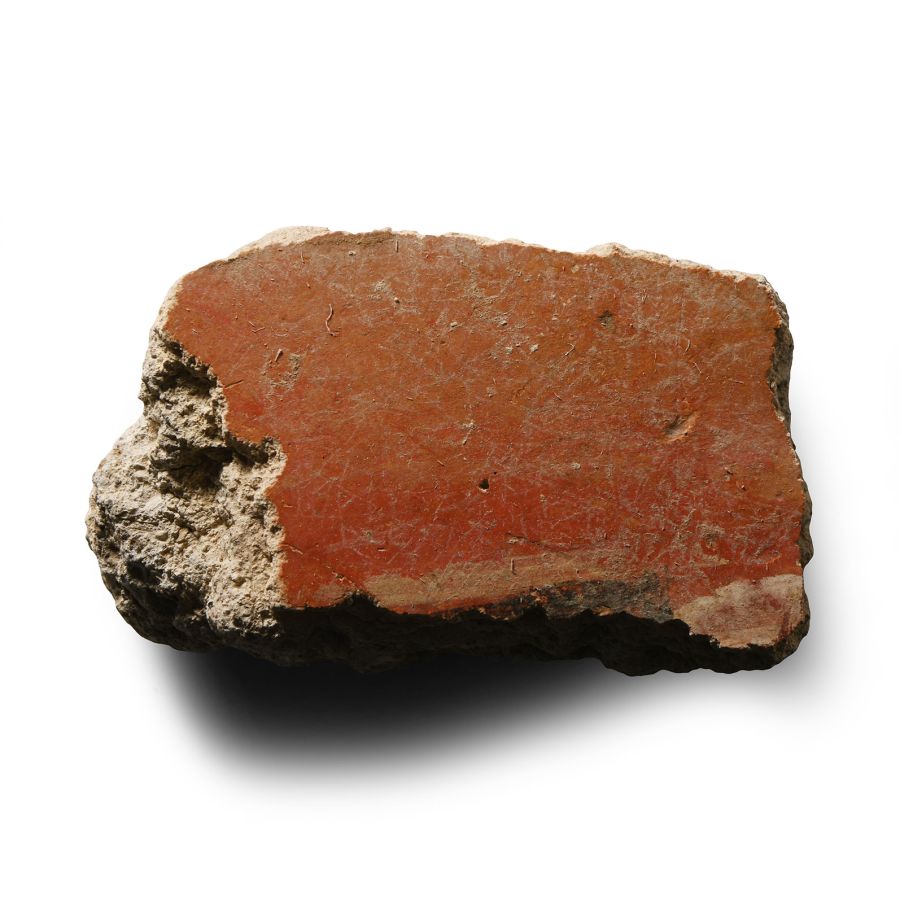
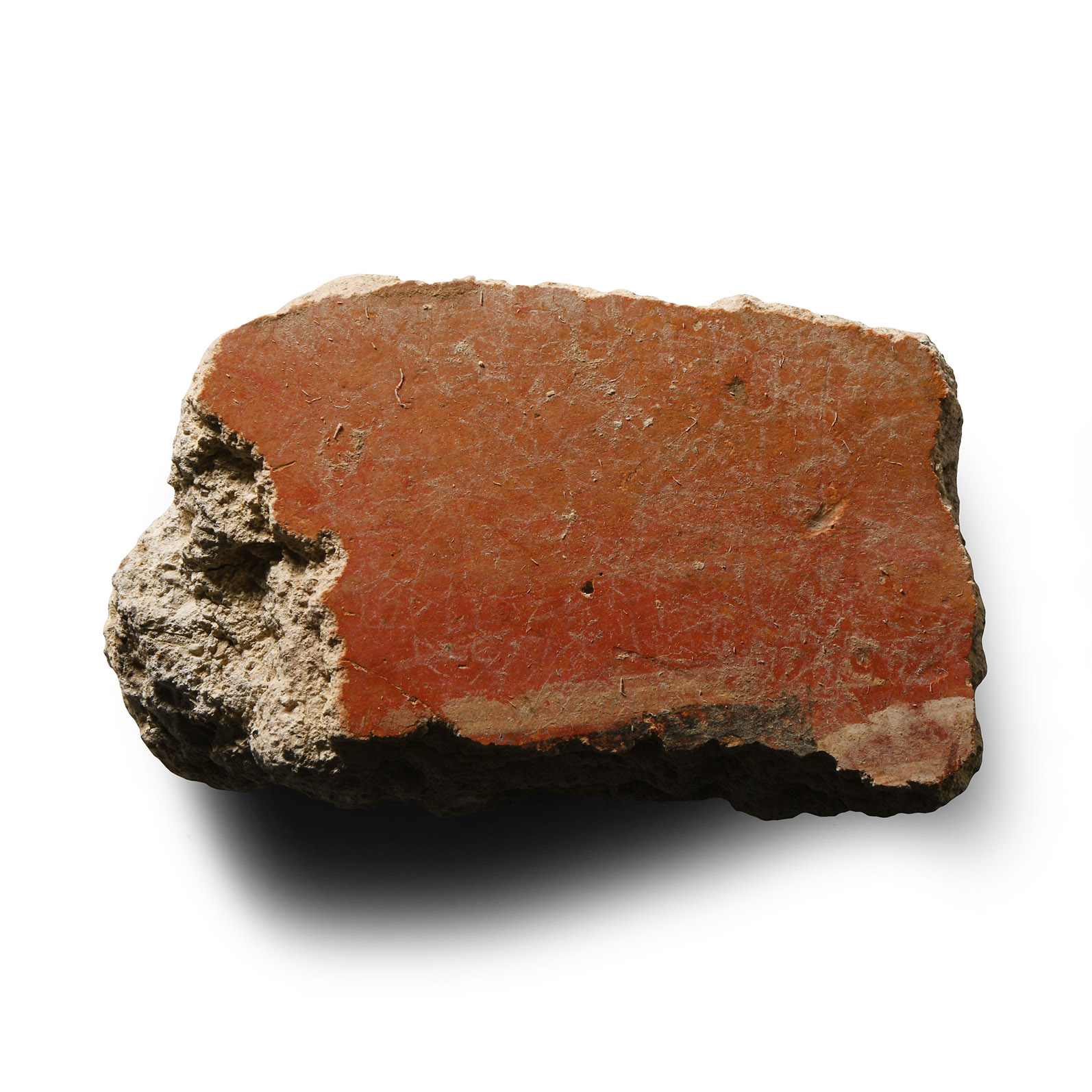
Roman 'Pompeii Red' Fresco Wallplaster
1ST CENTURY A.D.
4 1/2 in. (234 grams, 11.3 cm).
Fragment of wall plaster with rendered surface painted red with yellow and white detailing to the edge; impression of timber laths to the reverse; old inked inscription: 'SIDI BOU ALI' to verso. [No Reserve]
ProvenanceAcquired early 1900s.
Swiss family collection.
Acquired at Birmingham Coin & Antiquities Fair, circa 2004.
Ian Wilkinson collection, Nottinghamshire, UK.
Cf. Boislève, J., Dardenay, A., Monier, F., Peintures et stucs d’époque romaine. Révéler l’architecture par l’étude du décor, Paris, 2014, fig.6, for similar.
FootnotesThe ancient city of Sousse (today Sidi Bou Ali) was the Roman centre of Ulssipira, famous for its wonderful mosaics. However, as across Roman Tunisia, remains of frescoed houses have also been preserved. The ‘Pompeian red’ was used for walls as well as columns, such as those in the ‘house of the red columns’, Acholla, where the peristyle was formed by a narrow courtyard with stuccoed columns painted red.
CONDITIONTimeLine Auctions follows a vetting process to ensure the authenticity and legality of all items, reinforcing our commitment to integrity and responsible trading. Each antiquity, antique, and coin lot undergoes thorough examination by a vetting committee of at least ten external specialists, professional trade association members, scientists, and archaeologists: Our Vetting Process
AUCTIONS:
TimeLine is a leading auction house specialising in antiquities, ancient art, collectables, natural history, coins, medals, and books. Our auctions offer museums, collectors, historians, and enthusiasts the opportunity to acquire unique and historically significant pieces.
-
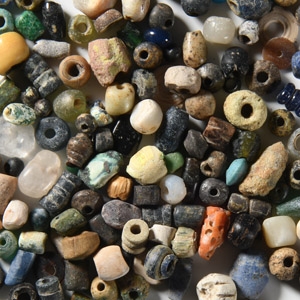
Roman Glass and Other Bead Group
1st-4th century A.D.Sold for (Inc. bp): £117
Including oblate, melon, tubular, fusiform and other types. 29 grams total, 2-11 mm
Acquired from Allan Cherry at the Birmingham Coin & Antiquities Fair, UK, in 2006. Ian Wilkinson collection, Nottinghamshire, UK. -
.jpg)
Orange Glass Intaglio
Roman, 3rd-4th century A.D. or laterSold for (Inc. bp): £124
The banded glass imitating banded agate; intaglio scene composed of a crowned figure standing right, holding a cornucopia and wreath, an eagle standing beside. 2.61 grams, 19 mm
From an early 20th century collection, Caernarfon, North Wales, UK.
The gem appears to represent Zeus with a cornucopia on his right arm and a crown in his left hand, with the eagle, his symbol, at his feet. The eagle has its head turned back, and stands looking up towards him. -
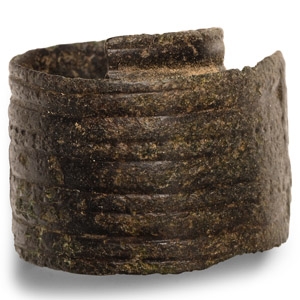
Roman Bronze Finger Ring
1st century A.D.Sold for (Inc. bp): £13
Fragment of a ribbed bracelet with finial, re-used as a finger ring. 6.85 grams, 23.82 mm overall, 16.58 mm internal diameter (approximate size British H, USA 3 3/4, Europe 6.18, Japan 6)
Found Suffolk, UK. Accompanied by a copy of the British Museum's Portable Antiquities Scheme (PAS) report no.SF-37E1B5.
