
Loading, please wait...
LOT 0677
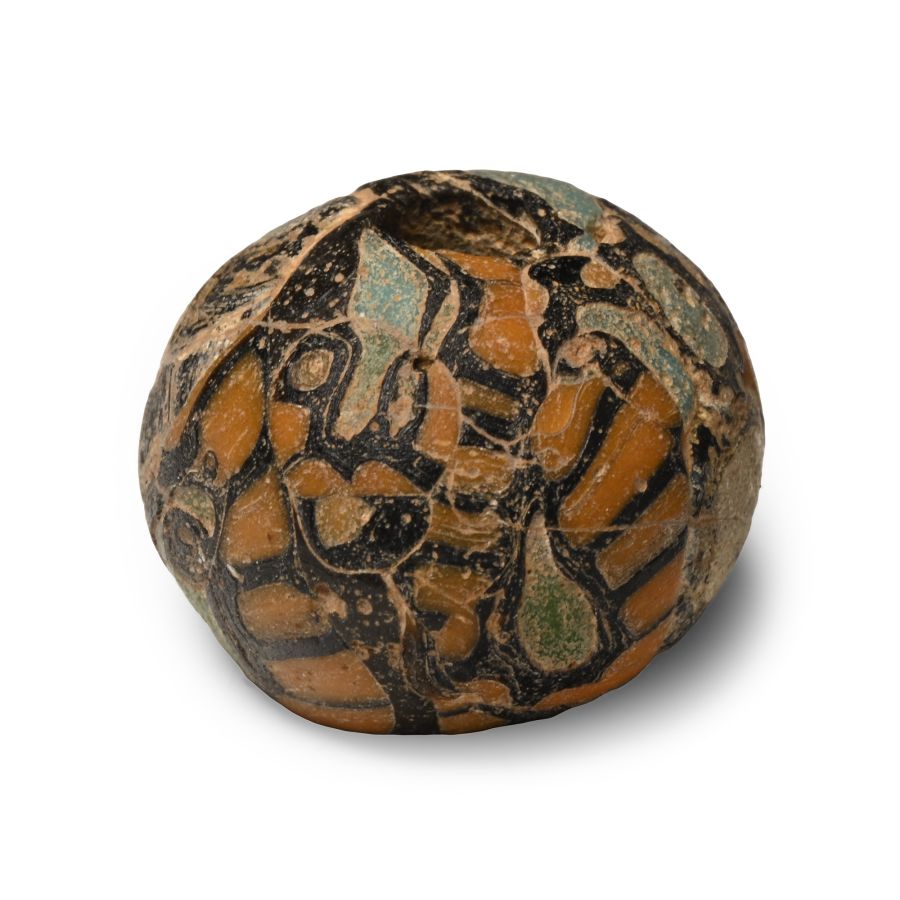
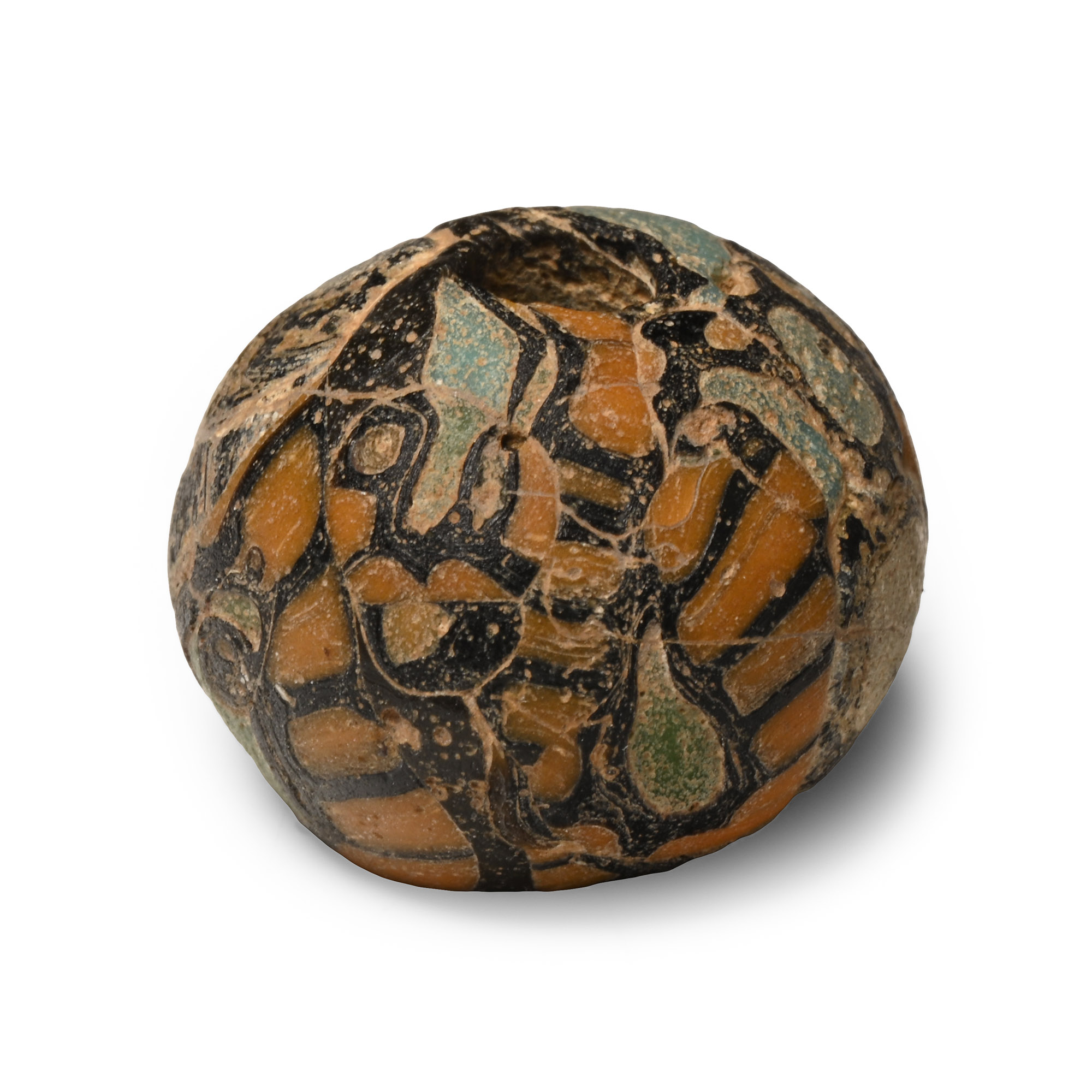
Roman Polychrome Glass Bead
1ST-4TH CENTURY A.D.
5/8 in. (4.37 grams, 17 mm).
Globular type with polychrome detailing. [No Reserve]
ProvenanceAcquired in London or Japan, early 1980s.
Property of a London, UK, gentleman.
TimeLine Auctions follows a vetting process to ensure the authenticity and legality of all items, reinforcing our commitment to integrity and responsible trading. Each antiquity, antique, and coin lot undergoes thorough examination by a vetting committee of at least ten external specialists, professional trade association members, scientists, and archaeologists: Our Vetting Process
AUCTIONS:
TimeLine is a leading auction house specialising in antiquities, ancient art, collectables, natural history, coins, medals, and books. Our auctions offer museums, collectors, historians, and enthusiasts the opportunity to acquire unique and historically significant pieces.
-
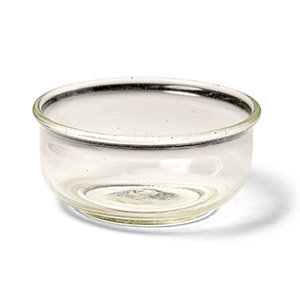
Roman Pale Green Glass Bowl
3rd-5th century A.D.Sold for (Inc. bp): £598
With narrow basal ring and curved sidewall, carinated and flared rim. 43.69 grams, 75 mm
Aquired Christie's, London, Antiquities, Works of Art and Important Renaissance Bronzes, Plaquettes and Limoges Enamels, 8 July 1981, no.12 (part). From a private Wiltshire, UK, collection. Accompanied by a copy of the relevant Christie's catalogue pages. -
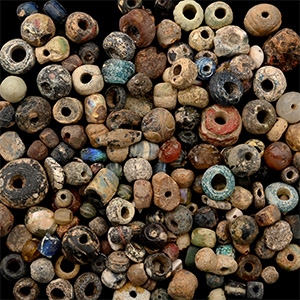
Ancient Glass and Other Bead Collection
Early 1st millennium A.D.Sold for (Inc. bp): £156
Including annular, tabular, polyhedral and other types. 94 grams total, 4-16 mm
From an old deceased estate. Property of an East London lady collector, acquired at auction before 1995. -
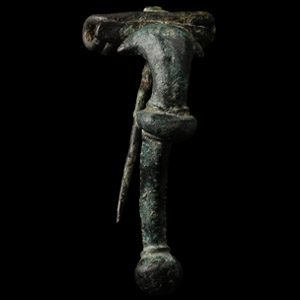
Roman Bronze Bow Brooch
2nd century A.D.Estimate: £100 - 140 (+bp*)
Opening Bid: £40
With chord and pin (now detached) at the head, D-section bow with lateral spurs, collar and swept foot with notched detailing, bulb finial, catch to the reverse. 26.6 grams, 54 mm
Ex important German collection, 1990s. This lot is accompanied by an illustrated lot declaration signed by the Head of the Antiquities Department, Dr Raffaele D’Amato.
This type of fibula, common in Pannonia, was typically worn in men's clothing. It closed the paenula on the chest, arranged horizontally. Naturally, it could also be worn with military attire.
