
Loading, please wait...
LOT 0803
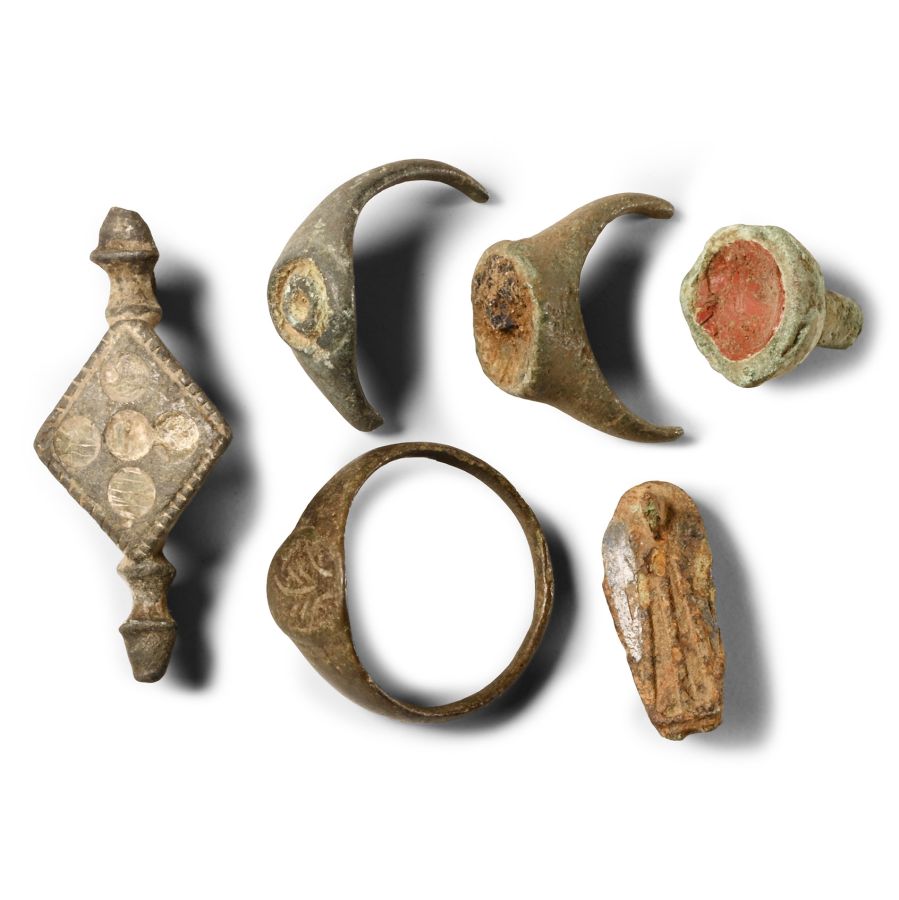
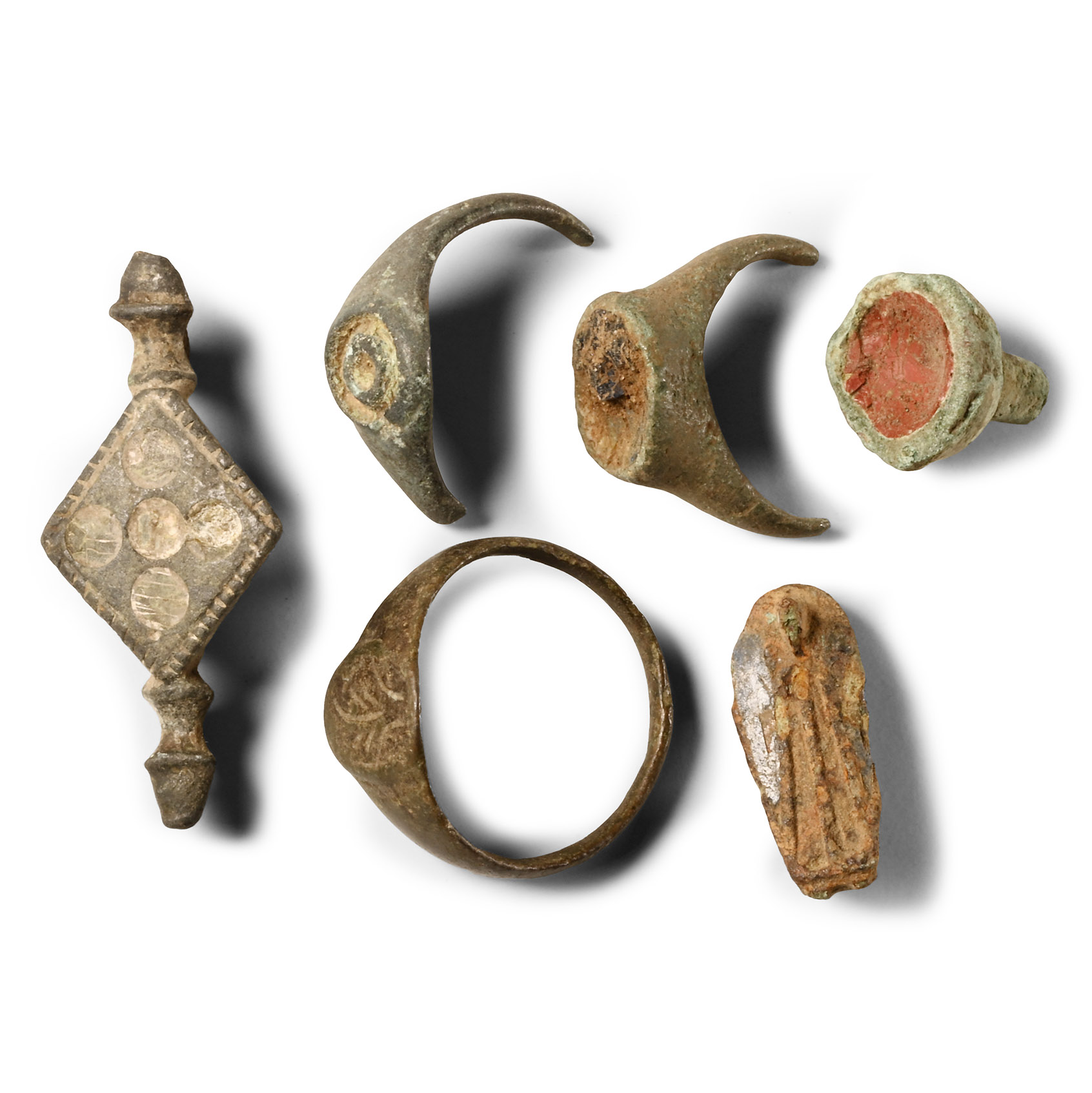
Roman Plate Brooch and Ring Fragments
1ST-4TH CENTURY A.D.
1/2 - 1 1/4 in. (13.6 grams total, 12-33 mm).
Including an equal-ended plate brooch, finger ring and fragments. [6]
ProvenanceAcquired between the 1960s-early 1990s.
From an old UK private collector from Worthing, West Sussex, UK.
Property of K.P., a Cornish lady collector, UK.
TimeLine Auctions follows a vetting process to ensure the authenticity and legality of all items, reinforcing our commitment to integrity and responsible trading. Each antiquity, antique, and coin lot undergoes thorough examination by a vetting committee of at least ten external specialists, professional trade association members, scientists, and archaeologists: Our Vetting Process
AUCTIONS:
TimeLine is a leading auction house specialising in antiquities, ancient art, collectables, natural history, coins, medals, and books. Our auctions offer museums, collectors, historians, and enthusiasts the opportunity to acquire unique and historically significant pieces.
LOT 0803
Roman Plate Brooch and Ring Fragments
Estimate £200 - 300€230 - 350 (for guidance only)$270 - 410 (for guidance only)
-
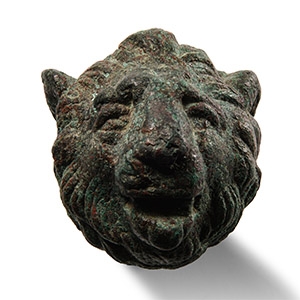
Roman Bronze Lion Head Finial
1st-2nd century A.D.Sold for (Inc. bp): £234
Hollow-formed on a tubular shank with raised rim, modelled with dense curls to the mane, mouth open and tongue protruding. 159 grams, 67 mm
Acquired in Europe in 1994. European private collection. -
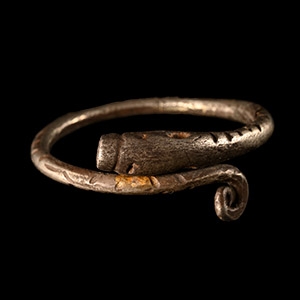
Roman Silver Snake Ring
1st-2nd century A.D.Sold for (Inc. bp): £111
Formed as a coiled snake with curved tail, hatched lines to the body and stylised facial features. 3.28 grams, 23.25mm overall, 19.74mm internal diameter (approximate size British T, USA 9 1/2, Europe 21.26, Japan 20)
Private collection, UK; formed in the 1980s. Property of a Shropshire private collector. -
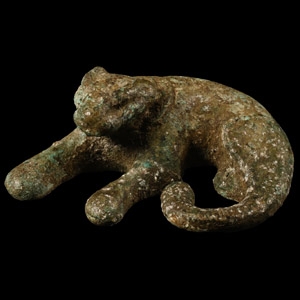
Roman Bronze Laying Panther Statuette
1st-3rd century A.D.Sold for (Inc. bp): £143
Modelled in the round laying flat on its side with forelegs extended; low-relief collar to the neck. 25 grams, 38 mm
From a collection acquired on the UK art market from various auction houses and collections mostly before 2000. From an important Cambridgeshire estate; thence by descent.
The presence of the collar suggests that the model represents a panther used in the gladiatorial animal-fighting games.
