
Loading, please wait...
LOT 0307
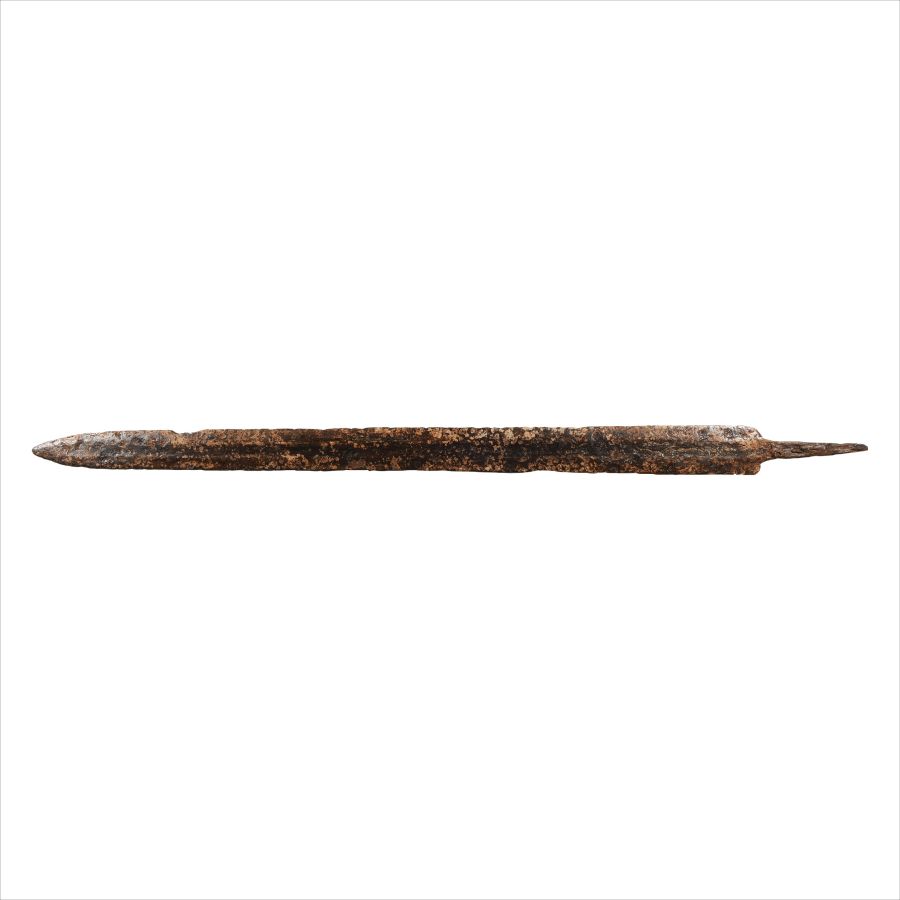
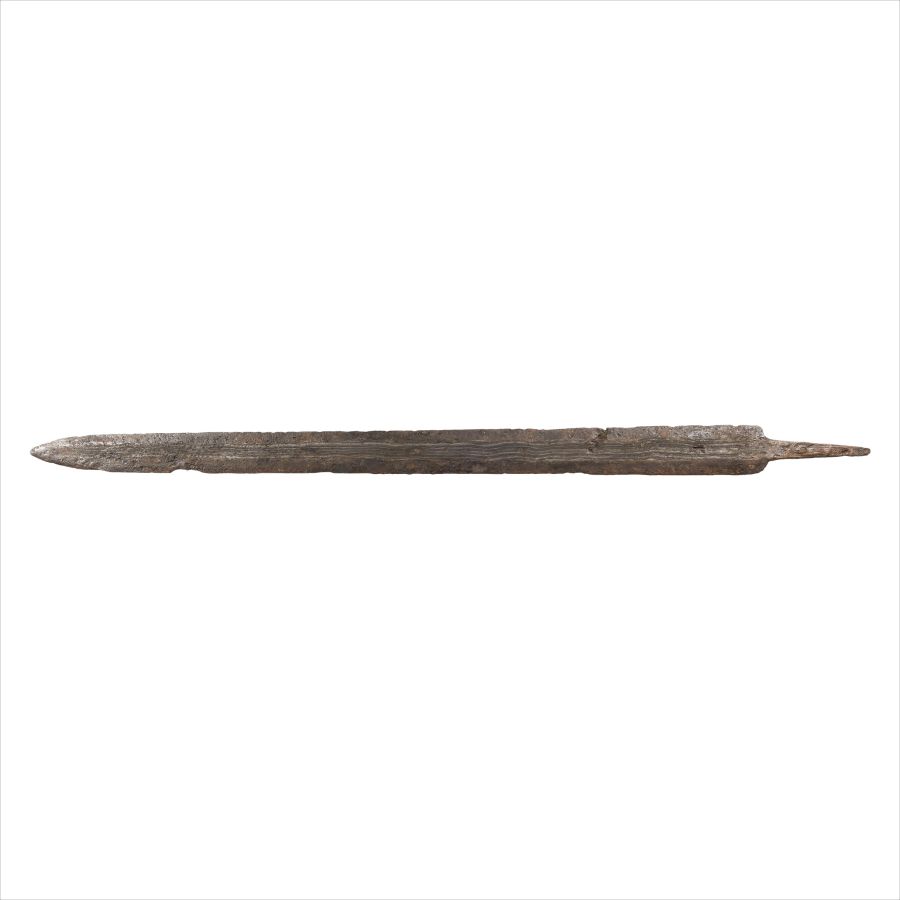
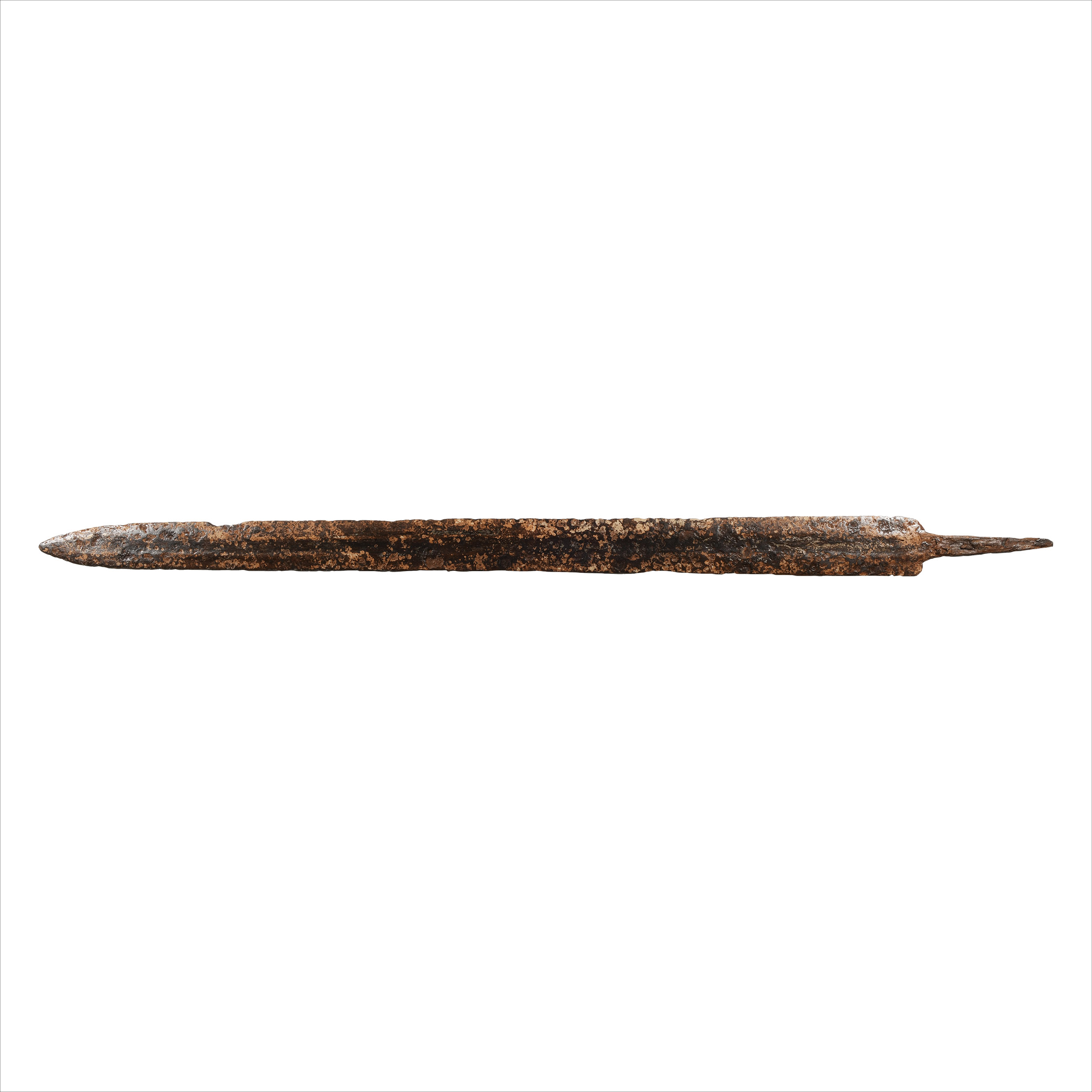
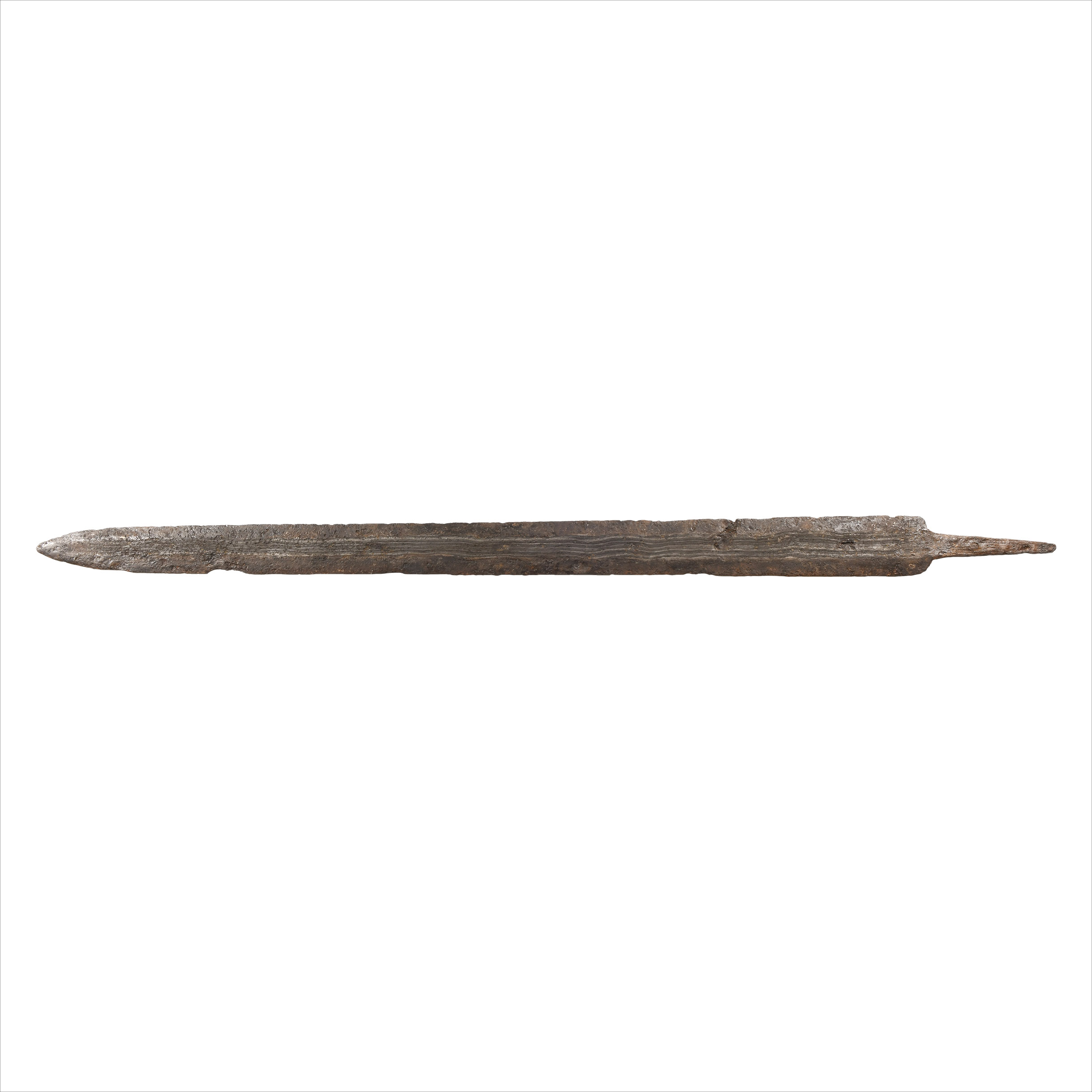
Roman Pattern-Welded Iron Sword
3RD-4TH CENTURY A.D.
33 3/4 in. (659 grams, 85.5 cm).
A Spatha with double-edged blade of Osterburken-Kemathen Type, fullers with damask pattern (rosette damask technique B.II.I.2), sturdy tang with remains of wood; the blade cleaned and conserved on one side.
ProvenanceFrom the private collection of a London gentleman, from his grandfather's collection formed before the early 1970s.
Accompanied by an academic report by Dr Raffaele D’Amato.
This lot has been checked against the Interpol Database of stolen works of art and is accompanied by search certificate number no. 11923-209660.
Exhibited at Harwich Museum, Harwich, Essex, UK, 14th March-9th June 2024; accompanied by a copy of a photograph of the artefact on display.
LiteratureSee Miks, C., Studien zur Romischen Schwertbewaffnung in der Kaiserzeit, I-II Banden, Rahden, 2007; for similar specimens see Miks, 2007, nos. A533, p.680, pl.137, from Nowa Cerekiew; A766, p.755, pl.141, from Vrasselt.
CONDITIONTimeLine Auctions follows a vetting process to ensure the authenticity and legality of all items, reinforcing our commitment to integrity and responsible trading. Each antiquity, antique, and coin lot undergoes thorough examination by a vetting committee of at least ten external specialists, professional trade association members, scientists, and archaeologists: Our Vetting Process
AUCTIONS:
TimeLine is a leading auction house specialising in antiquities, ancient art, collectables, natural history, coins, medals, and books. Our auctions offer museums, collectors, historians, and enthusiasts the opportunity to acquire unique and historically significant pieces.
LOT 0307
Roman Pattern-Welded Iron Sword
Estimate £2,000 - 3,000€2,320 - 3,480 (for guidance only)$2,700 - 4,050 (for guidance only)
-
.jpg)
Viking Age Bronze Sword Scabbard Chape Collection
9th-11th century A.D.Estimate: £500 - 700 (‡+bp*)
Opening Bid: £250
Comprising: one heater-shaped with openwork raven motif to each face; one similar with openwork raven enmeshed in tendrils; one with fleur-de-lys to the centre of each upper edge and a lobed spur to each side; one with openwork quatrefoil to each face and knop finial to the apex. 145 grams total, 55-85 mm
From the collection of a North American gentleman, formed in the 1990s. -
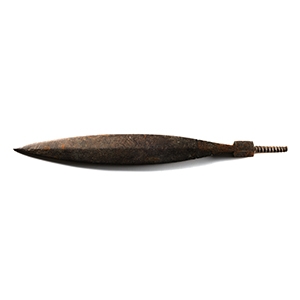
Maasai Leaf-Shaped Iron Spear
20th century A.D.Sold for (Inc. bp): £91
Lenticular in section, leaf-shaped in plan with rectangular block to the shoulder and threaded tang. 447 grams, 37 cm
From an old English collection formed in the 1980s. Property of an Essex gentleman; acquired on the UK art market. -
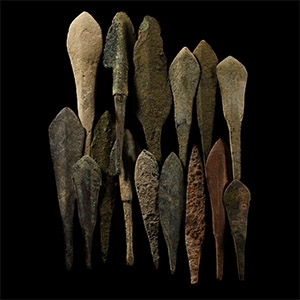
Western Asiatic Bronze Arrowhead Group
2nd-1st millennium B.C.Sold for (Inc. bp): £117
Comprising fifteen tanged examples, including one slender arrowhead in iron. 112 grams total, 44-75 mm
Acquired 1980-2015. Ex Abelita family collection.
