
Loading, please wait...
LOT 0267
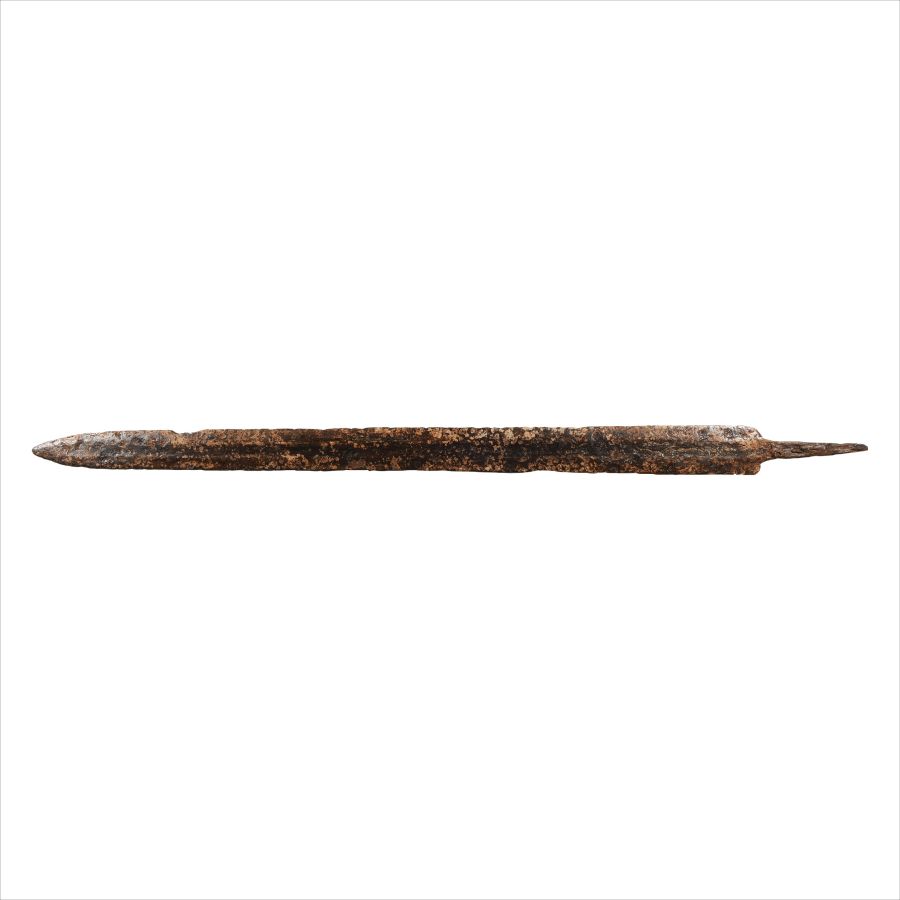
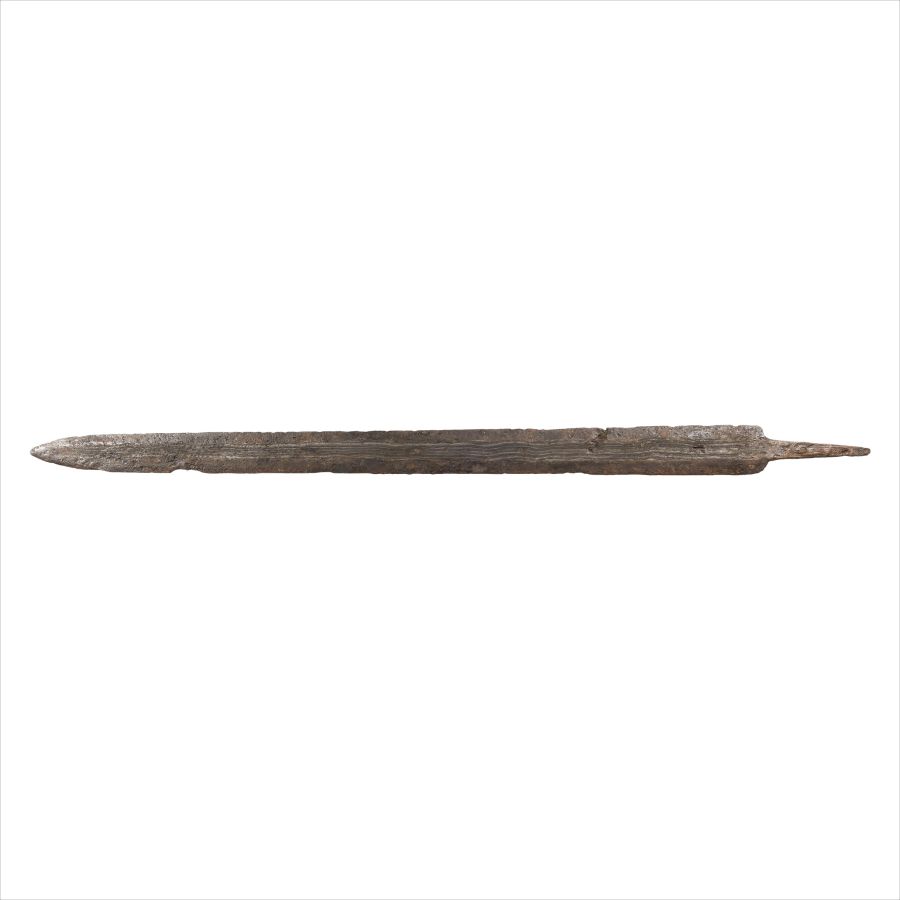
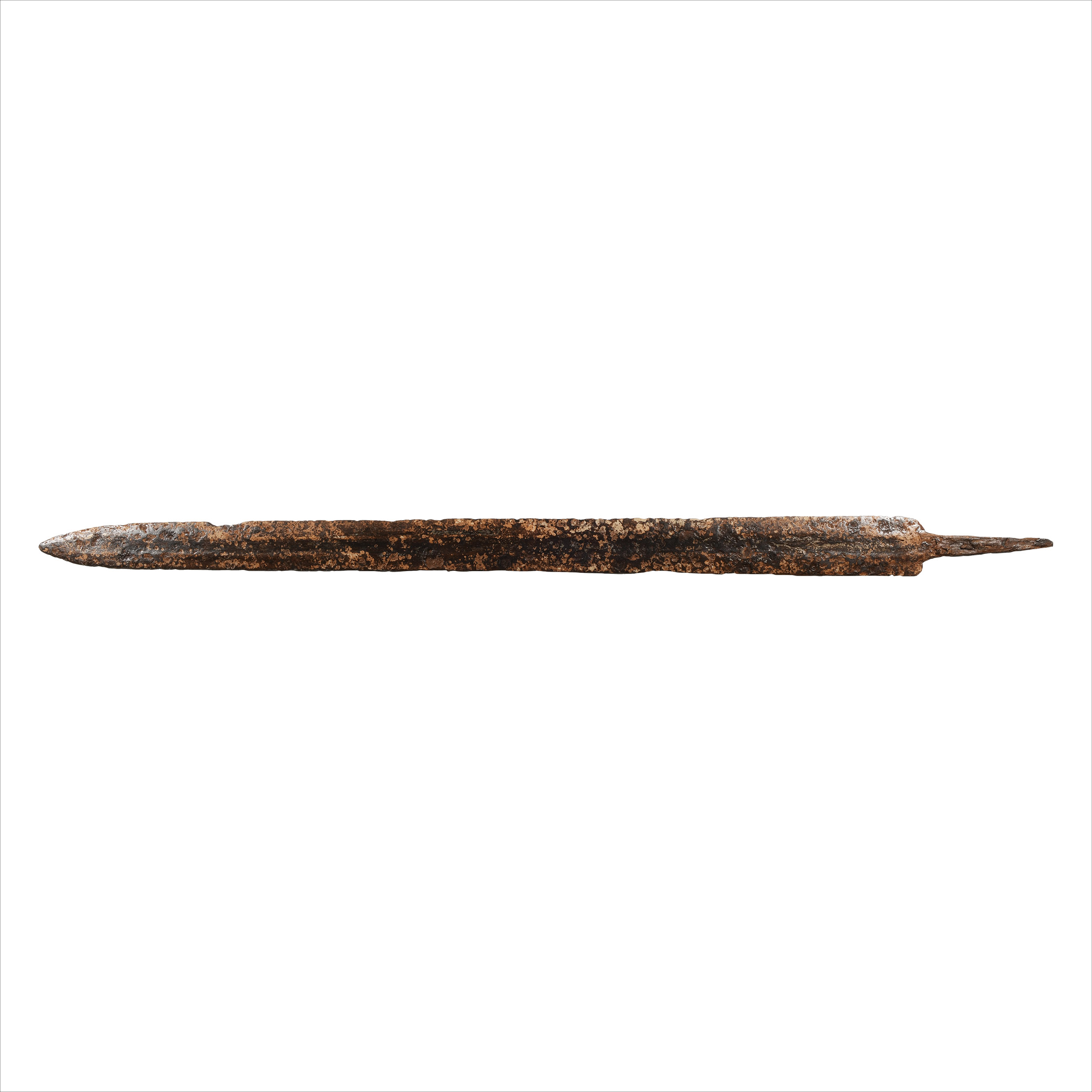
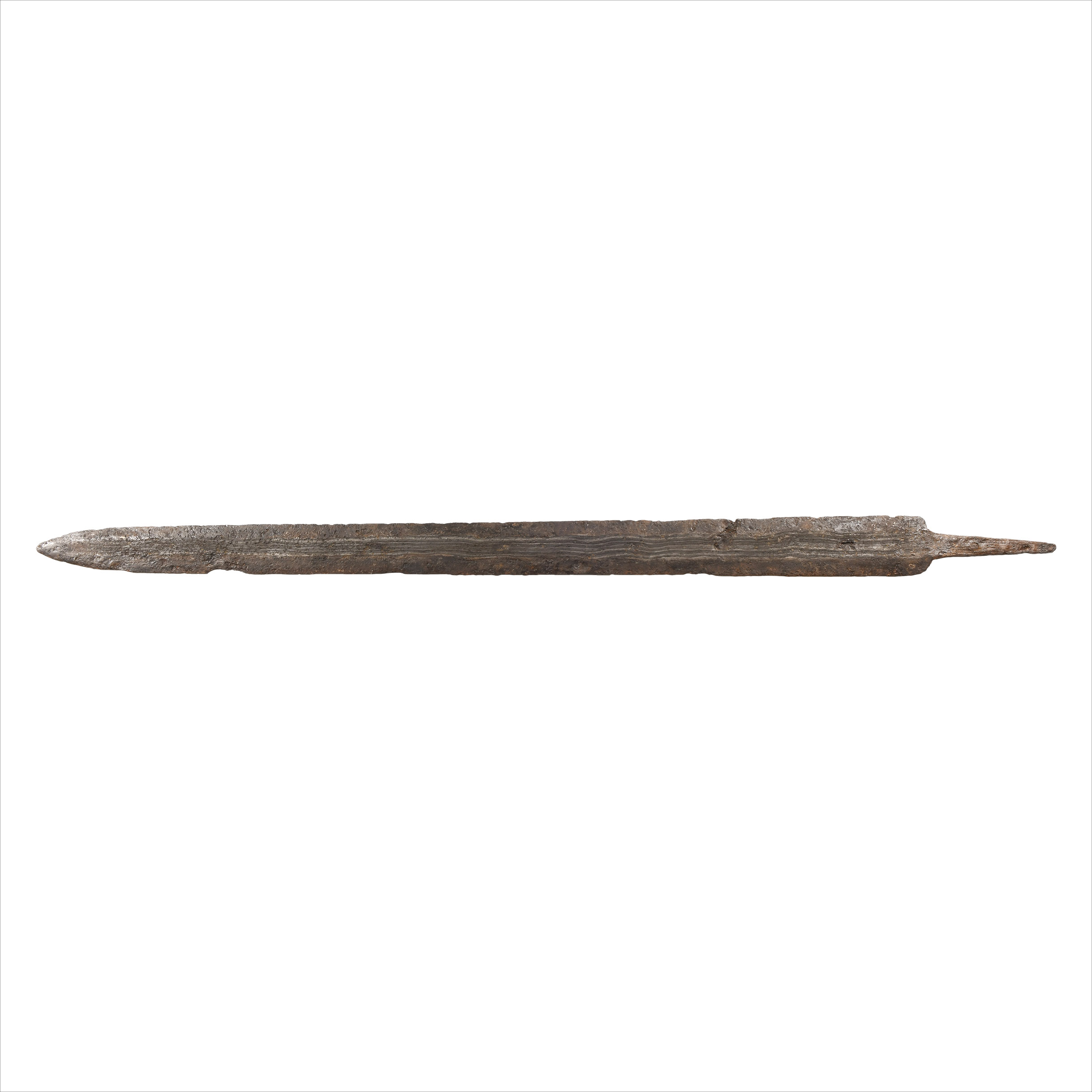
Roman Pattern-Welded 'Damascus' Iron Sword
3RD-4TH CENTURY A.D.
33 3/4 in. (659 grams, 85.5 cm).
A spatha with double-edged blade of Osterburken-Kemathen Type, fullers with damask pattern (rosette damask technique B.II.I.2), sturdy tang with remains of wood; the blade cleaned and conserved on one side.
ProvenanceFrom the private collection of a London gentleman, from his grandfather's collection formed before the early 1970s.
Accompanied by an academic report by Dr Raffaele D’Amato.
This lot has been checked against the Interpol Database of stolen works of art and is accompanied by a search certificate number no. 11923-209660.
Exhibited at Harwich Museum, Harwich, Essex, UK, 14th March-9th June 2024; accompanied by a copy of a photograph of the artefact on display.
LiteratureSee Miks, C., Studien zur Romischen Schwertbewaffnung in der Kaiserzeit, I-II Banden, Rahden, 2007; for similar specimens see Miks, 2007, nos. A533, p.680, pl.137, from Nowa Cerekiew; A766, p.755, pl.141, from Vrasselt.
CONDITIONTimeLine Auctions follows a vetting process to ensure the authenticity and legality of all items, reinforcing our commitment to integrity and responsible trading. Each antiquity, antique, and coin lot undergoes thorough examination by a vetting committee of at least ten external specialists, professional trade association members, scientists, and archaeologists: Our Vetting Process
AUCTIONS:
TimeLine is a leading auction house specialising in antiquities, ancient art, collectables, natural history, coins, medals, and books. Our auctions offer museums, collectors, historians, and enthusiasts the opportunity to acquire unique and historically significant pieces.
LOT 0267
Roman Pattern-Welded 'Damascus' Iron Sword
Estimate £2,000 - 3,000€2,320 - 3,480 (for guidance only)$2,700 - 4,050 (for guidance only)
-
Large Romano-British Bronze Catapult Fitting
1st century A.D.Sold for (Inc. bp): £20
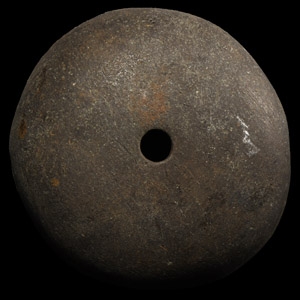
Substantial cast cupola with socket to the apex; possibly from a field artillery piece. 110 grams, 67 mm
Reputed to have been excavated near Viables in Hampshire at the end of the 19th century. From the estate of the late Jennifer Simmonds. Acquired from Jacobs & Hunt auctioneers, Petersfield, Hampshire, UK.
The circular umbo does not correspond to any known central shield boss, as it also lacks the lower edge; instead, it finds a good correspondence with the circular bosses that reinforced the lower and upper frame of a catapult, equipped with a central bronze cover. -
Viking Age Baltic Bearded Iron Axehead
12th-13th century A.D.Sold for (Inc. bp): £234
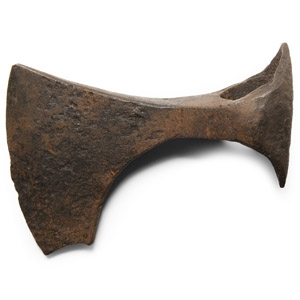
With short curved blade and spur beneath the chin, narrow neck, deep socket with extended edges to the reverse. 360 grams, 12 cm
From the collection of a Californian, USA, gentleman, dating back to the late 1960s.
The Curonians were known as fierce warriors and sailors who were involved in several wars and alliances with the Swedish, Danish and Icelandic Vikings. Baltic tribes created an original and impressive set of weaponry. They included battle knives, battle axes and spears and javelins with medium sized heads of a characteristic shape. -
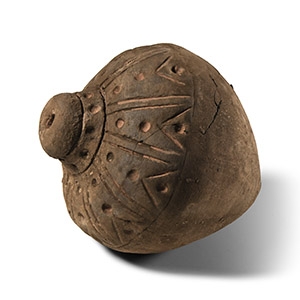
Byzantine 'Greek Fire' Ceramic Fire Bomb or Hand Grenade
9th-11th century A.D.Sold for (Inc. bp): £117
Piriform body with impressed panels and roundels to the shoulder, domed filler-hole, intended to be filled with explosive liquid and wick, used as a hand grenade. 415 grams, 10.7 cm
From a specialist collection of militaria, London, UK, collected 1990s onwards. Accompanied by an academic paper by military specialist Dr Raffaele D'Amato, dated 15 July 2019 and titled 'Eastern Roman Empire - Greek Fire Bomb or Hand Grenade (μεσαίον kακάβιον) 9th-11th century AD'.
Apart from the use of siphons or manual flame-throwers called cheirosiphona, special corps of Roman soldiers employed terracotta grenades, in the form of small jars, abundantly evidenced in archaeological excavations. They were called μεσαία kακαβιά or κυτροκακάβια where the former had a bulbous shape and the latter a more cylindrical form.
