
Loading, please wait...
LOT 0676
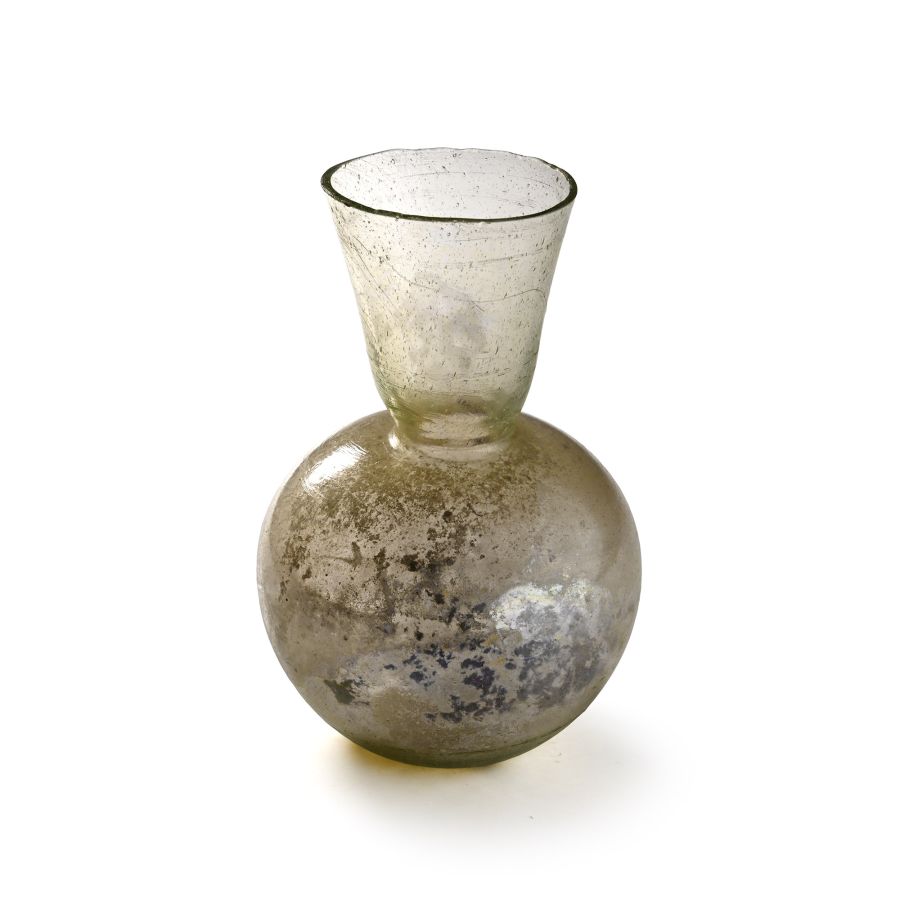
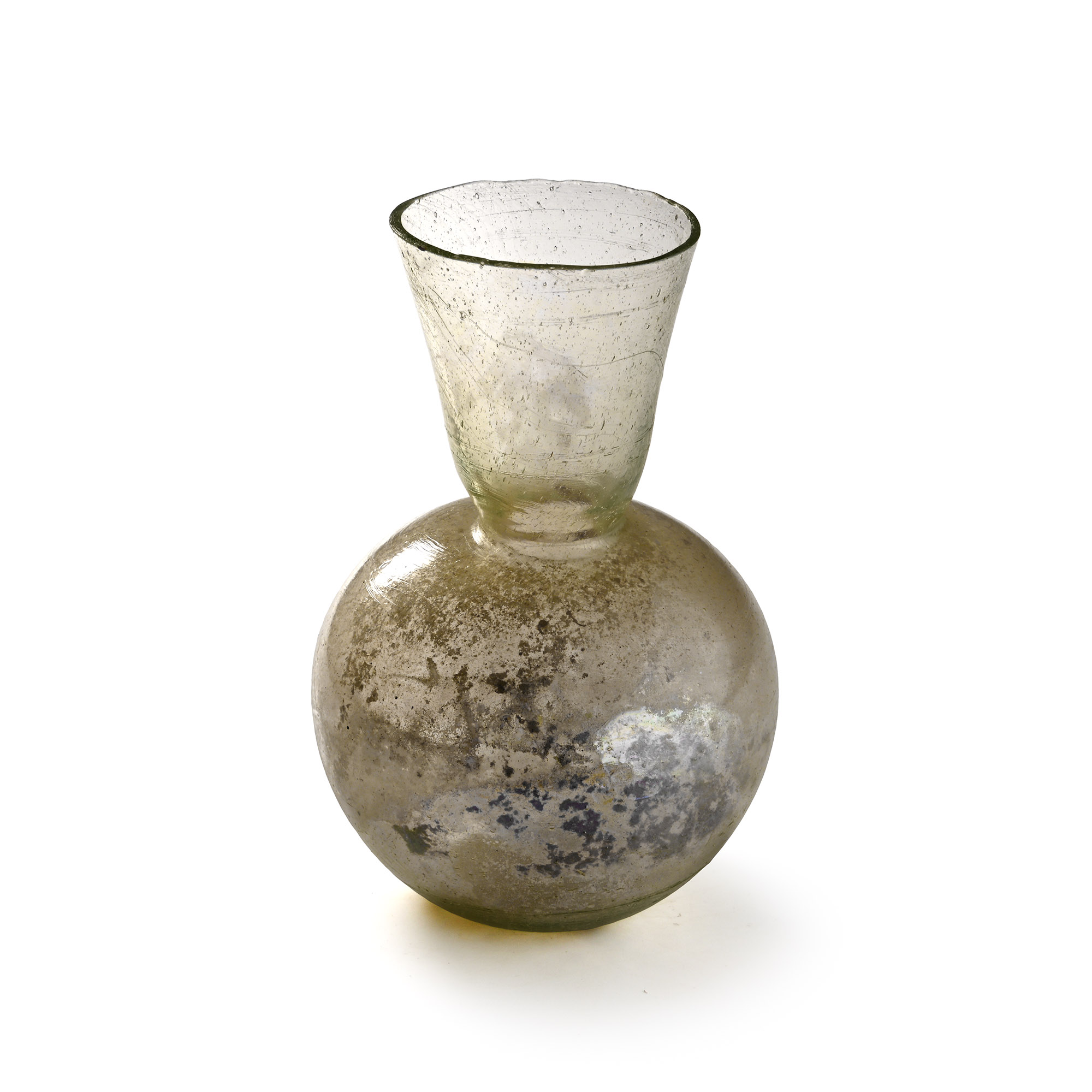
Roman Pale Green Iridescent Glass Vessel
2ND-4TH CENTURY A.D.
4 in. (59.7 grams, 10.2 cm).
Piriform in profile in aqua glass with broad flared neck, rim cut down; dimple base; areas of iridescence.
ProvenanceAcquired Christie's, London, Antiquities, Works of Art and Important Renaissance Bronzes, Plaquettes and Limoges Enamels, 8 July 1981, no.12 (part).
From a private Wiltshire, UK, collection.
Accompanied by a copy of the relevant Christie's catalogue pages.
See Whitehouse, D., Roman Glass in the Corning Museum of Glass, vol.2, New York, 2001, item 696, for type.
CONDITIONTimeLine Auctions follows a vetting process to ensure the authenticity and legality of all items, reinforcing our commitment to integrity and responsible trading. Each antiquity, antique, and coin lot undergoes thorough examination by a vetting committee of at least ten external specialists, professional trade association members, scientists, and archaeologists: Our Vetting Process
AUCTIONS:
TimeLine is a leading auction house specialising in antiquities, ancient art, collectables, natural history, coins, medals, and books. Our auctions offer museums, collectors, historians, and enthusiasts the opportunity to acquire unique and historically significant pieces.
-
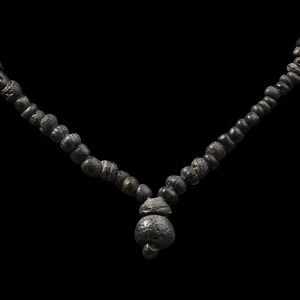
Roman Black Glass Bead Necklace String
1st-4th century A.D. and laterSold for (Inc. bp): £65
Restrung group of oblate and other types with annular pendant centrepiece. 9.39 grams, 44.5 cm
London, UK, collection, 2000s. -
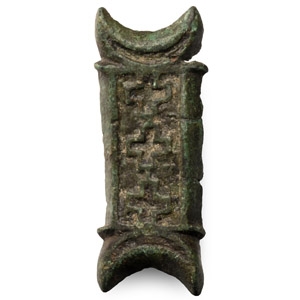
Romano-British Bronze Belt Mount with Crescent Moons and Crosses
2nd century A.D.Sold for (Inc. bp): £52
Rectangular plate with three Greek crosses, each end with a crescentic moon; two rivets on the rear. 4.84 grams, 40 mm
Found Cambridgeshire, UK. From a Kent collection formed in the 1990s. -
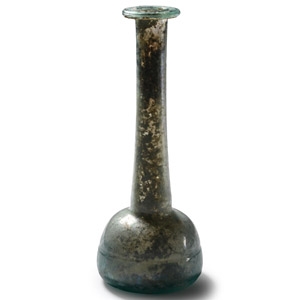
Roman Glass Unguentarium
1st-3rd century A.D.Estimate: £120 - 170 (+bp*)
Opening Bid: £65
With plano-convex body and dimple base, tall slender neck, folded rim; iridescent green surface. 78 grams, 15 cm
From an important London collection of glass, 1990s. This lot is accompanied by an illustrated lot declaration signed by the Head of the Antiquities Department, Dr Raffaele D'Amato.
This kind of toilet bottle was called ‘candlestick unguentarium’ by the academics due to the shape of its neck. This specific type, with its transparent grayish green glass, is especially found in Roman Cyprus (Hayes's fabric 2 of Cypriot blown glass).
