
Loading, please wait...
LOT 0639
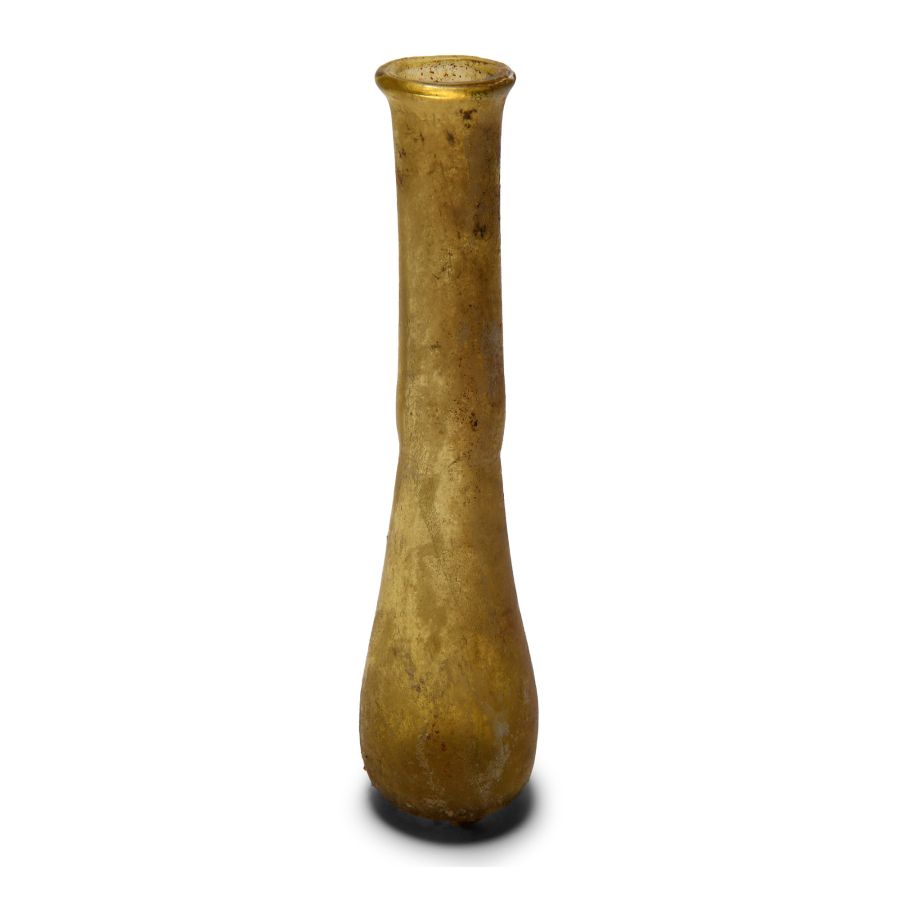
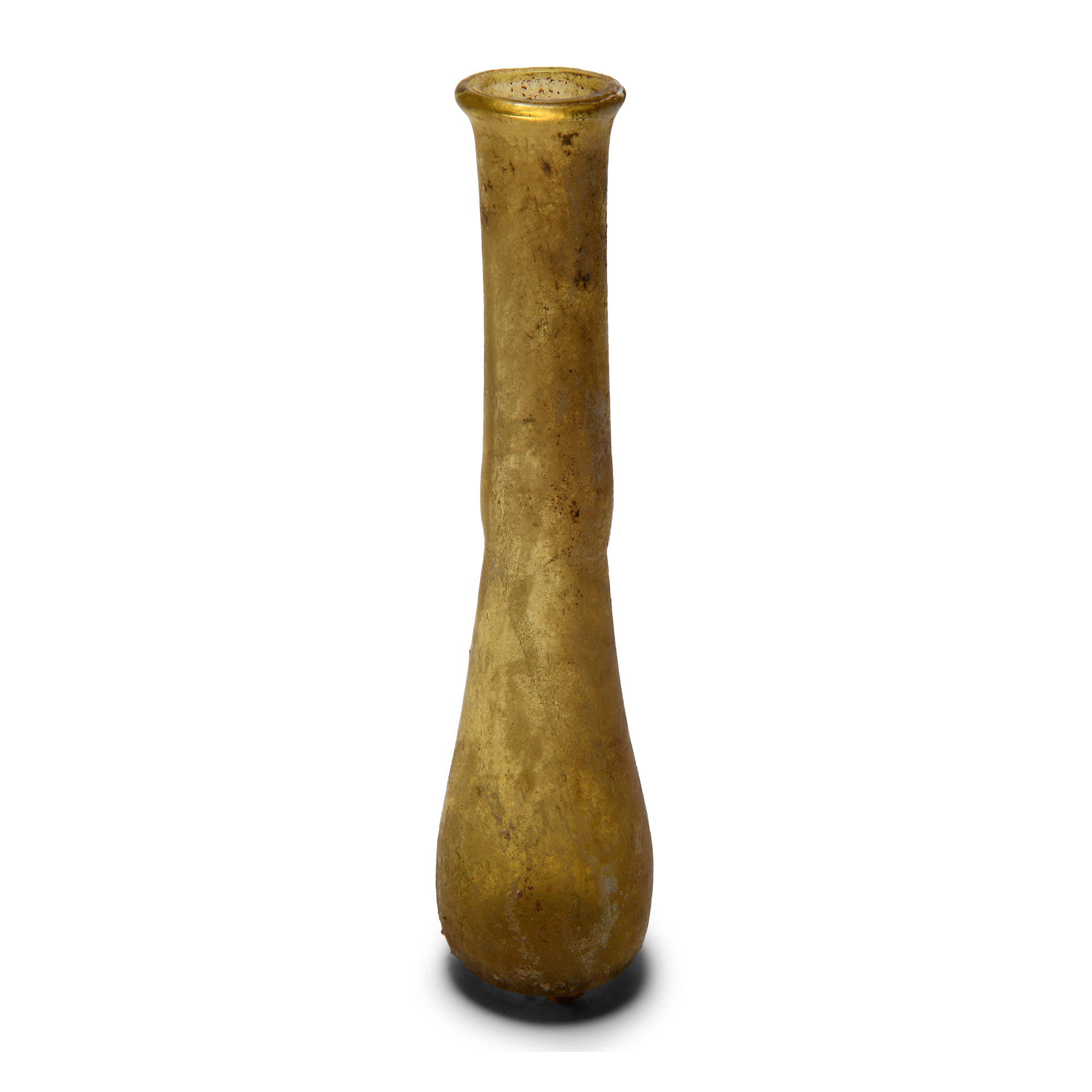
Roman Pale Green Glass Unguentarium
1ST-2ND CENTURY A.D.
5 in. (27.2 grams, 12.5 cm high).
The lower body of piriform shape, cylindrical neck and everted rim; iridescent surfaces.
ProvenanceAcquired 1969-1999.
From the private collection of the late Mr S.M., London, UK, thence by descent.
Cf. The British Museum, museum number 1870,0402.743, for similar.
CONDITIONTimeLine Auctions follows a vetting process to ensure the authenticity and legality of all items, reinforcing our commitment to integrity and responsible trading. Each antiquity, antique, and coin lot undergoes thorough examination by a vetting committee of at least ten external specialists, professional trade association members, scientists, and archaeologists: Our Vetting Process
AUCTIONS:
TimeLine is a leading auction house specialising in antiquities, ancient art, collectables, natural history, coins, medals, and books. Our auctions offer museums, collectors, historians, and enthusiasts the opportunity to acquire unique and historically significant pieces.
-
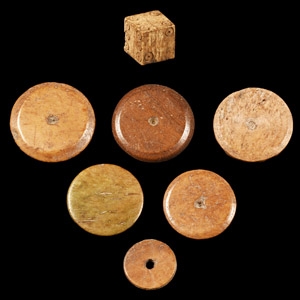
Roman 'Thames' Bone Gaming Piece and Dice Group
1st-4th century A.D.Sold for (Inc. bp): £124
Comprising six polished discoid counters and a single dice, the latter configured: 1:6; 2:5; 3:4 in punched ring-and-dot markers. 8 grams total, 7-18 mm
Found Billingsgate spoil from the Thames foreshore, London, UK. -
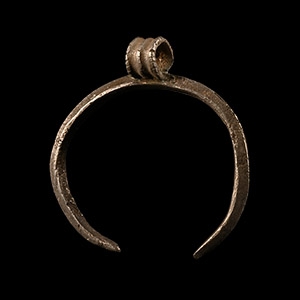
Roman Silver Lunar Pendant
1st-3rd century A.D.Sold for (Inc. bp): £91
With square-section crescent and ribbed suspension loop. 3.15 grams, 32 mm
From the collection of an EU gentleman formed in the 1990s. Acquired on the UK art market. -
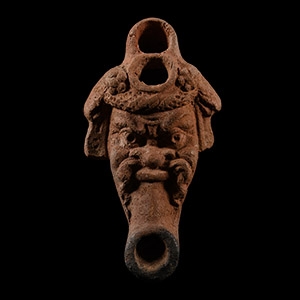
Roman Miniature Terracotta Oil Lamp with Theatre Mask
2nd century B.C.-1st century A.D.Sold for (Inc. bp): £364
Hollow-formed with long nozzle extending from the fleshy mouth, crown of foliage; smaller nozzle and filler-hole to the brow; raised ring to the base; a theatre mask or face of Silenus. 24.3 grams, 72 mm
Acquired 1960s-1990s. From the late Alison Barker collection, a retired London barrister.
Lamps with figurines first appeared in the Hellenistic period, possibly originating in Athens. Found in all parts of the Mediterranean basin, they were particularly popular during the first and second centuries A.D. The Silenus face types were linked to the Bacchic cult. The crown of leaves and fruit across the forehead alludes to Bacchus or one of his followers.
