
Loading, please wait...
LOT 0678
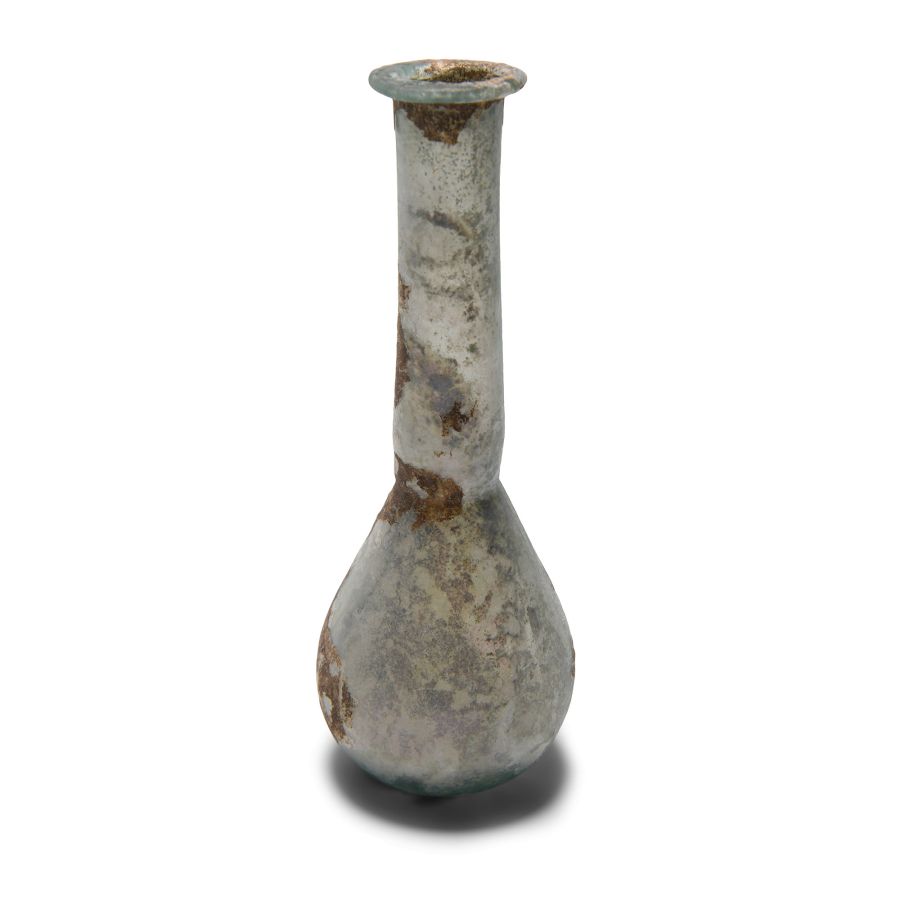
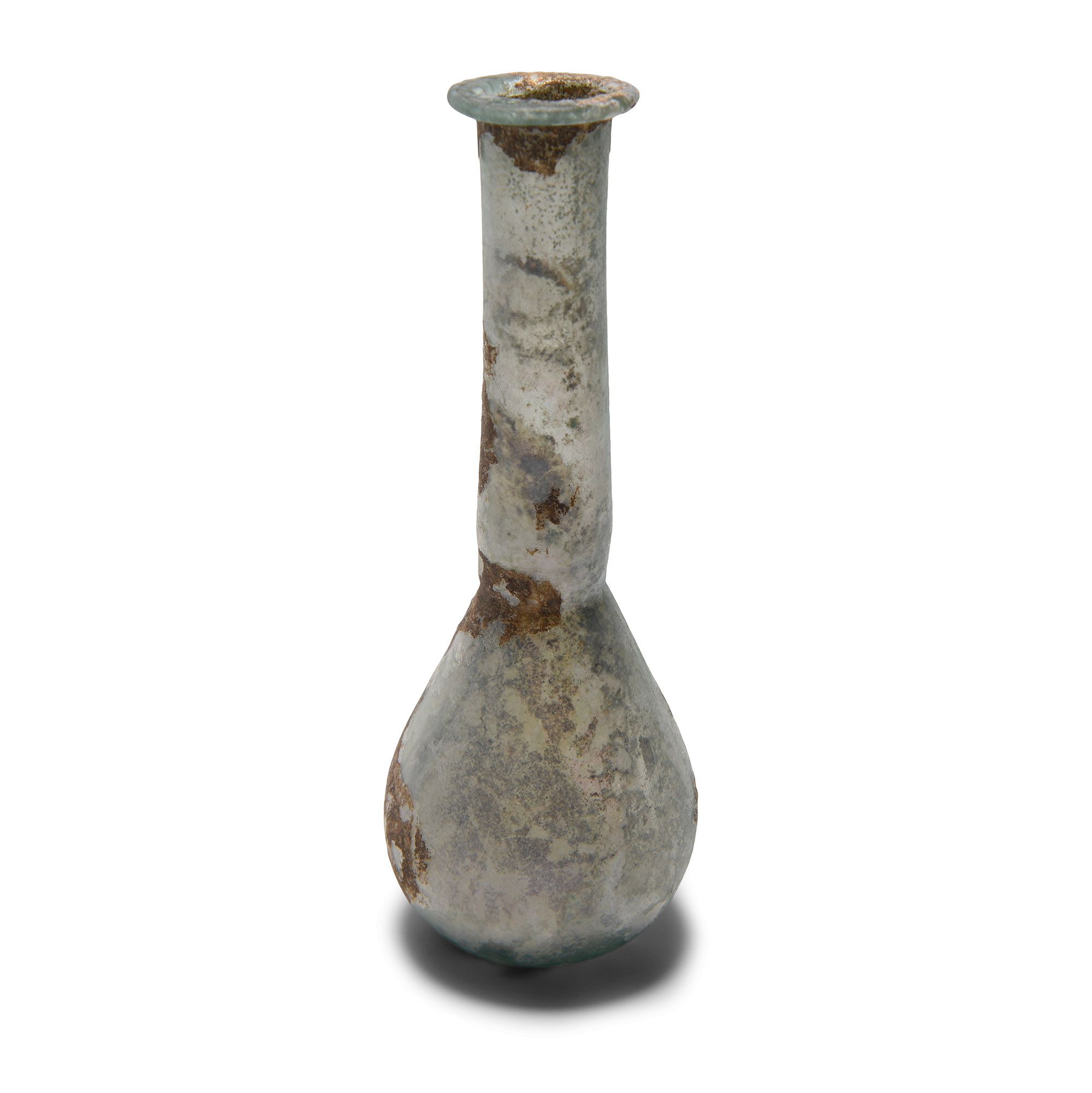
Roman Pale Blue Glass Unguentarium
1ST-2ND CENTURY A.D.
4 3/4 in. (15.6 grams, 12 cm high).
Featuring a piriform lower body, extended cylindrical neck and flange rim; iridescent surfaces.
ProvenanceAcquired 1969-1999.
From the private collection of the late Mr S.M., London, UK, thence by descent.
Cf. The British Museum, museum number 1901,0413.3009, for similar.
CONDITIONTimeLine Auctions follows a vetting process to ensure the authenticity and legality of all items, reinforcing our commitment to integrity and responsible trading. Each antiquity, antique, and coin lot undergoes thorough examination by a vetting committee of at least ten external specialists, professional trade association members, scientists, and archaeologists: Our Vetting Process
AUCTIONS:
TimeLine is a leading auction house specialising in antiquities, ancient art, collectables, natural history, coins, medals, and books. Our auctions offer museums, collectors, historians, and enthusiasts the opportunity to acquire unique and historically significant pieces.
-
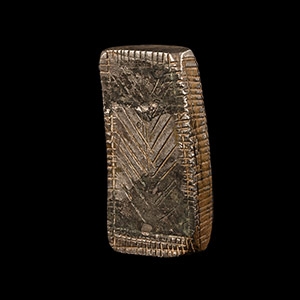
Roman Silver Ingot with Palm Branch
1st-4th century A.D.Estimate: £300 - 400 (+bp*)
Opening Bid: £167
Incised with a palm frond within a hatched border, hatching to three of the side edges. 14.5 grams, 26 mm
‘The Ancient Menagerie Collection’ formerly the property of a Cambridgeshire lady, collected since the 1990s and acquired from auctions and dealers throughout Europe and the USA, now ex London collection. -

Roman Bronze Plaque with Eros on Lion
Circa 2nd-4th century A.D.Estimate: £1,500 - 2,000 (+bp*)
Opening Bid: £600
Modelled in relief with openwork elements, stylised detailing to both figures; hollow reverse. 182 grams, 10.2 cm high
Acquired 1990s-early 2000s. East Anglian private collection.
Hollow cast bronze images of Eros riding a lion are linked to the Eastern Levant and have been found for example in Tamna, probably a Roman import. The importance of the long-distance contacts within the Eastern Mediterranean areas was rapidly reflected in provincial artistic styles, probably as soon as in Hellenistic times, at the beginning of the third century B.C., possibly even earlier. The unquestionable Greek influence led a number of scholars to define three main styles for the bronzes discovered in the eastern Roman provinces: a local type and iconography locally produced, Greek or Roman imports, and Oriental, Hellenistic, or Roman style, locally produced. -
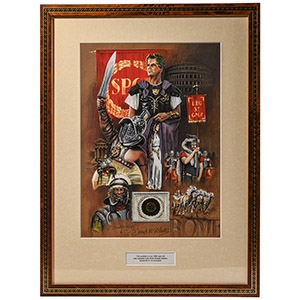
Roman Coin and Limited Edition Framed Print
3rd century A.D. and laterSold for (Inc. bp): £13
The coin mounted on 22 carat gold foil, framed with an art print signed by the artist David McAllister, depicting scenes of Roman military activity; limited edition number 65/1150. 1.3 kg, 36.5 x 49 cm
Essex gallery, early 2000s.
David McAllister's exciting design is a 'one of a kind' work that portrays the might and riches of the Roman civilisation. This limited edition print is a celebration of the award winning artist's lifetime dedication to historical paintings of the ancient world. To enhance appreciation of this rare and historic work, each individual print is signed and numbered by the artist.
