
Loading, please wait...
LOT 0683
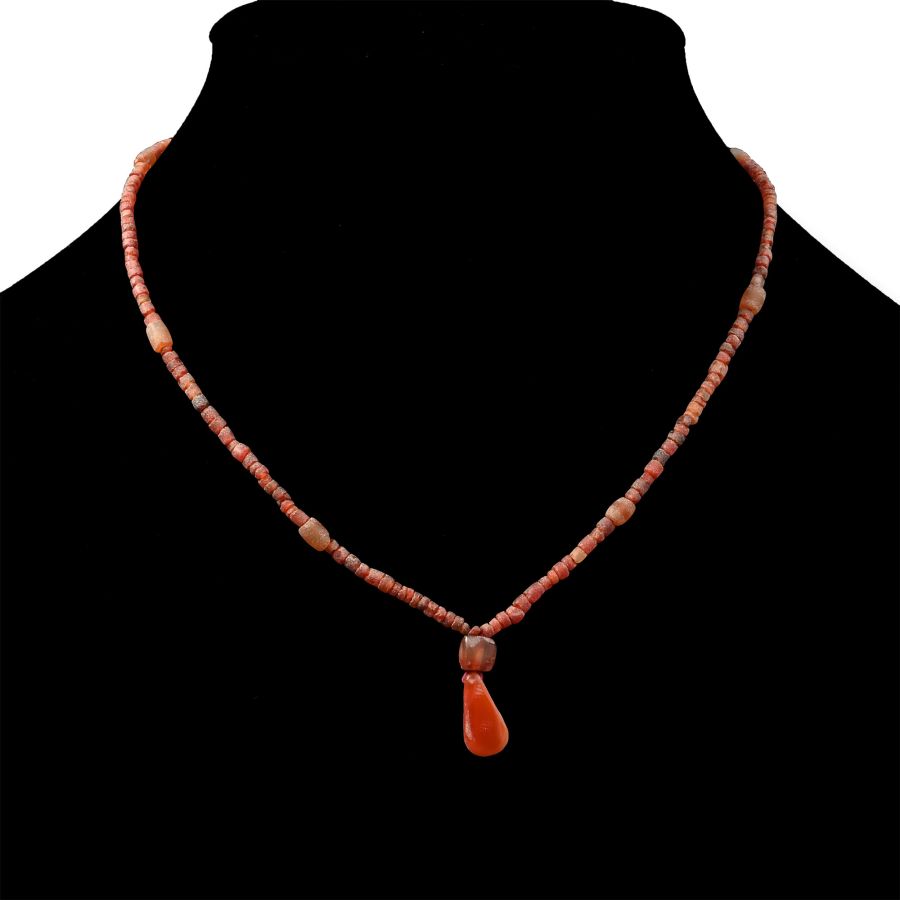
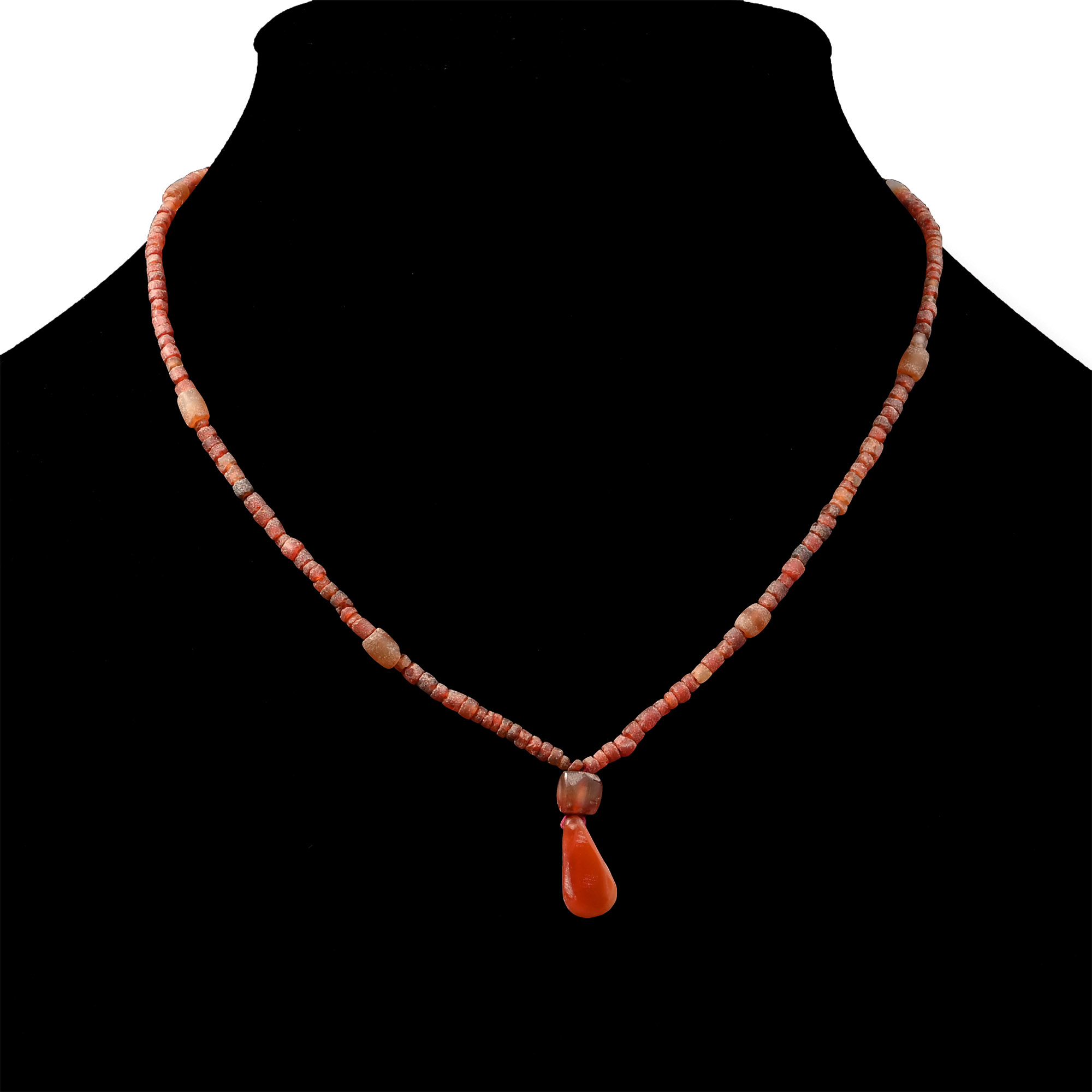
Roman Orange Glass Bead Necklace String
1ST-4TH CENTURY A.D. AND LATER
16 in. (6.41 grams, 40.7 cm).
A restrung group of tubular, annular and other types with teardrop pendant centrepiece, including some carnelian beads. [No Reserve]
ProvenanceLondon, UK, collection, 2000s.
CONDITIONTimeLine Auctions follows a vetting process to ensure the authenticity and legality of all items, reinforcing our commitment to integrity and responsible trading. Each antiquity, antique, and coin lot undergoes thorough examination by a vetting committee of at least ten external specialists, professional trade association members, scientists, and archaeologists: Our Vetting Process
AUCTIONS:
TimeLine is a leading auction house specialising in antiquities, ancient art, collectables, natural history, coins, medals, and books. Our auctions offer museums, collectors, historians, and enthusiasts the opportunity to acquire unique and historically significant pieces.
-
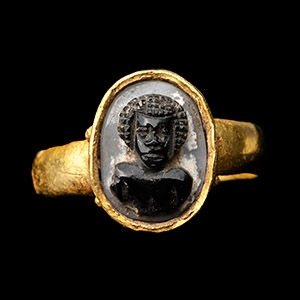
Roman Gold Ring with Onyx Nubian Bust Cameo
3rd century A.D.Estimate: £5,000 - 7,000 (+bp*)
Opening Bid: £2,250
With granules flanking an ellipsoid cell containing an onyx cameo facing bust of a Nubian with dressed hair executed in the half-round. 7.53 grams, 28.75 mm overall, 20.36 mm internal diameter (approximate size British V, USA 10 1/2, Europe 23.77, Japan 22).
Acquired 1970-1990. Ex property of a deceased lady. This lot has been checked against the Interpol Database of stolen works of art and is accompanied by search certificate number no.12954-246353. -
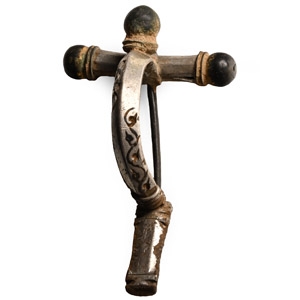
Roman Silver Crossbow Brooch
Circa 4th century A.D.Sold for (Inc. bp): £234
Spherical knops to the crossbar, keeled bow with vine leaf decoration, coiled collar at the base of the bow. 21.6 grams, 61 mm
From the collection of a gentleman, acquired on the London art market in the 1990s. -
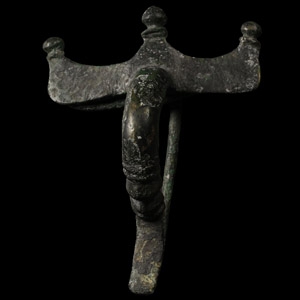
Roman Bronze Bow Brooch
2nd century A.D.Sold for (Inc. bp): £98
P-shaped bow brooch with three onion-shaped knops to the upper edge of the headplate, chord and pin to reverse, deep bow with ribbed section above junction with the rectangular foot; catch to reverse. 38.4 grams, 69 mm
Ex important German collection, 1990s. This lot is accompanied by an illustrated lot declaration signed by the Head of the Antiquities Department, Dr Raffaele D’Amato.
This type of fibula falls within the P-shaped bow brooch typology, a provincial form found in Britain, Pannonia, and the Balkan Peninsula. It is usually associated with men's costume.
