
Loading, please wait...
LOT 0135
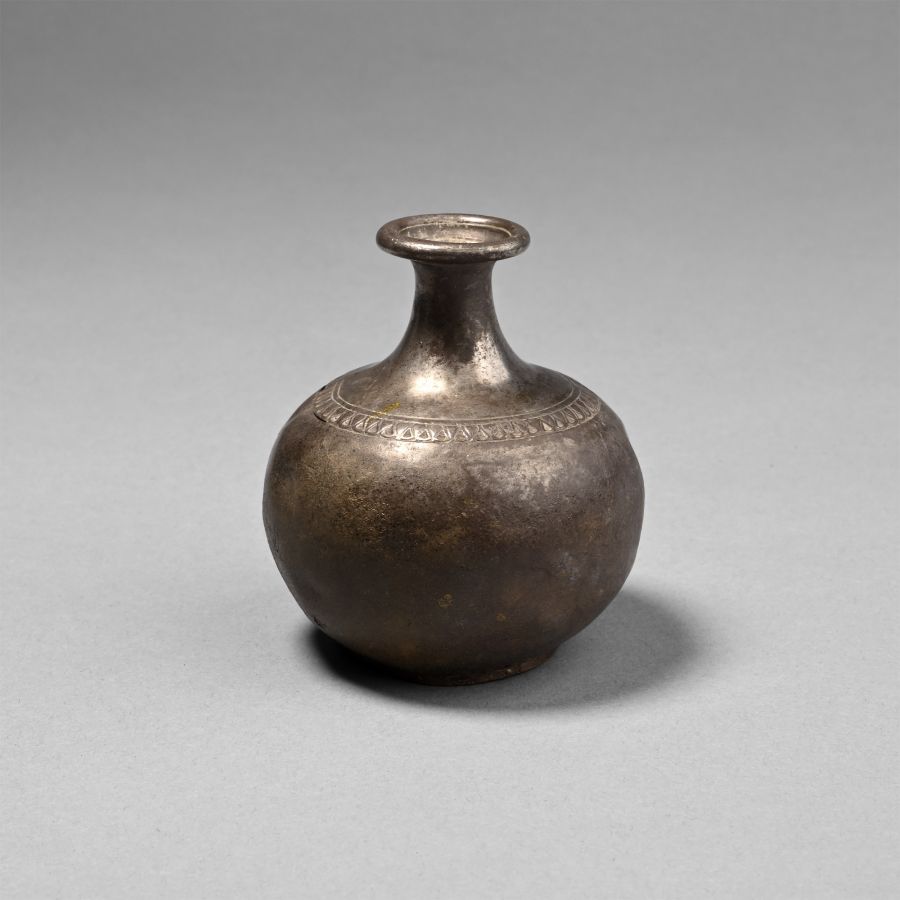
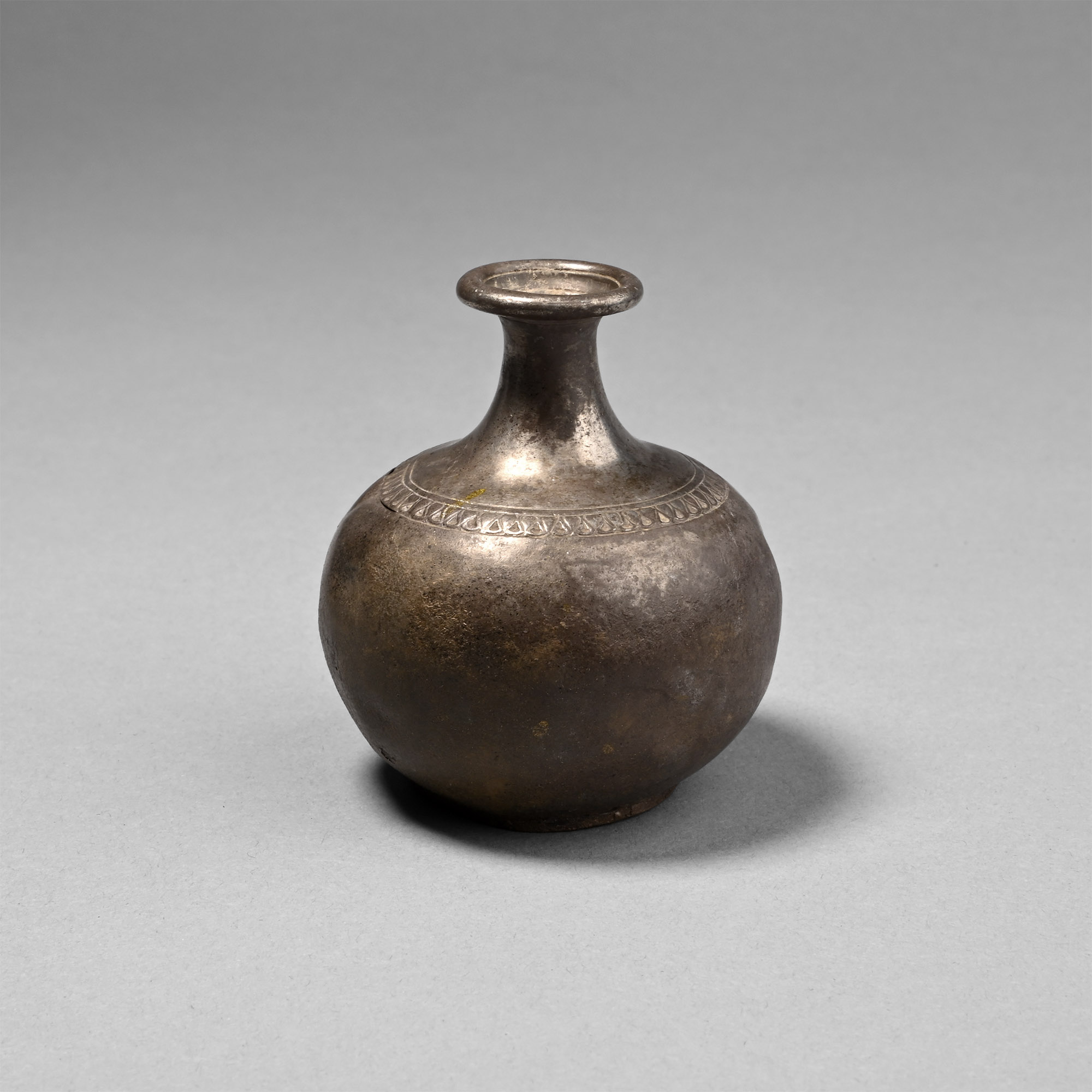
Roman or Gandharan Decorated Silver Aryballos
CIRCA LATE 1ST CENTURY B.C.-EARLY 1ST CENTURY A.D.
2 1/2 in. (46 grams, 66 mm).
Globular in profile with basal ring, punched band of teardrops to the shoulder, trumpet-shaped neck with everted and rolled rim.
ProvenanceAcquired from a private UK collection prior to 1979.
Ex Julian Sherrier collection, a leading figure in Gandharan art.
with Christie's, New York, sale 2337, 14th September 2010, no.40 (part).
Accompanied by the original Christie's lot ticket.
Cf. Barratte, F., East and West, A Central Asia Silver hoard from the Parthian East, 2002, pp.39, fig.19c.
CONDITIONTimeLine Auctions follows a vetting process to ensure the authenticity and legality of all items, reinforcing our commitment to integrity and responsible trading. Each antiquity, antique, and coin lot undergoes thorough examination by a vetting committee of at least ten external specialists, professional trade association members, scientists, and archaeologists: Our Vetting Process
AUCTIONS:
TimeLine is a leading auction house specialising in antiquities, ancient art, collectables, natural history, coins, medals, and books. Our auctions offer museums, collectors, historians, and enthusiasts the opportunity to acquire unique and historically significant pieces.
-
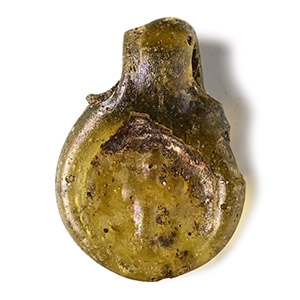
Late Roman Glass Pendant
5th-7th century A.D.Sold for (Inc. bp): £117
Discoid with integral loop, impressed cross motif. 1.64 grams, 22 mm
From the private collection of the late Mr S.M., 1969-1999. -
.jpg)
Roman Arretine Red Slip Terra Sigillata Cup with Rabbits and SEX.M.D. Maker's Mark
Augustan, early 1st century A.D.Sold for (Inc. bp): £546
Squat bowl with carinated profile and low foot; to the rim, applied rosettes and hares; stamped to the centre, a sandaled foot with legend 'SEX.M.D' legend. 132 grams, 11.3 cm wide
Acquired from Casemate Gallery, Bath, UK, 1990. From a late private Dorset, UK, collector. Property of a West London, UK, gentleman. Accompanied by an old identification card and original invoice dated 10 November 1990. -
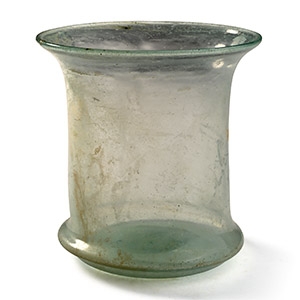
Roman Pale Green Glass Cup
Circa 3rd century A.D.Sold for (Inc. bp): £390
With slightly dimpled base, carinated flange to foot and tubular body, flared rim. 54 grams, 85 mm
From an important collection of glass, London, UK, 1990s.
