
Loading, please wait...
LOT 0170
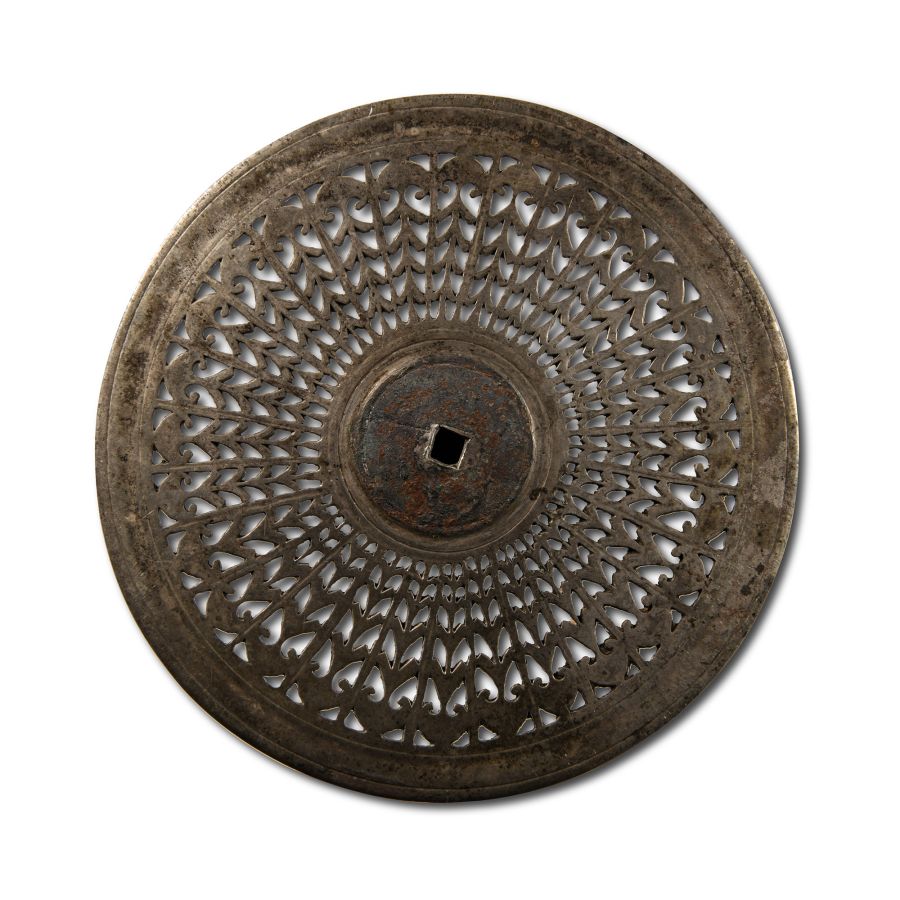
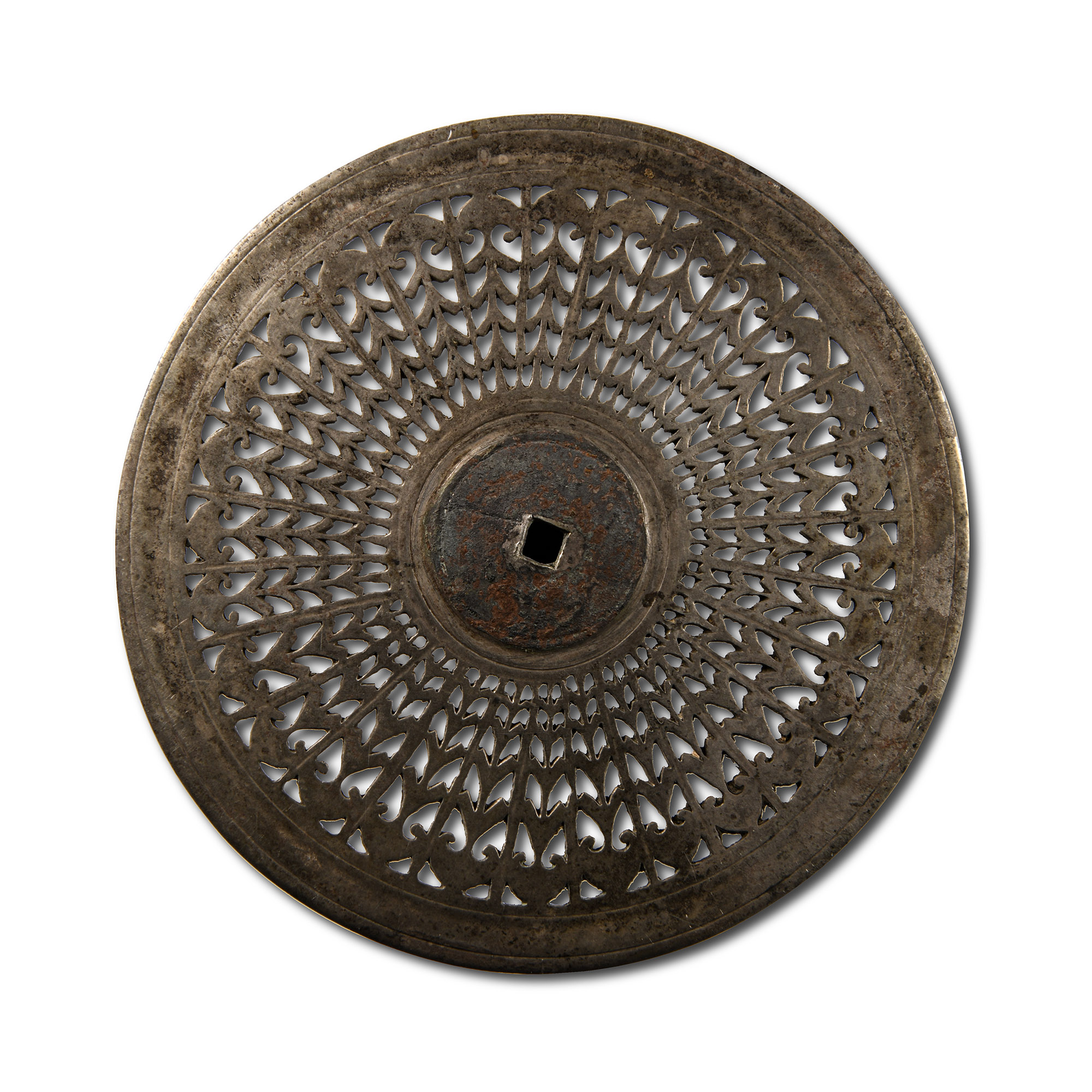
Roman Openwork Silver Military Baldric Phalera
3RD CENTURY A.D.
3 3/8 in. (40 grams, 86 mm).
With concentric lines of openwork ornament in lanceolate shapes, ending with crescent decorations.
ProvenanceAcquired from Gallery Gryphos, Munich, 1997.
European private collection.
Accompanied by an academic report by Dr Raffaele D’Amato.
This lot has been checked against the Interpol Database of stolen works of art and is accompanied by search certificate number no.11998-211928.
Cf. Bishop, M.C. & Coulston, J.N.C., Roman Military Equipment from the Punic Wars to the Fall of Rome, Oxford, 2006, pls.3b and 7a, for similar.
FootnotesIn the 3rd century A.D. Roman army, the old ring suspension system of the sword, of Celtic and Iberian origin, was abandoned. The sword was now mainly carried suspended from a broad baldric on the soldier’s left side. The high quality of the openwork decoration of our phalera and the precious silver of which it is made imply that it may have once belonged to a commissioned officer.
CONDITIONTimeLine Auctions follows a vetting process to ensure the authenticity and legality of all items, reinforcing our commitment to integrity and responsible trading. Each antiquity, antique, and coin lot undergoes thorough examination by a vetting committee of at least ten external specialists, professional trade association members, scientists, and archaeologists: Our Vetting Process
AUCTIONS:
TimeLine is a leading auction house specialising in antiquities, ancient art, collectables, natural history, coins, medals, and books. Our auctions offer museums, collectors, historians, and enthusiasts the opportunity to acquire unique and historically significant pieces.
-
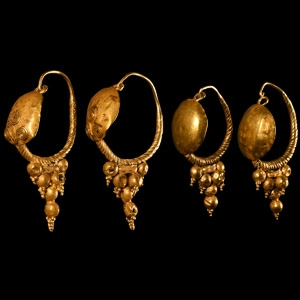
Roman Gold Earring Pairs
2nd-3rd century A.D. or earlierEstimate: £1,500 - 2,000 (‡+bp*)
Opening Bid: £750
Two pairs of earrings with decoratively twisted hoops, domed plaques and pyramid bulbs embellished with granule clusters; one pair with gold wire spirals to the plaques. 16.97 grams total, 42-50 mm
Acquired between 1950-1970s. Ex Swiss private collection. -
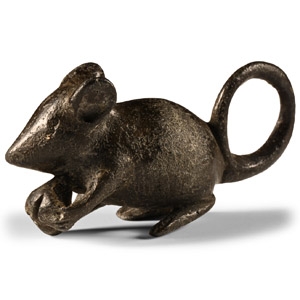
Roman Bronze Mouse Statuette
1st-2nd century A.D.Sold for (Inc. bp): £845
Modelled in the round, crouching, holding a nut in its raised forepaws, tail looped to the rear. 46.7 grams, 49 mm
From a collection acquired on the UK art market from various auction houses and collections mostly before 2000. From an important Cambridgeshire estate; thence by descent. -
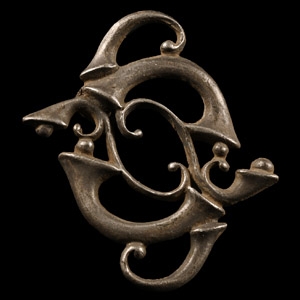
Roman Silver Trumpet Whorl Brooch
2nd century A.D.Sold for (Inc. bp): £520
Fine openwork casting of La Tène trumpets and scrolls with catch to the reverse. 10.5 grams, 38 mm
Ex London collection, 1990s. Acquired on the UK art market. Property of an East London gentleman.
