
Loading, please wait...
LOT 0903
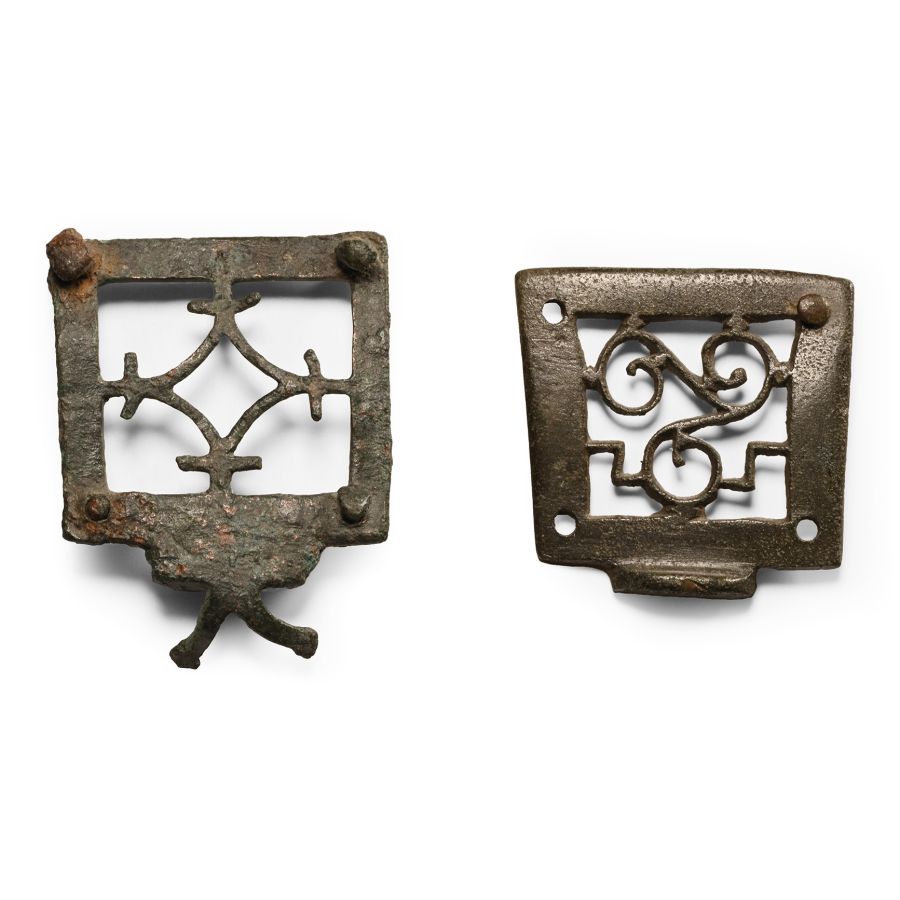
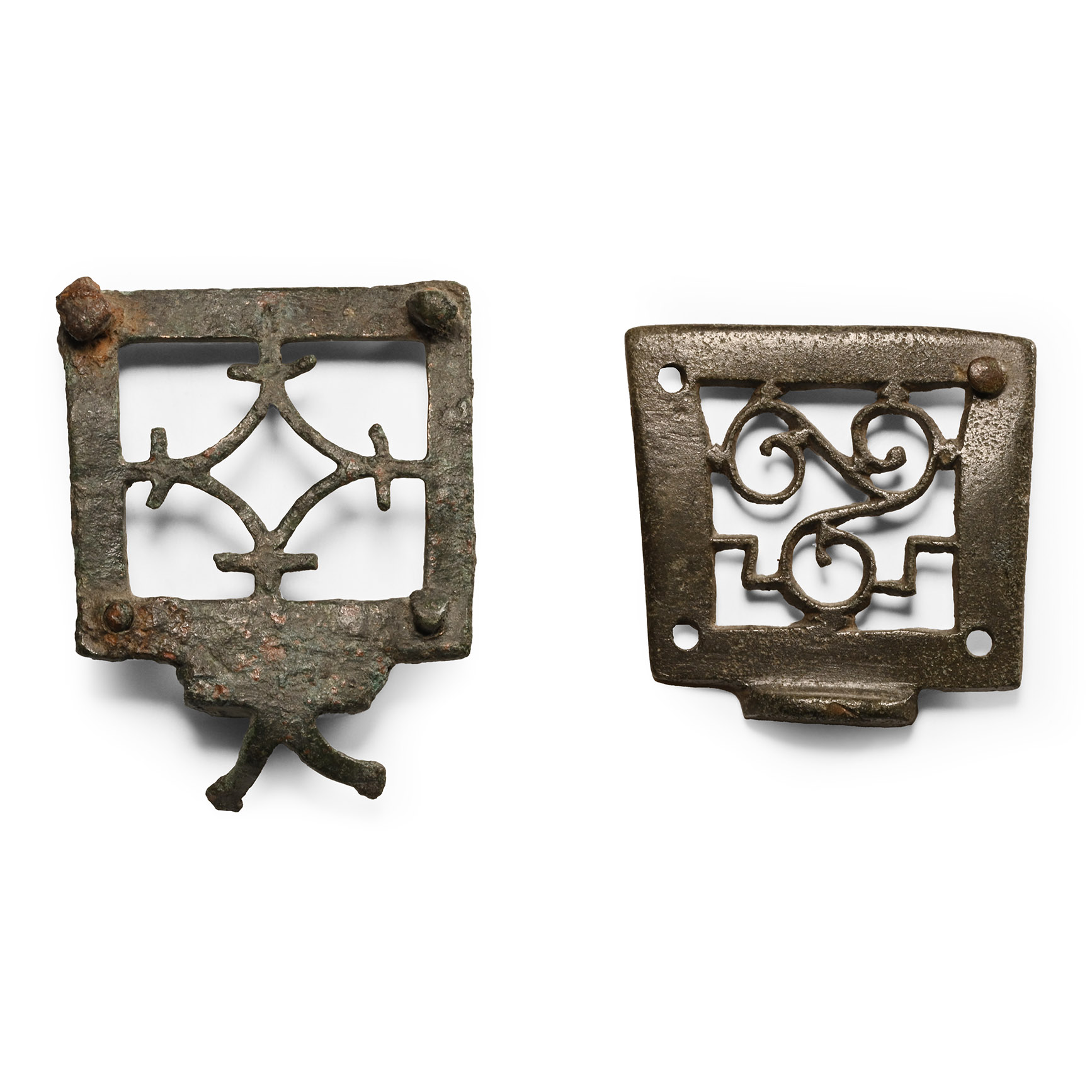
Roman Openwork Military Belt Mount Group
2ND CENTURY A.D.
1 1.8 - 1 3/8 in. (13.2 grams total, 28-35 mm).
Each with a trapezoidal frame and openwork design: one a coiled triskele, the other a lozenge with cruciform spurs; from a military belt. [2, No Reserve]
ProvenanceProperty of the vendor's grandfather, thence by family descent, circa 1985.
From the private collection of a New York, USA gentleman
TimeLine Auctions follows a vetting process to ensure the authenticity and legality of all items, reinforcing our commitment to integrity and responsible trading. Each antiquity, antique, and coin lot undergoes thorough examination by a vetting committee of at least ten external specialists, professional trade association members, scientists, and archaeologists: Our Vetting Process
AUCTIONS:
TimeLine is a leading auction house specialising in antiquities, ancient art, collectables, natural history, coins, medals, and books. Our auctions offer museums, collectors, historians, and enthusiasts the opportunity to acquire unique and historically significant pieces.
-
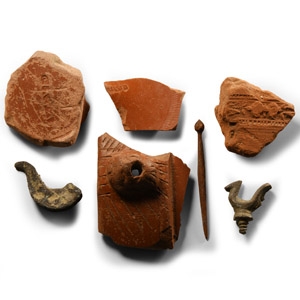
Roman 'Essex' Bronze and Other Artefact Group
1st-4th century A.D.Sold for (Inc. bp): £26
Including redware fragments, one stamped 'PALL[..]' and another with a lion-mask spout, bronze crest from a statuette of Mercury, bird finial, bone pin, and other items. 127 grams total, 30-68 mm
Found various sites in Essex, UK. Property of an Essex collector. -
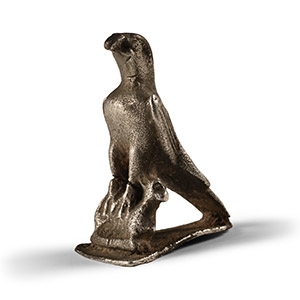
Roman Silver Eagle and Lamb Mount
1st-4th century A.D.Sold for (Inc. bp): £416
Modelled in the round on a trapezoidal plaque, the eagle gripping a lamb in its powerful claws, head raised and wings crossed; suspension loop absent. 8.53 grams, 27 mm
Acquired in the mid 1980s-1990s. From the family collection of Mr S.A., Switzerland, thence by descent. Private collection since the late 1990s. -
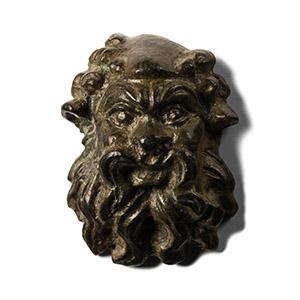
Roman Bronze Silenus Mount
1st-3rd century A.D.Estimate: £350 - 450 (+bp*)
Opening Bid: £175
Mask of Silenus modelled in the half-round with curly hair and luxuriant beard; hollow to the reverse. 31.5 grams, 36 mm
Ex German art market, 2000s. Acquired from an EU collector living in London. From the collection of Surrey, UK, gentleman.
