
Loading, please wait...
LOT 0739
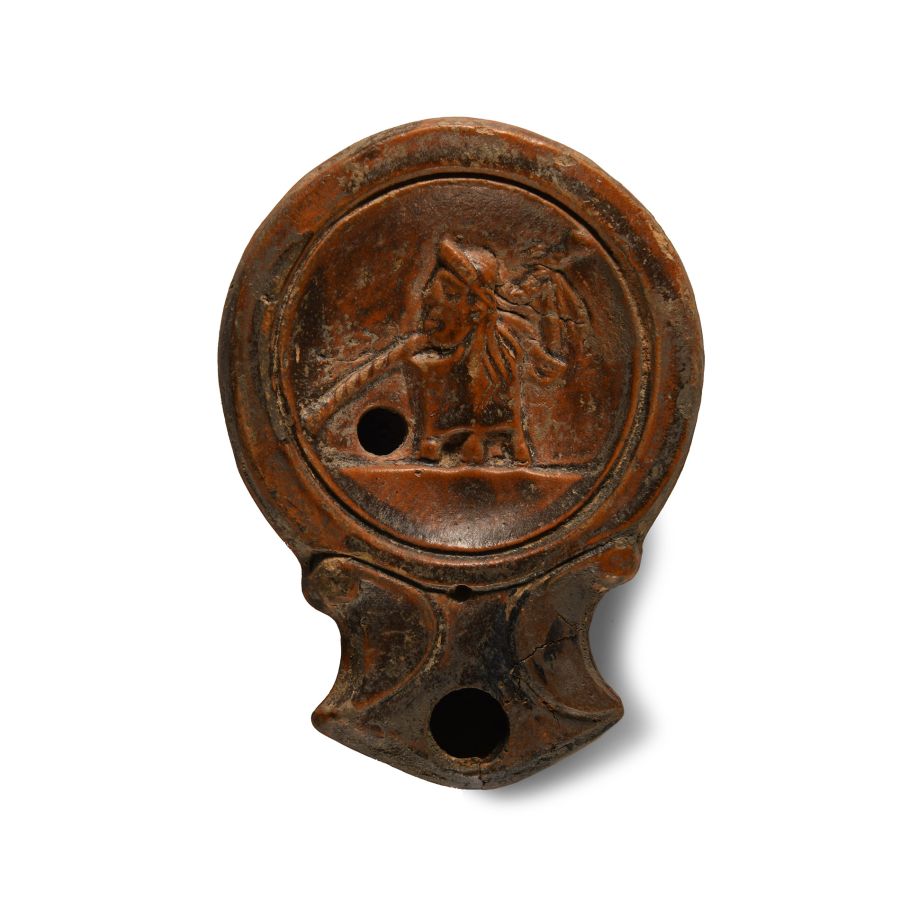
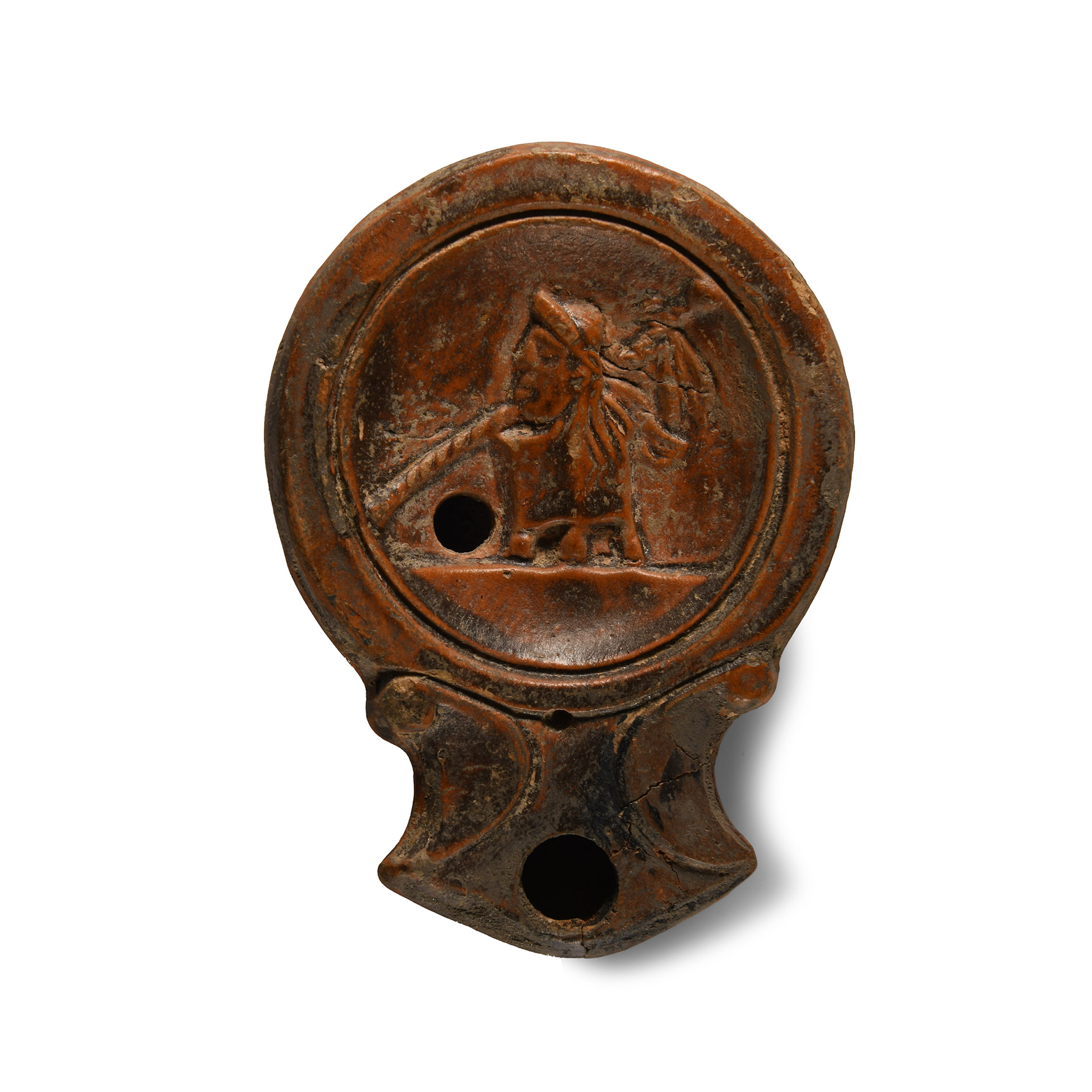
Roman Oil Lamp with Theatre Scene
LATE 1ST CENTURY A.D.
3 3/8 in. (45.7 grams, 86 mm).
Depicting a theatre scene to central discus; voluted angular-tipped nozzle; base marked off by a circular groove. [No Reserve]
ProvenancePrivate collection since the 1990s.
with Gorny & Mosch, 12 December 2012, lot 491.
Property of a Bristol, UK, gentleman.
Accompanied by copies of the relevant Gorny & Mosch catalogue pages.
Cf. Dejean, H., Lamps Antiques à travers les Ages: Le Corpus Paris, Archaeo Numis, 2012, pl.35, M027.
CONDITIONTimeLine Auctions follows a vetting process to ensure the authenticity and legality of all items, reinforcing our commitment to integrity and responsible trading. Each antiquity, antique, and coin lot undergoes thorough examination by a vetting committee of at least ten external specialists, professional trade association members, scientists, and archaeologists: Our Vetting Process
AUCTIONS:
TimeLine is a leading auction house specialising in antiquities, ancient art, collectables, natural history, coins, medals, and books. Our auctions offer museums, collectors, historians, and enthusiasts the opportunity to acquire unique and historically significant pieces.
-
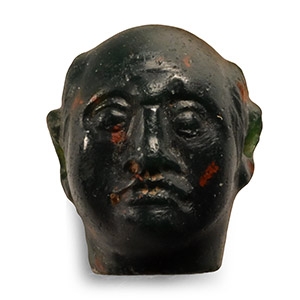
Roman Head of a Philosopher Bead
Circa 1st century B.C.-1st century A.D.Sold for (Inc. bp): £91
Carved with a severe facial expression, short cropped hair, pierced at the ears, old collector's label '018' to the underside. 3.05 grams, 14 mm
From the glyptic collection of Mr X; thence by descent. Acquired Hotel des Ventes, Drouot, Eve SVV, Paris, France, 28 June 2017, no.152 (Part). Property of a French collector. -
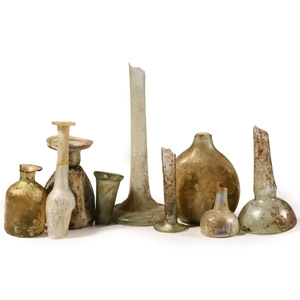
Roman Glass Fragment Group
1st-4th century A.D.Sold for (Inc. bp): £143
Including narrow-stemmed unguentaria and other types. 233 grams total, 5.2-16.5 cm
From the collection of a late East Anglian teacher and antiquarian who retired to the Isle of Wight in Hampshire, UK. He amassed a large collection of objects between the 1960s-1980s. -
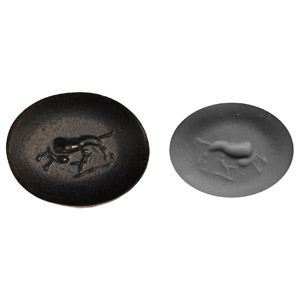
Roman Gemstone with Bull Trampling a Dog
2nd-3rd century A.D.Estimate: £120 - 170 (+bp*)
Opening Bid: £60
Plano-convex in profile with chamfered rim, intaglio scene of a horned bull one baseline with a hound attacking it from below; supplied with a museum-quality impression. 0.90 grams, 13 mm
From a Swiss collection, 1980s onwards. Property of a North London, UK, gentleman.
