
Loading, please wait...
LOT 0862
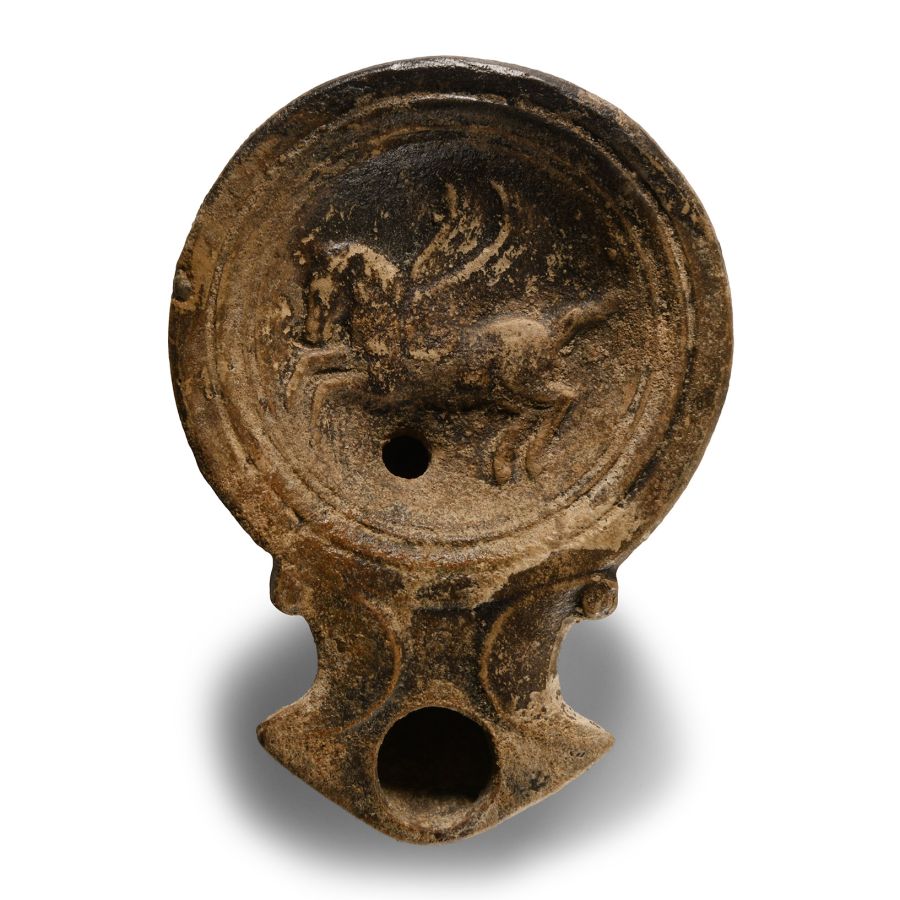
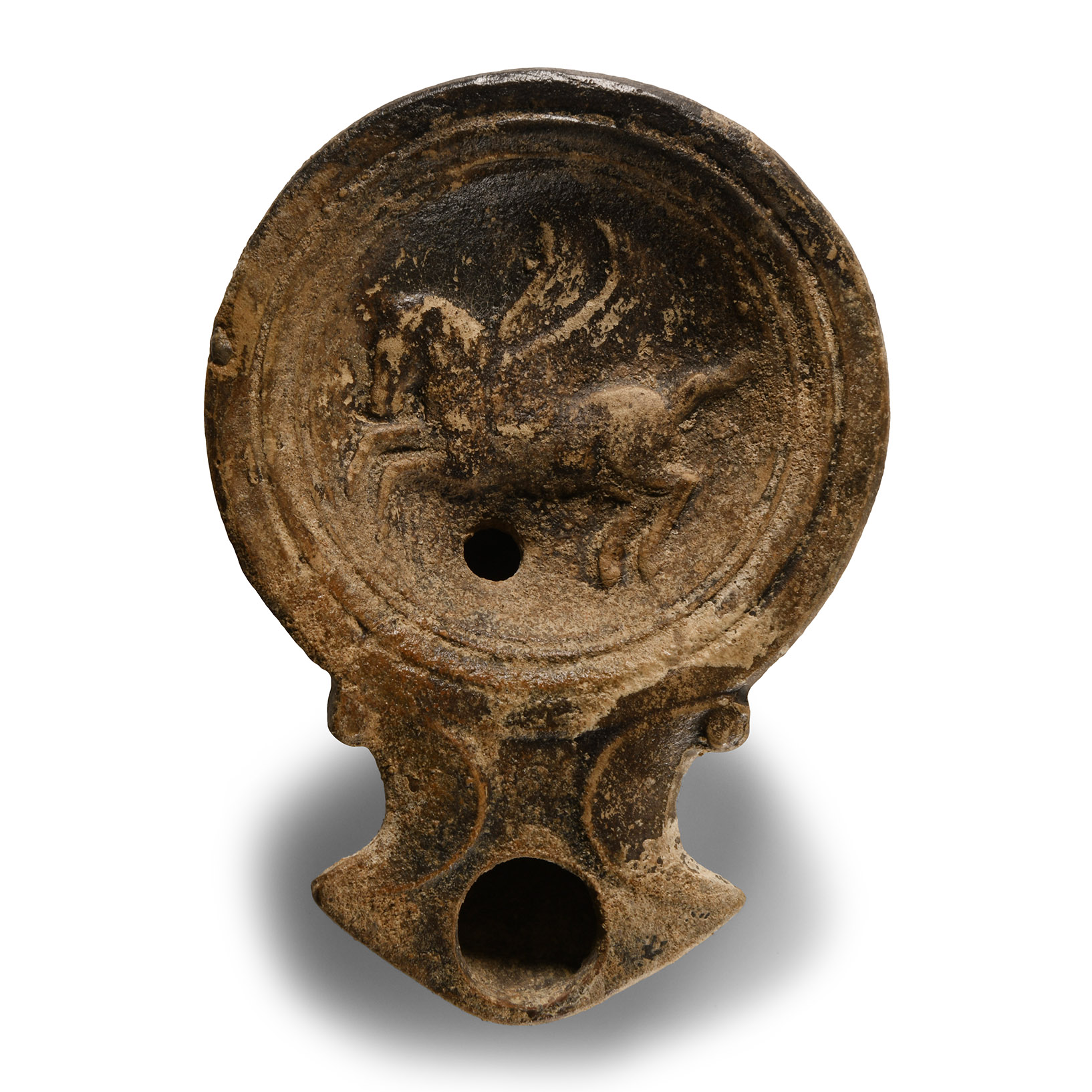
Roman Oil Lamp with Pegasus
1ST CENTURY A.D.
4 1/8 in. (69 grams, 10.6 cm).
Squat lamp with broad body and volutes flanking the nozzle, recessed discus with low-relief image of winged horse; maker's mark to obverse, 'T' with pellet finials.
ProvenanceEx Arizona collection.
with Artemis Gallery, Louisville, Colorado, 2014.
Property of a North London collector.
Accompanied by an Artemis certificate of authenticity dated 28 July 2014.
TimeLine Auctions follows a vetting process to ensure the authenticity and legality of all items, reinforcing our commitment to integrity and responsible trading. Each antiquity, antique, and coin lot undergoes thorough examination by a vetting committee of at least ten external specialists, professional trade association members, scientists, and archaeologists: Our Vetting Process
AUCTIONS:
TimeLine is a leading auction house specialising in antiquities, ancient art, collectables, natural history, coins, medals, and books. Our auctions offer museums, collectors, historians, and enthusiasts the opportunity to acquire unique and historically significant pieces.
-
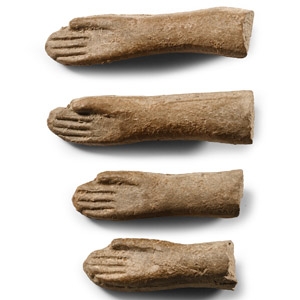
Roman Terracotta Votive Arm Group
1st-3rd century A.D.Sold for (Inc. bp): £59
Comprising four lower arms with extended fingers. 17.2 grams total, 33-45 mm
Ex German art market, 2000s. Acquired from an EU collector living in London. From the collection of Surrey, UK, gentleman. -
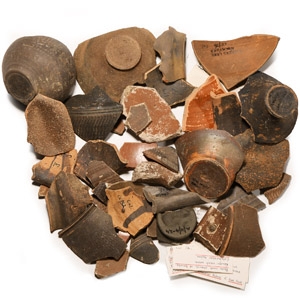
Romano-British Castor Ware and Other Sherd Group
1st-4th century A.D.Sold for (Inc. bp): £130
Mixed group of sherds, many with inked reference number, and collector's display cards including 'Sherd of calcite gritted bowl. Indented rim. Colchester kilns. 4th Cent.', 'NENE VALLEY / NVCIO', 'Col' for Colchester, 'CANVEY ISLAND / CC/6', 'MG/105 / CAMBRIDGE / P.', LONDON / CC/27', 'TINKERS LANE / ROCHFORD / CC/26'. 804 grams total, 2.5-10 cm
Found UK. From the collection of a late East Anglian teacher and antiquarian who retired to the Isle of Wight in Hampshire, UK. He amassed a large collection of objects between the 1960s-1980s. Accompanied by handwritten information display cards. -
.jpg)
Roman Bronze Harpocrates Statuette
3rd century A.D.Sold for (Inc. bp): £247
Modelled nude in advancing pose with right arm bent across the body and fist clenched to support an attribute (absent); the facial details in light relief and small forelock to the brow; mounted on a custom-made display stand. 231 grams total, 12 cm high including stand
From a collection acquired on the UK art market from various auction houses and collections mostly before 2000. From an important Cambridgeshire estate; thence by descent.
The cult of Harpocrates, began in Ptolemaic times, expanding considerably in the Imperial Roman period, and absorbing influences from the cult of ram of Mendes, the ithyphallic Min, the crocodile god Sobek, and Hercules. The missing left hand probably held a small cornucopia.
